The Epiphyte Guide
What are Epiphytes?
Epiphytes are "air plants" of the water world. Unlike traditional plants, they do not grow in soil or substrate. In nature, they attach themselves to rocks, fallen branches, or tree trunks. If you bury their thick horizontal stem (called a Rhizome), the plant will rot and die.
How to Attach Them
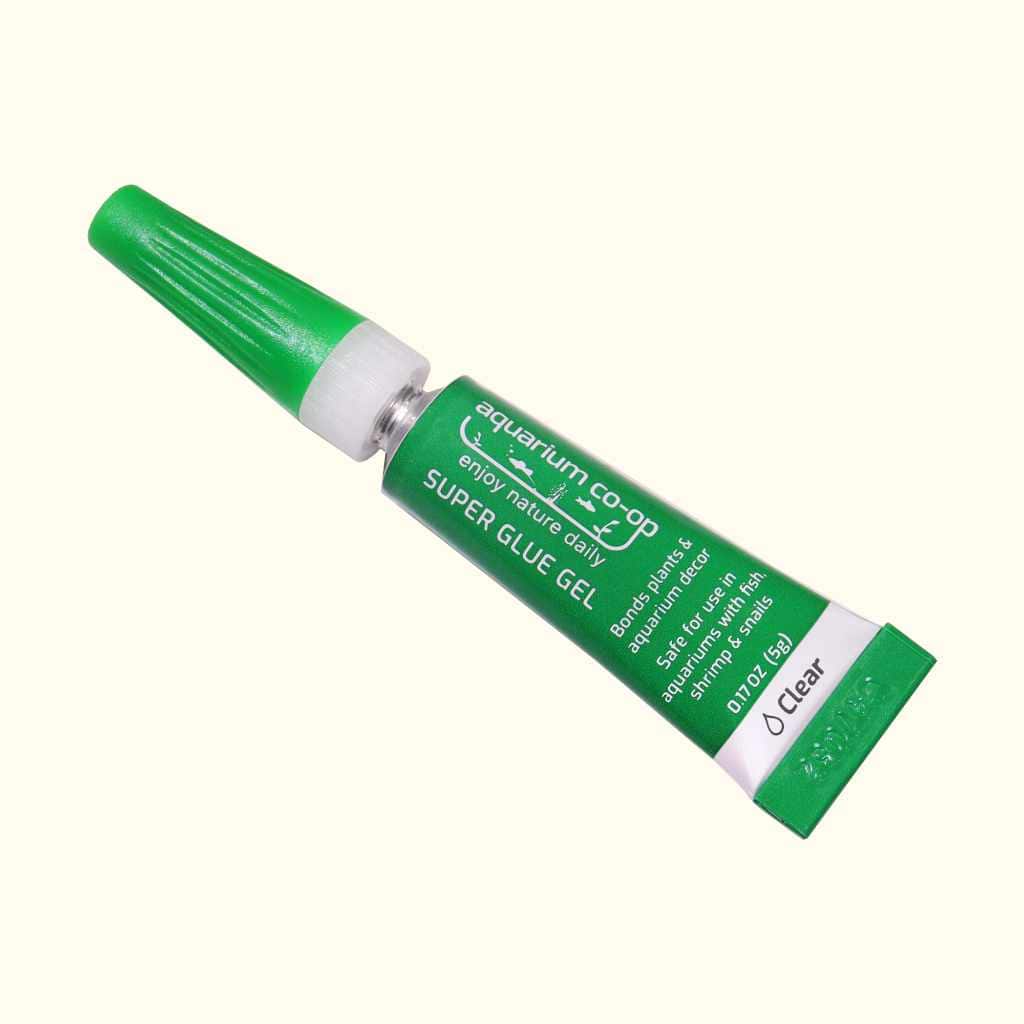
Cyanoacrylate Glue
Use "Gel" type superglue. It is 100% reef and fish safe once it hits the water. Make sure it doesn't have any other components.
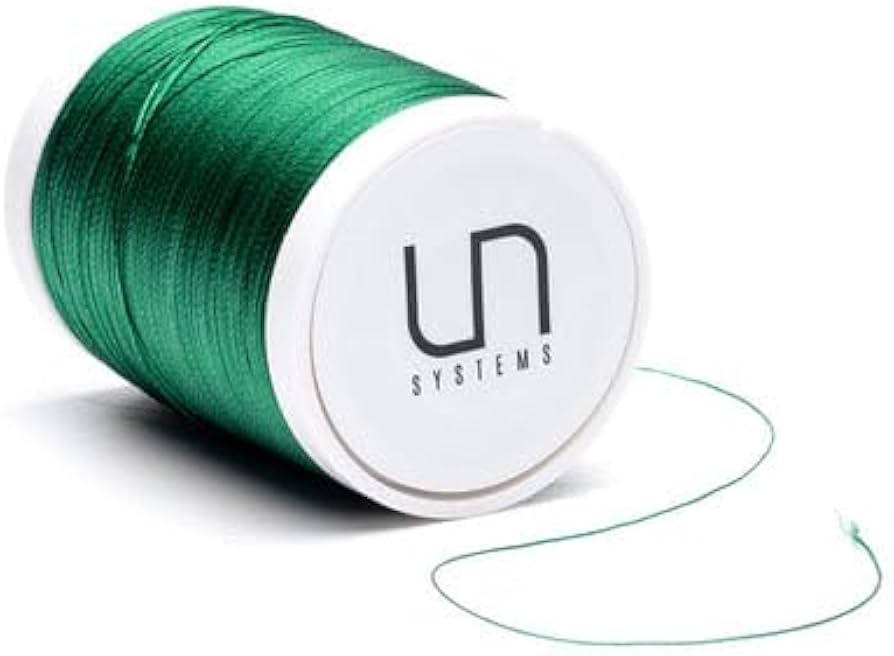
Fishing Line / Thread
Tie the plant gently to a rock or driftwood. Use brown or green thread to hide it. You can also use biodegradable moss cotton thread.
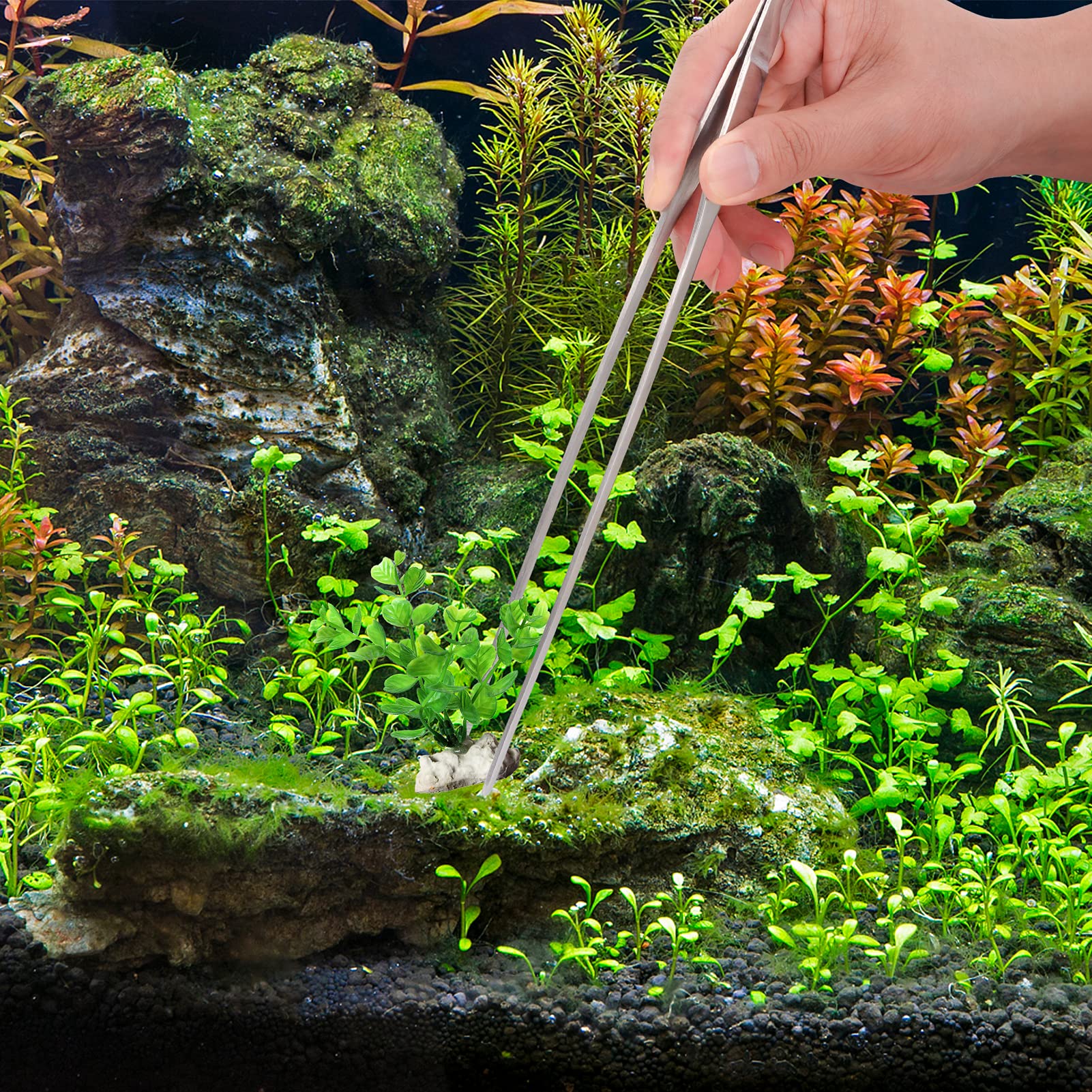
The "Wedge"
Simply jam the roots into a crack in a rock or wood. The plant will grip over time.
✨ The Cotton / Paper Trick
Struggling to get glue to stick to wet surfaces? Try this:
Place a tiny piece of tissue paper or cotton fiber between the plant and the surface. Apply liquid superglue to the cotton. It creates a rock-hard bond that fills the gaps perfectly!
Once in place, you can use Baking Soda or a Super Glue Reactor to bond it faster. Use a bit of vegetable oil to keep your hands from sticking!
Growing Above the Waterline (Riparian)
⚠️ Warning: When keeping land plants with their roots in the tank, never let the leaves touch the water. If leaves remain submerged, they cannot "breathe" properly and will rot, which can cause ammonia spikes in your aquarium.
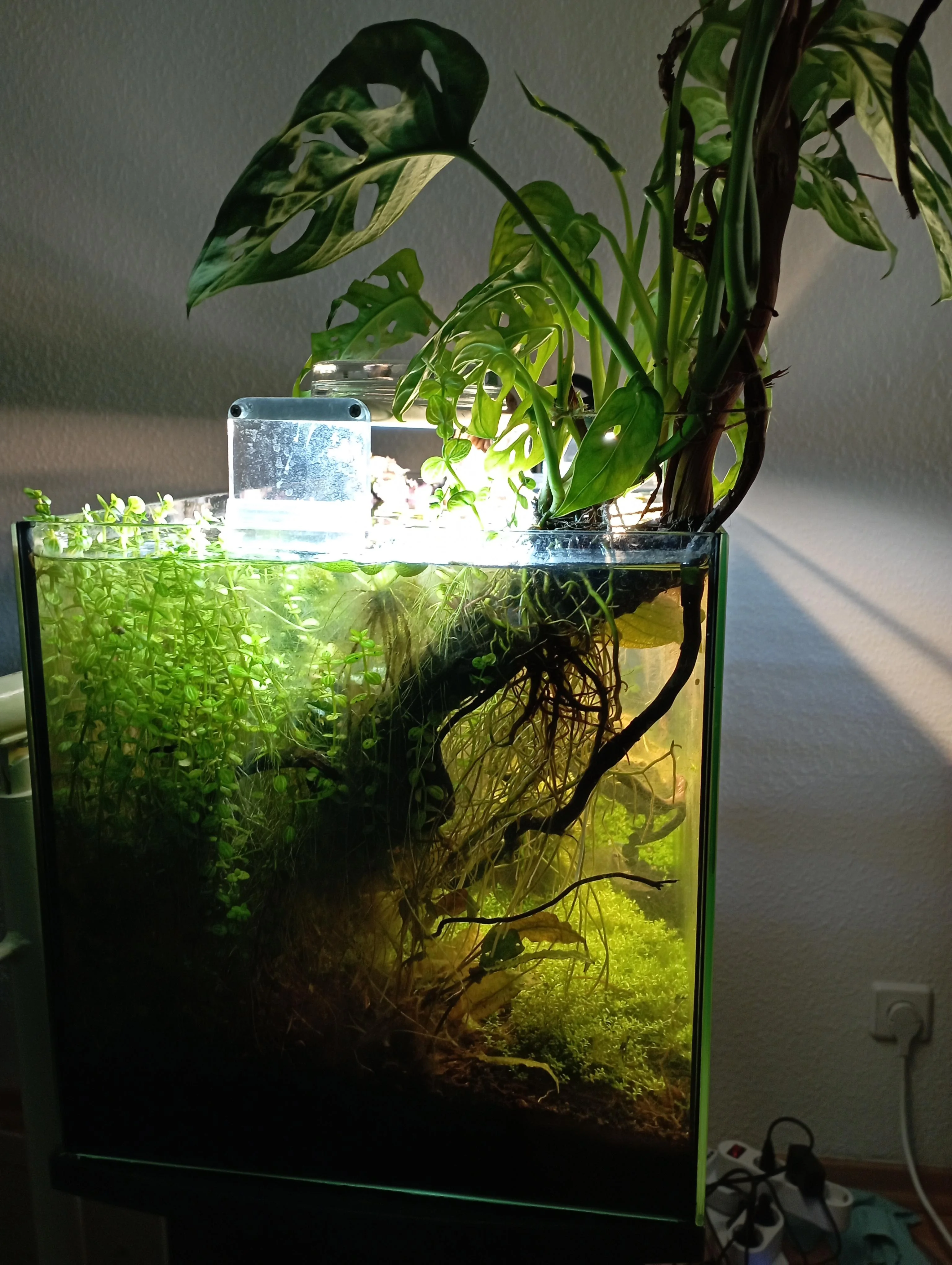
Natural Support
Bigger plants can just be kept in a corner. Their own weight and the tension between the glass and the rim will often hold them steady without any extra tools. They can also be wedged next to the filter when smaller.
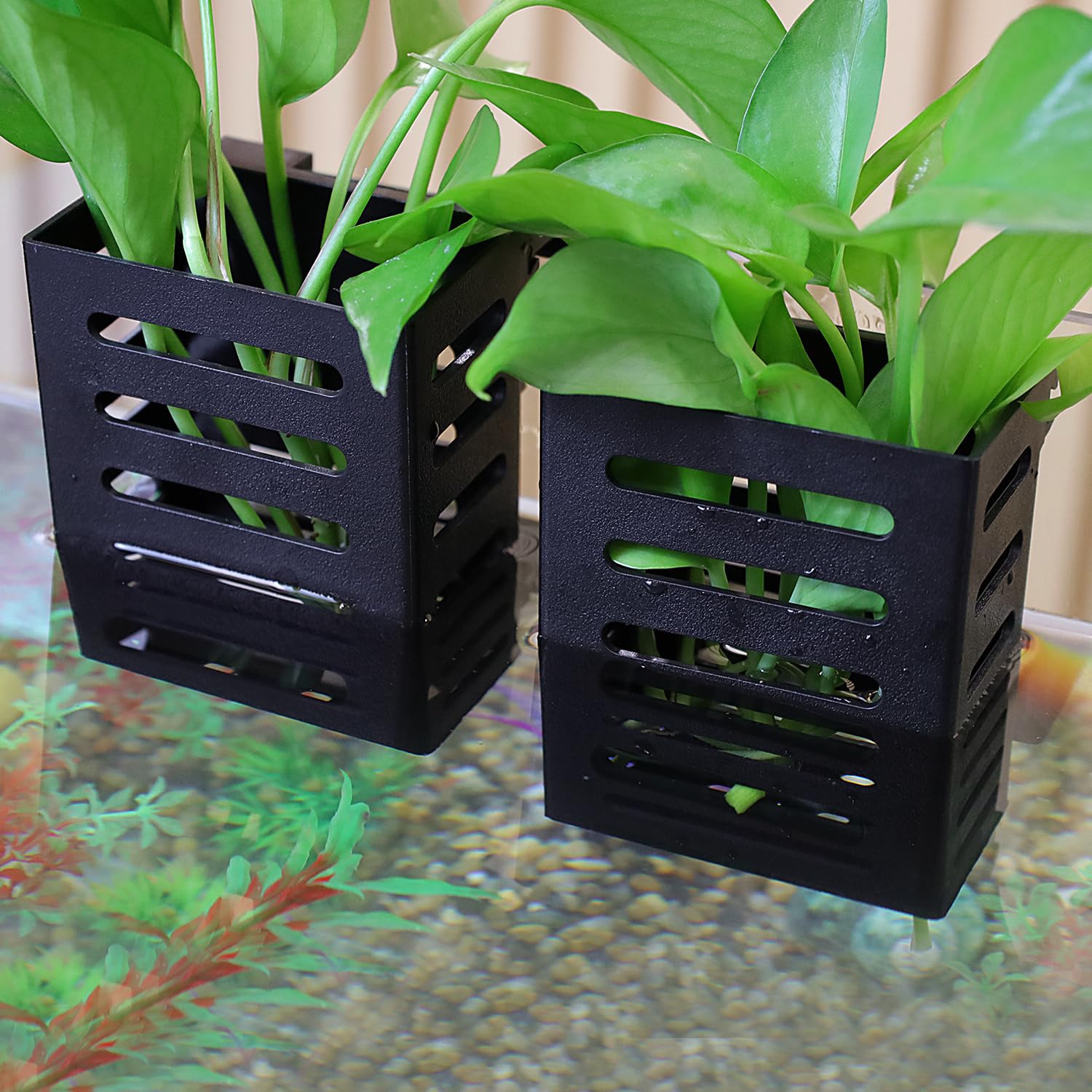
Aquarium Plant Holder
Use specialized 3D-printed baskets or acrylic hangers. These keep the roots perfectly submerged while ensuring the stems and leaves stay safe and dry above the rim.
Submerged Epiphytes (Fully Underwater)
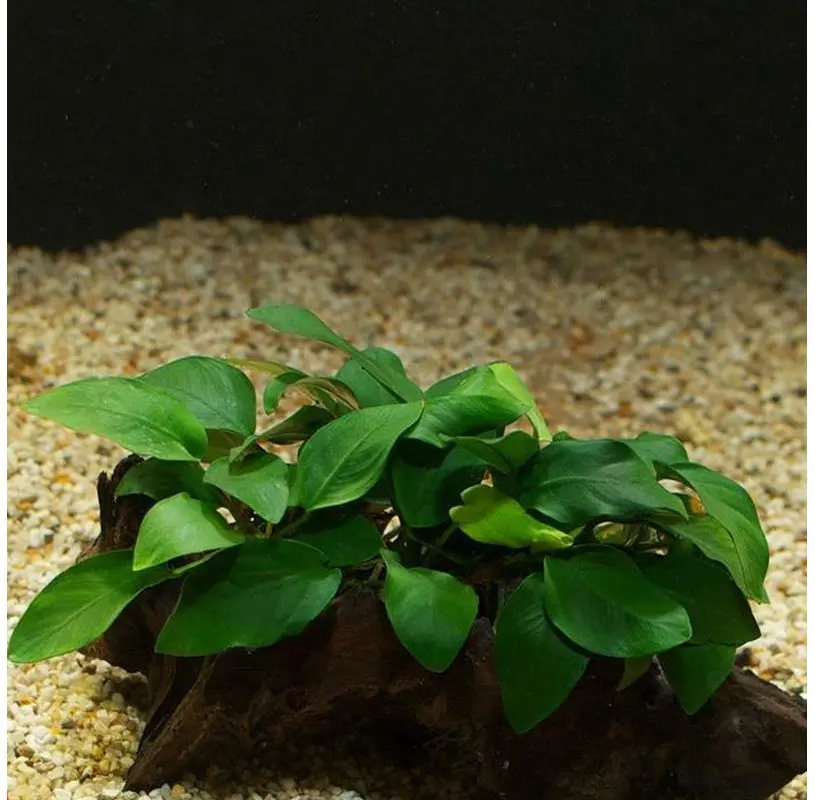
Anubias barteri var. nana
(Anubias Nana)Difficulty: Easy
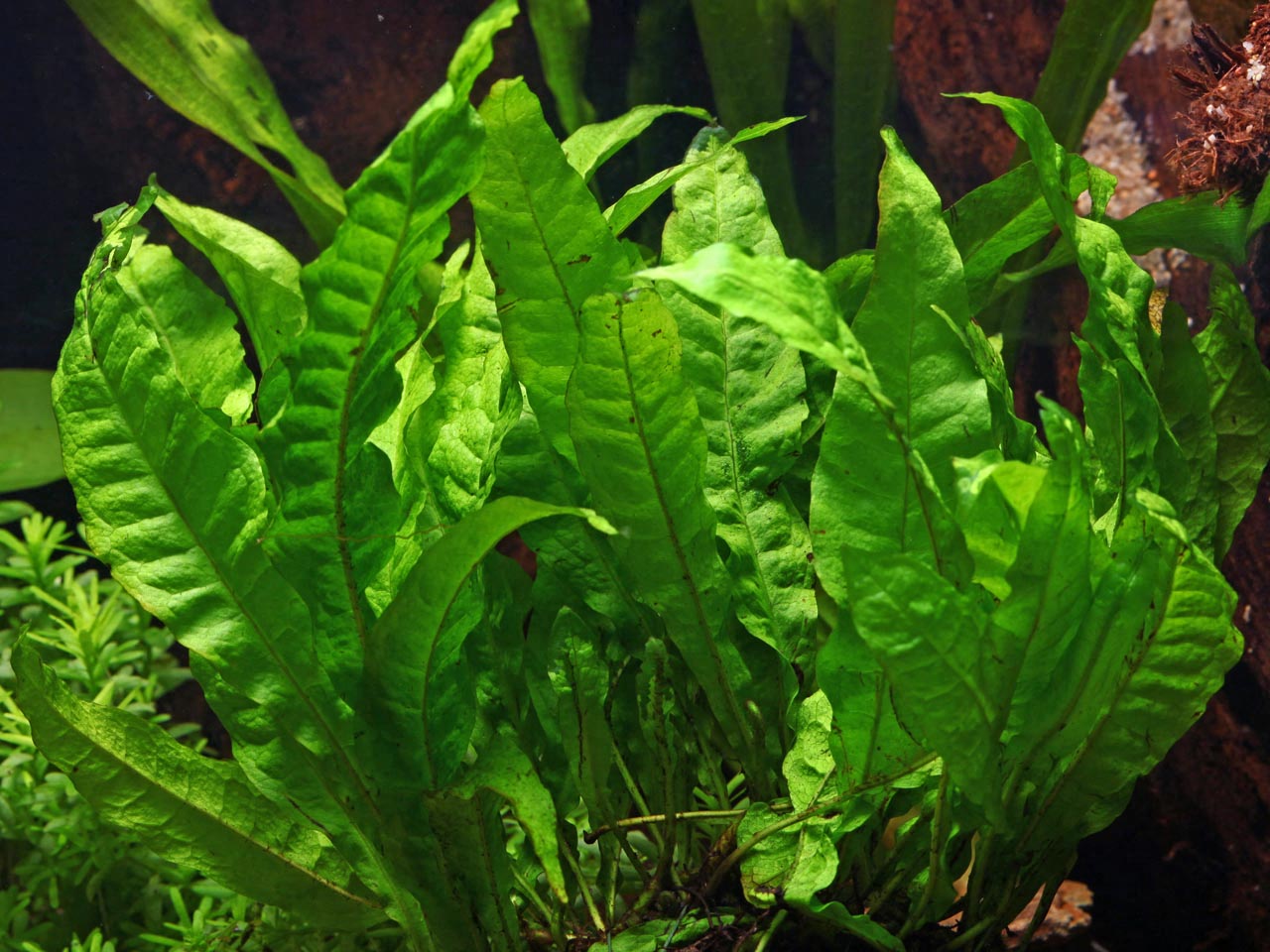
Microsorum pteropus
(Java Fern)Difficulty: Easy
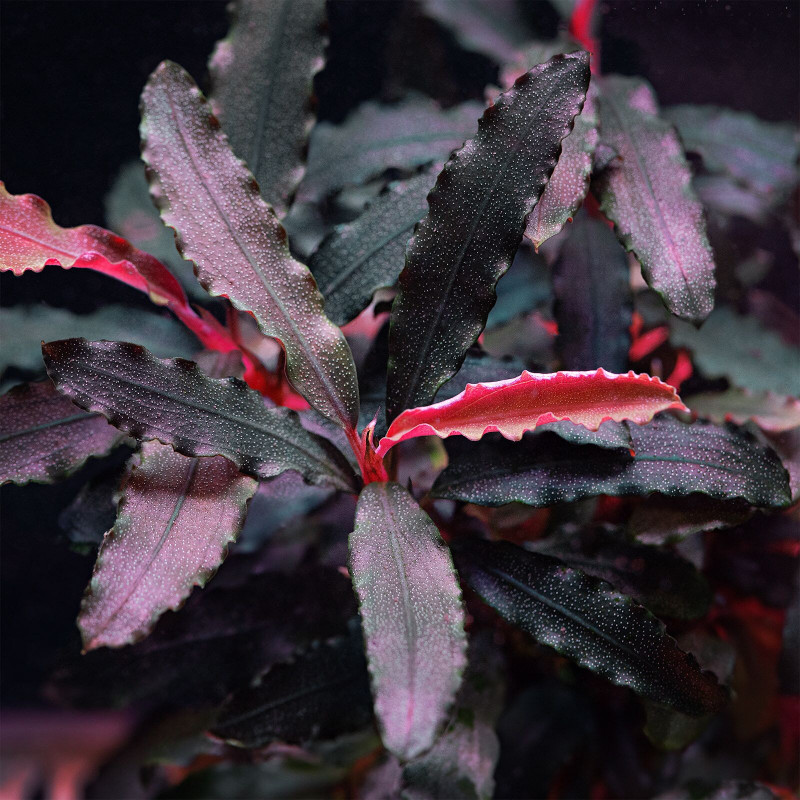
Bucephalandra spp.
(Bucephalandra)Difficulty: Easy
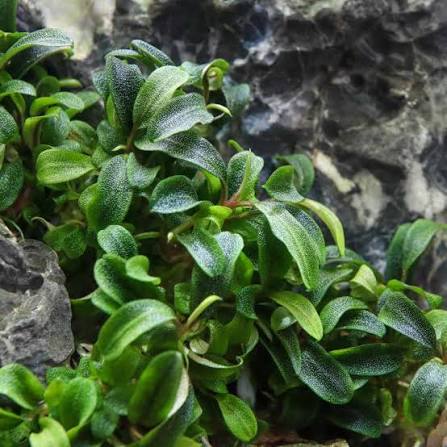
Bucephalandra sp. 'Needle Leaf'
(Needle Leaf Buce)Difficulty: Easy
Features exceptionally narrow, needle-like leaves with slightly wavy margins. It grows in compact clumps and can display subtle metallic or iridescent blue hues under optimal lighting.
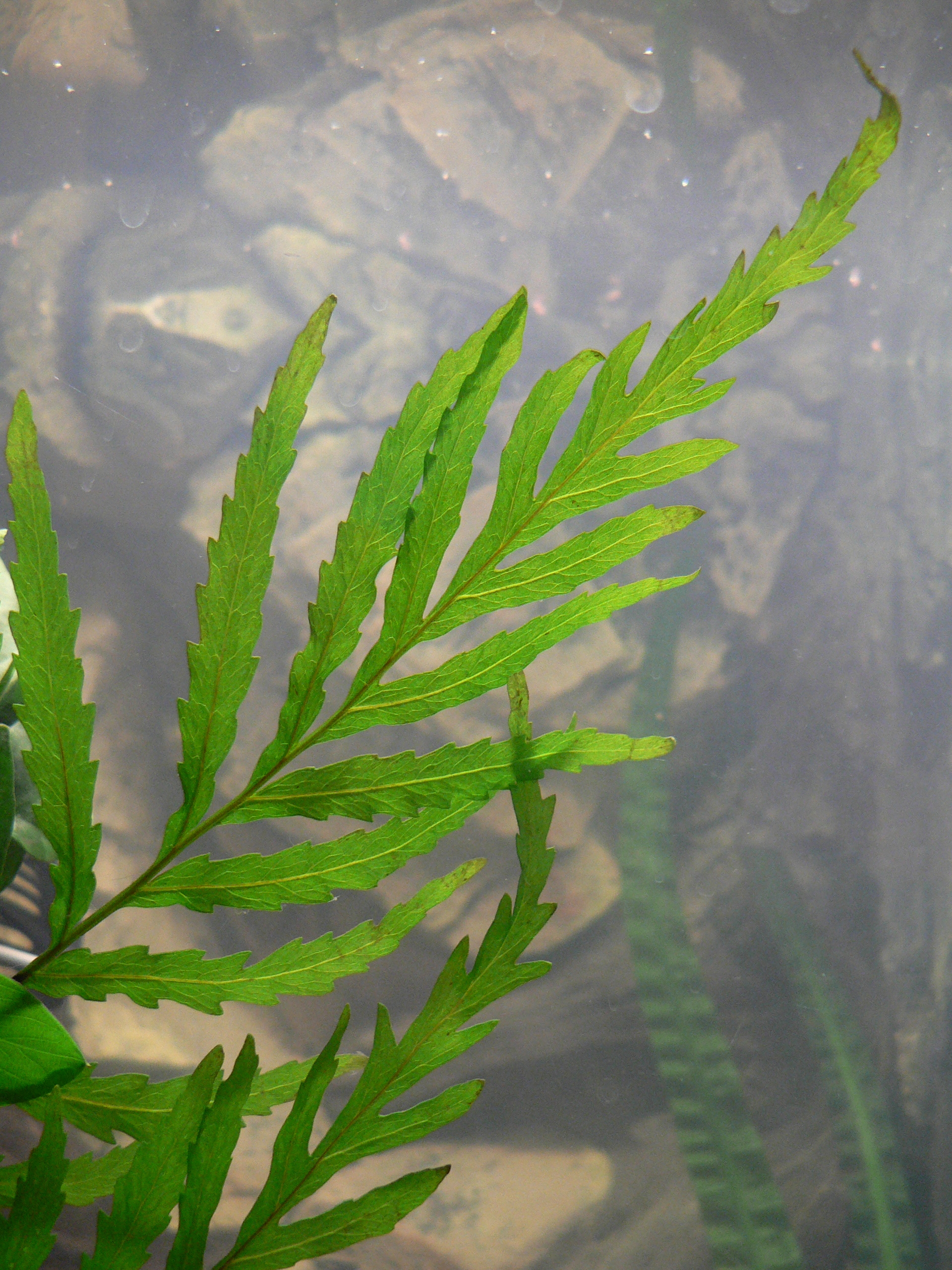
Bolbitis heudelotii
(African Water Fern)Difficulty: Medium
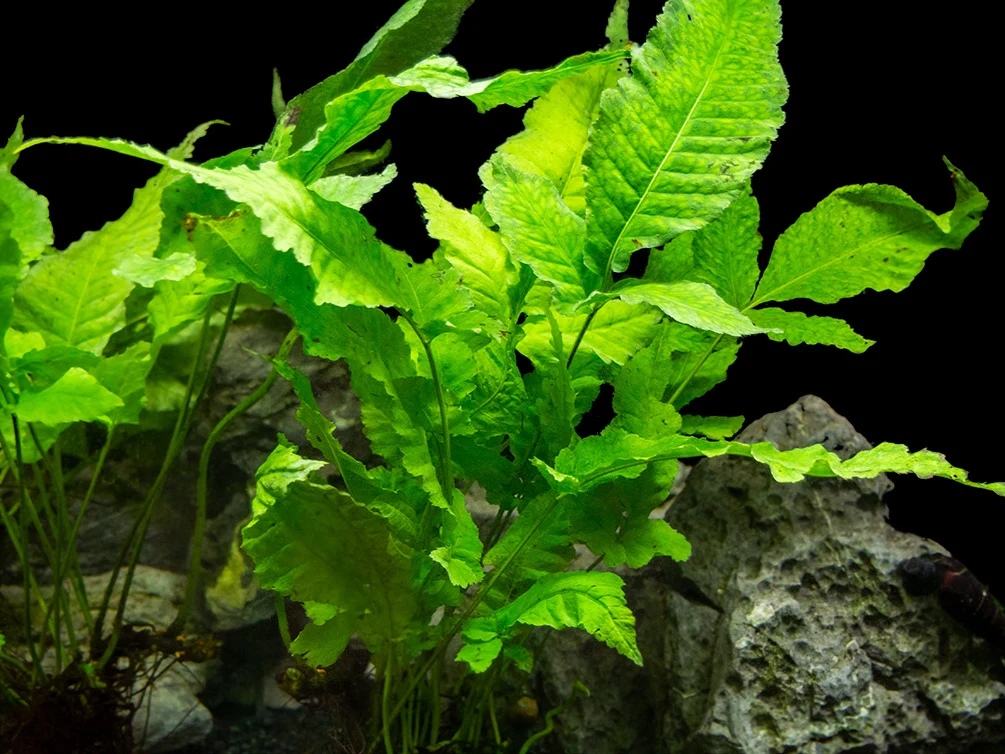
Bolbitis heteroclita
(El Niño Asian Water Fern)Difficulty: Easy
A slow-growing fern with textured, broad, dark green leaves. Like other water ferns, it must be bound to rocks or driftwood; burying its creeping rhizome in the substrate will cause it to rot.
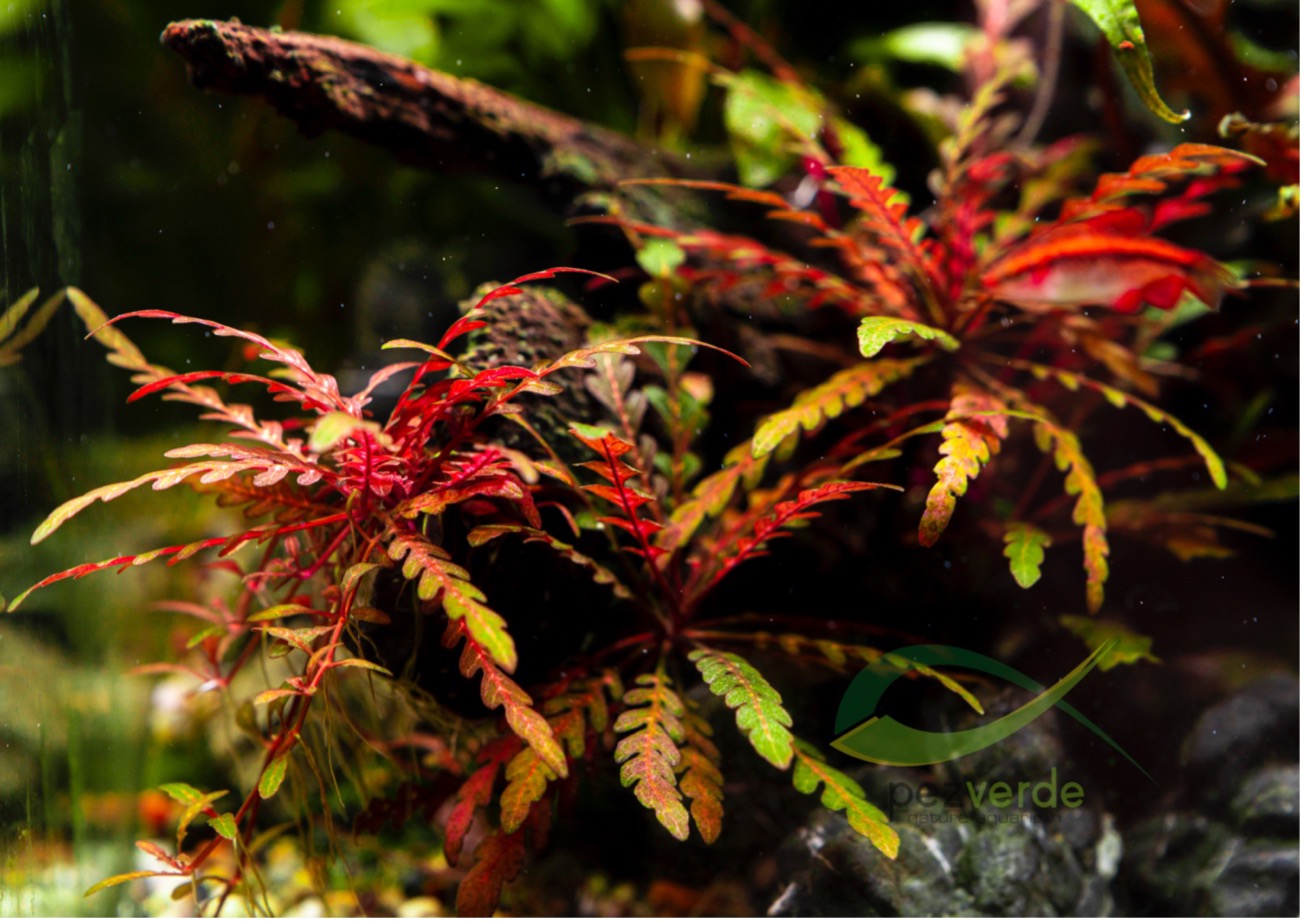
Hygrophila pinnatifida
(Fern Hygrophila)Difficulty: Medium
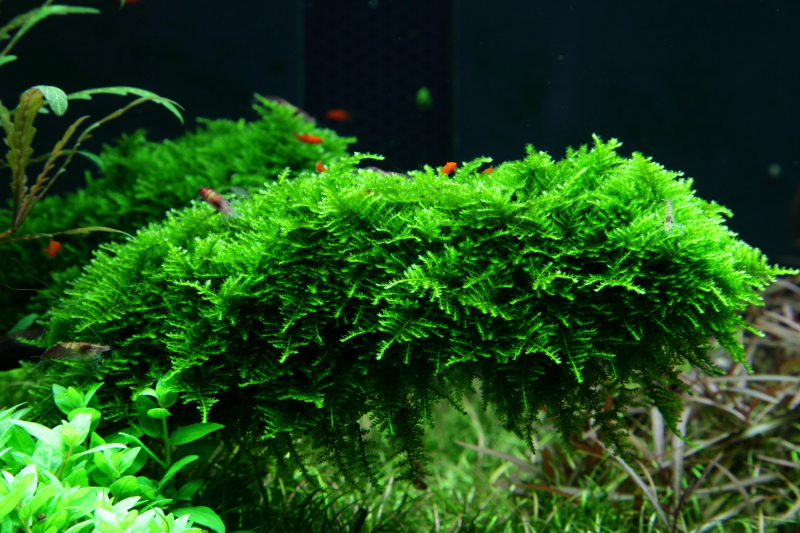
Vesicularia montagnei
(Christmas Moss)Difficulty: Easy
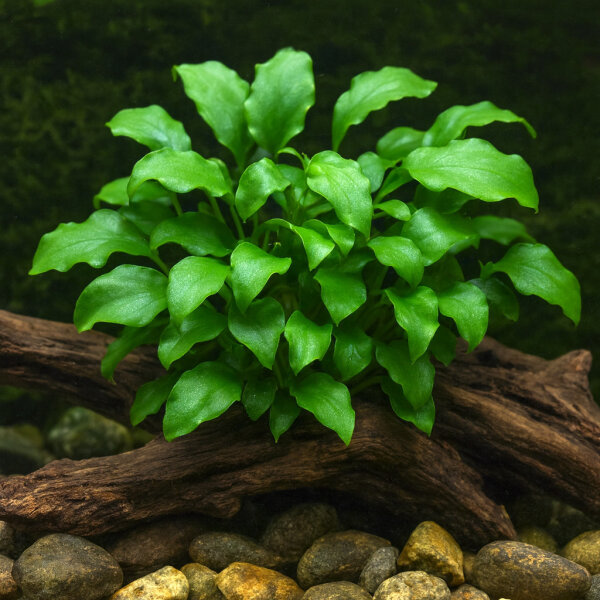
Schismatoglottis prietoi
(Schismatoglottis)Difficulty: Easy
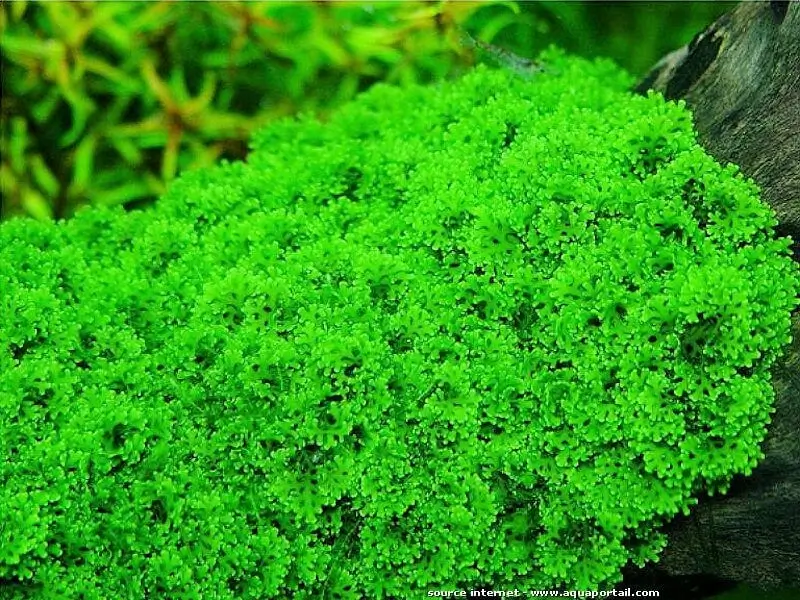
Riccardia chamedryfolia
(Mini Pellia / Coral Moss)Difficulty: Hard
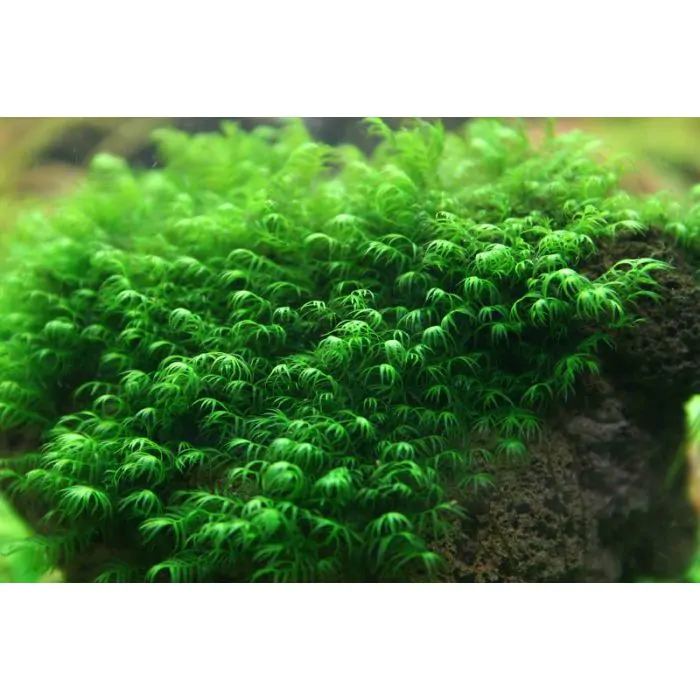
Fissidens fontanus
(Phoenix Moss)Difficulty: Medium
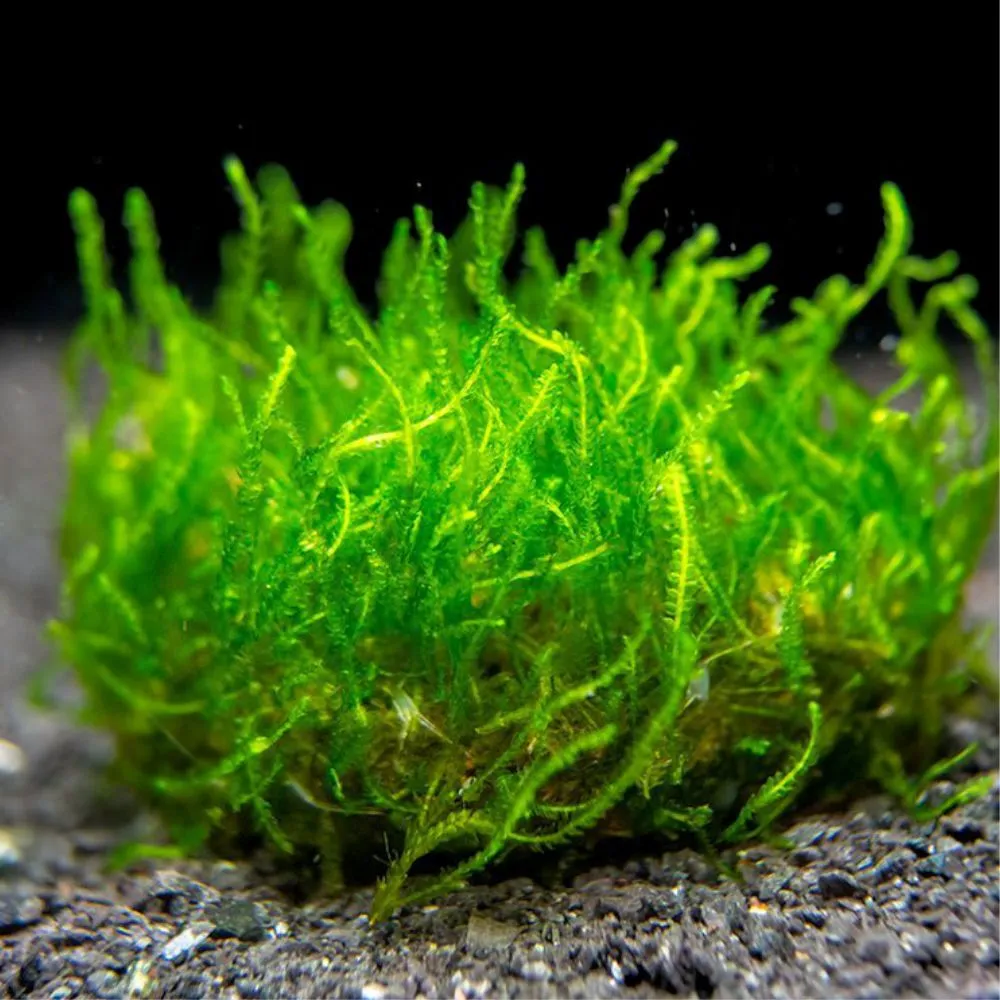
Taxiphyllum 'Flame'
(Flame Moss)Difficulty: Easy
Unlike most mosses, this grows spirally upward, creating a look reminiscent of green flames. Great for vertical wood pieces.
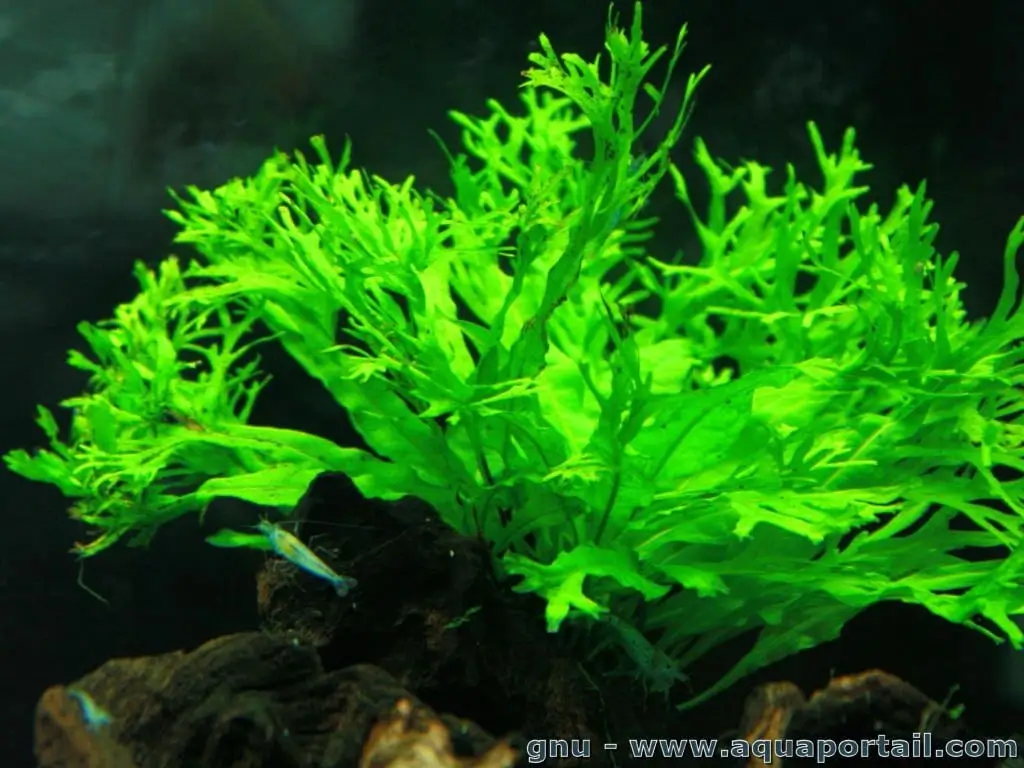
Microsorum pteropus 'Windelov'
(Windelov Java Fern)Difficulty: Easy
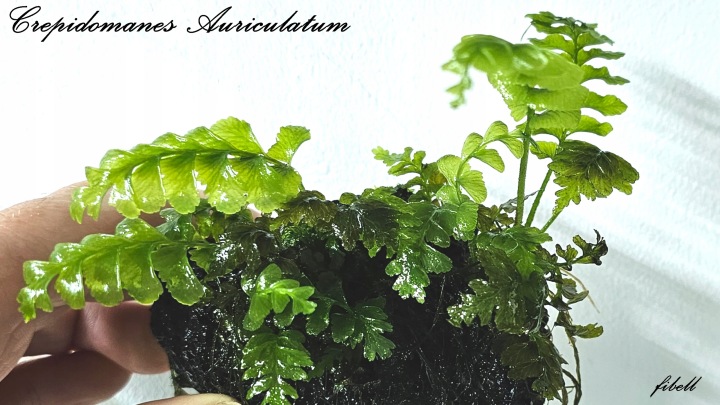
Crepidomanes auriculatum
(Asian Filmy Fern)Difficulty: Medium
A stunning, translucent fern that stays very small. It loves high flow and very clean water.
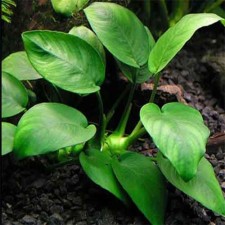
Anubias barteri var. barteri
(Standard Anubias)Difficulty: Easy
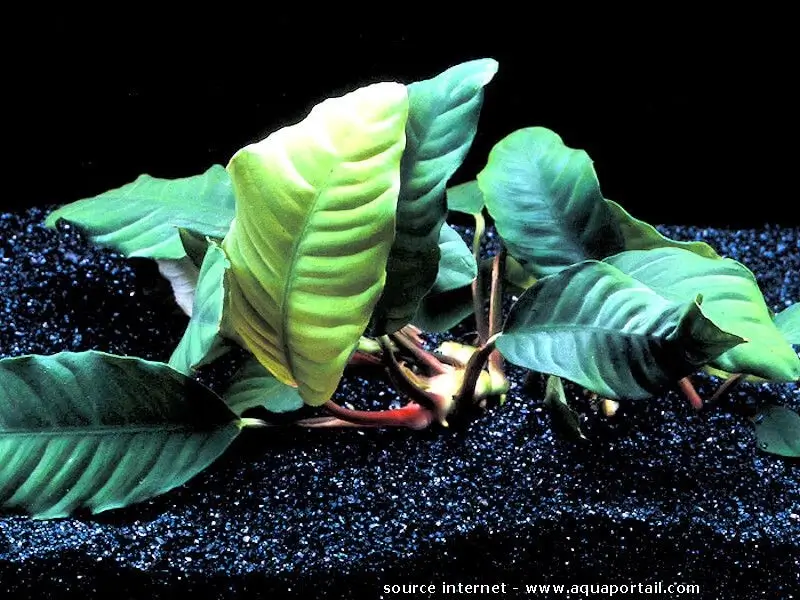
Anubias barteri var. 'Coffeefolia'
(Coffee Leaf Anubias)Difficulty: Easy
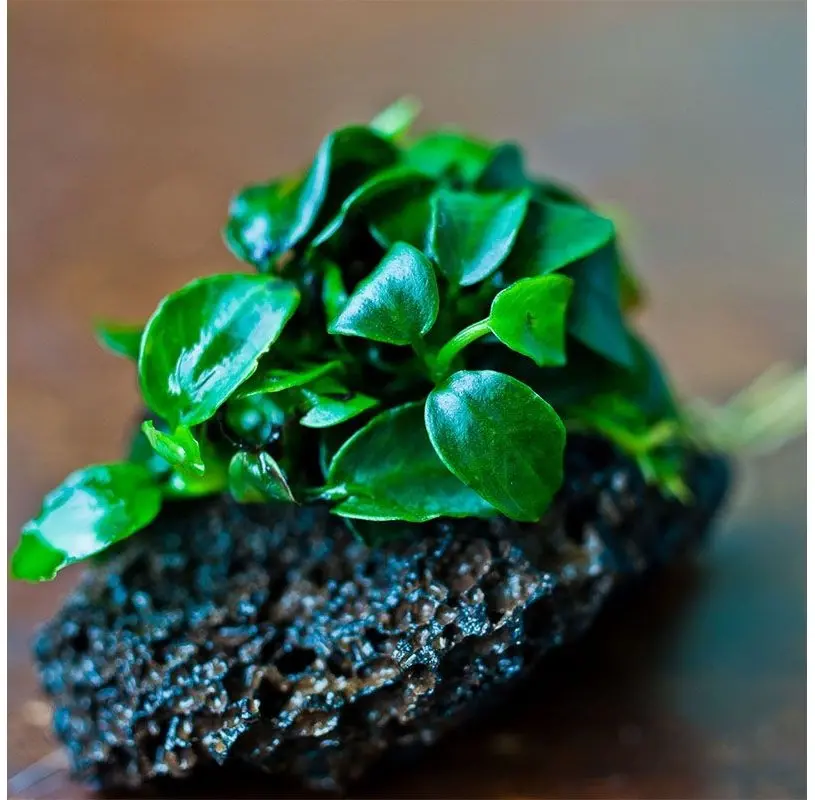
Anubias barteri var. nana 'Petite'
(Nana Petite)Difficulty: Easy
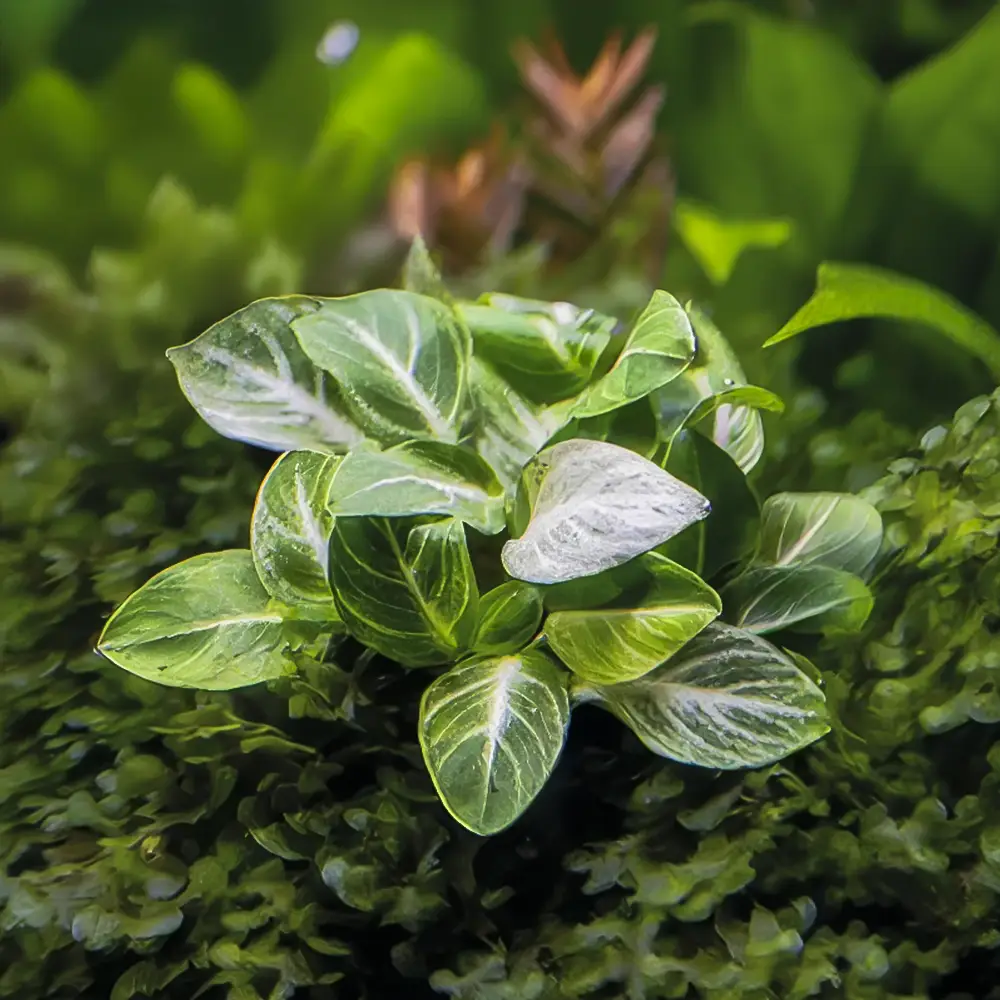
Anubias barteri var. nana 'Stardust'
(Nana Stardust)Difficulty: Easy
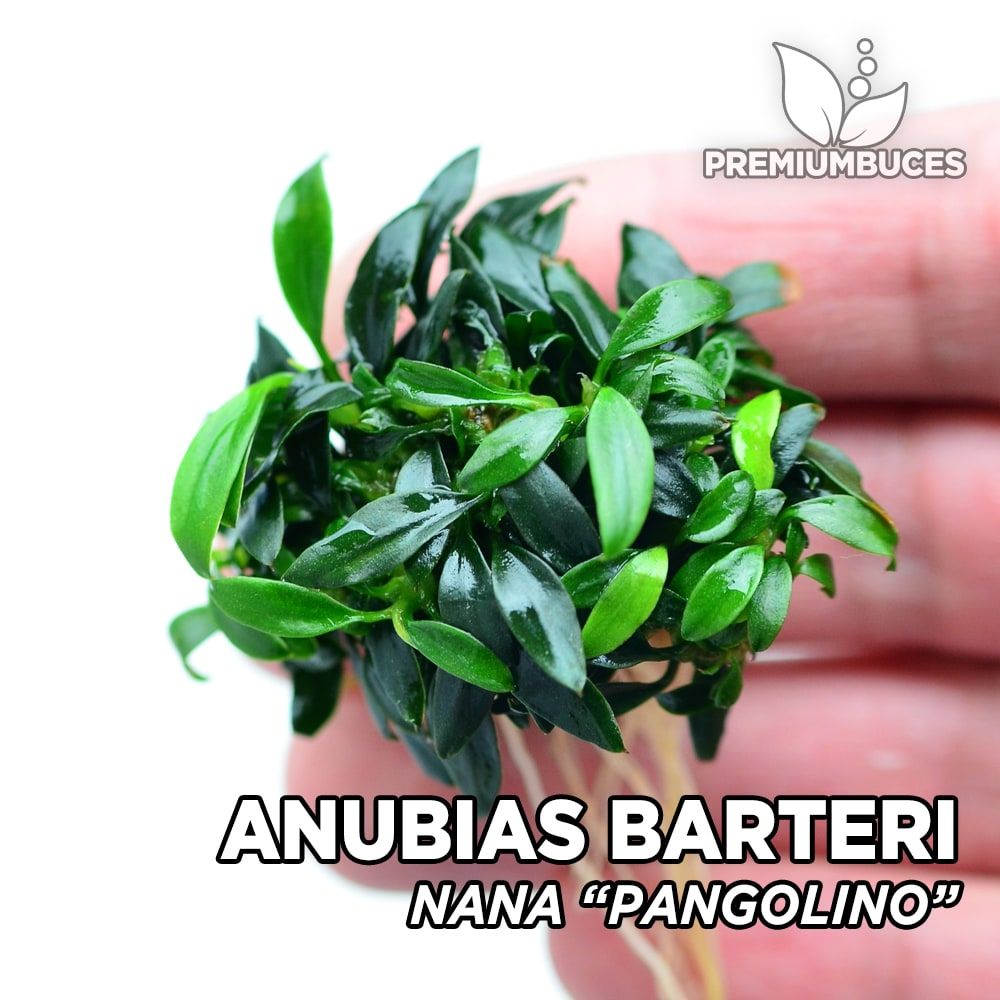
Anubias barteri var. nana 'Pangolino'
(Pangolino Anubias)Difficulty: Harder
The smallest Anubias in the world. Leaves are tiny and scale-like, resembling a Pangolin's back. Extremely slow grower.
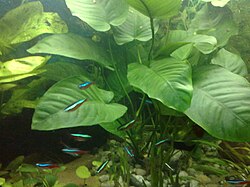
Anubias barteri var. caladiifolia
(Heart-shaped Anubias)Difficulty: Easy
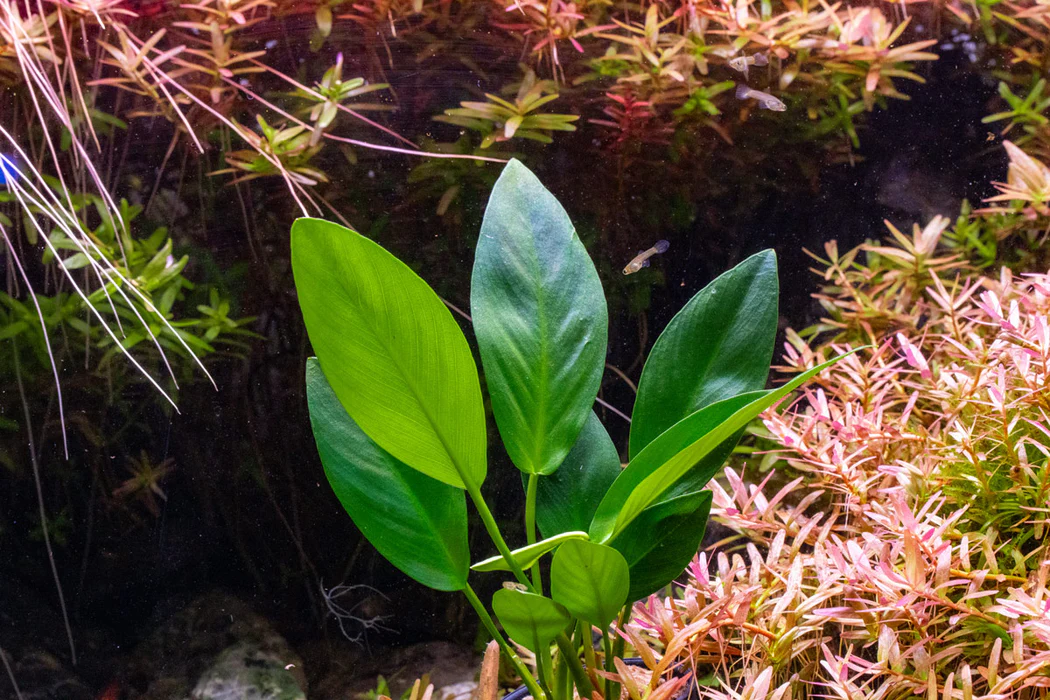
Anubias hastifolia
(Arrowhead Anubias)Difficulty: Easy
Named for its distinct arrowhead-shaped leaves. One of the larger species, great for big tanks.
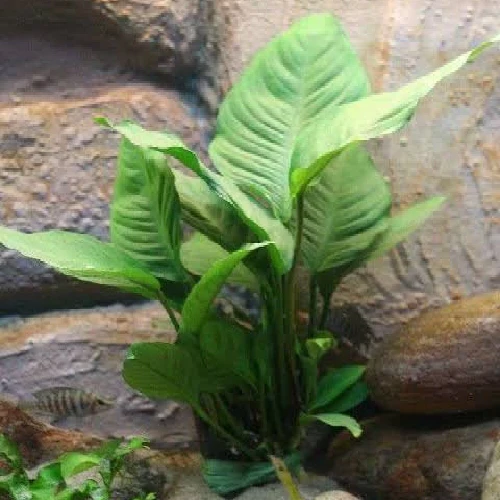
Anubias heterophylla
(Lance-leaf Anubias)Difficulty: Easy
Features long, slender leaves with slightly wavy margins. Very leather-like and tough.
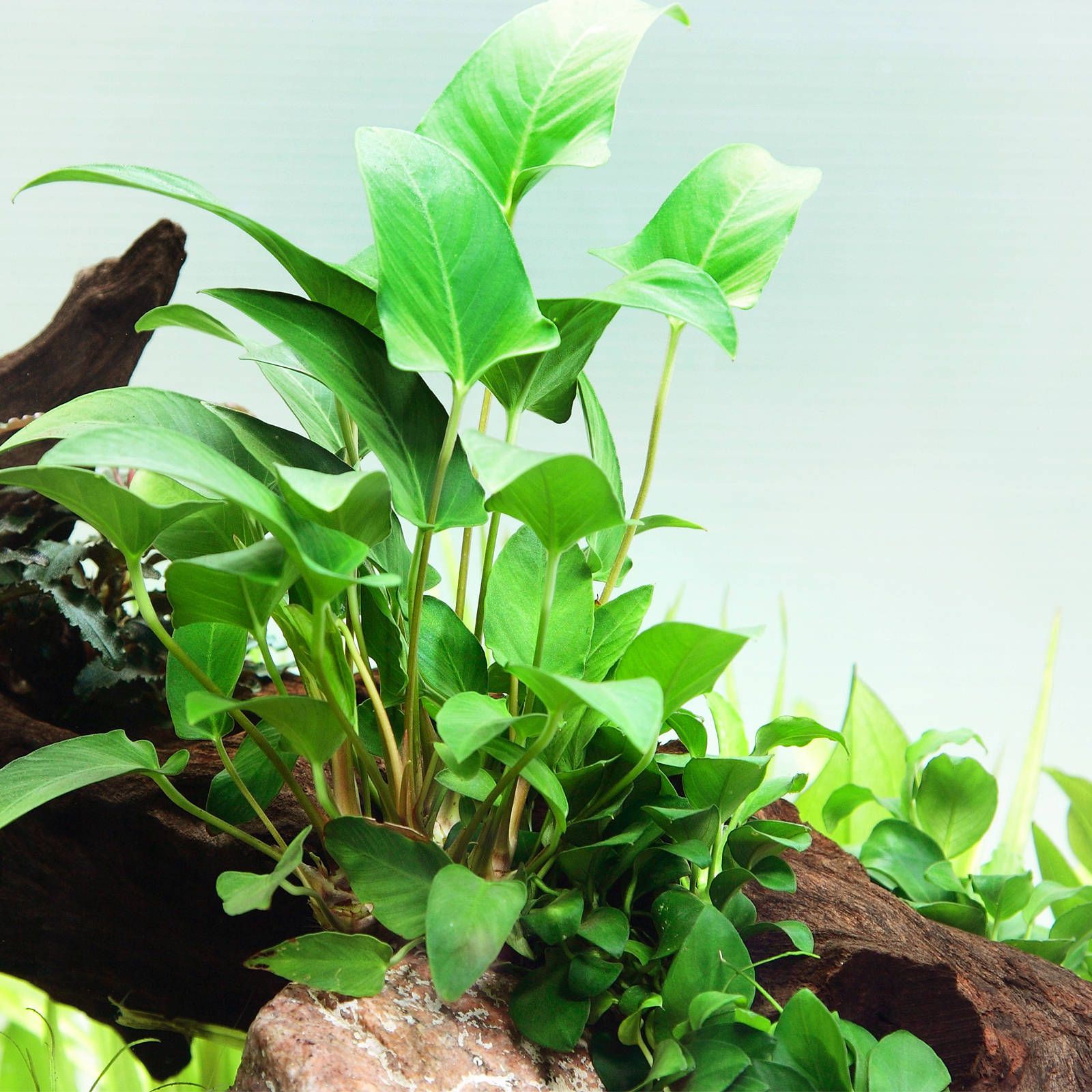
Anubias gracilis
(Slender Anubias)Difficulty: Easy
Recognized by its triangular, tri-lobed leaves. Looks very elegant when attached to tall driftwood.
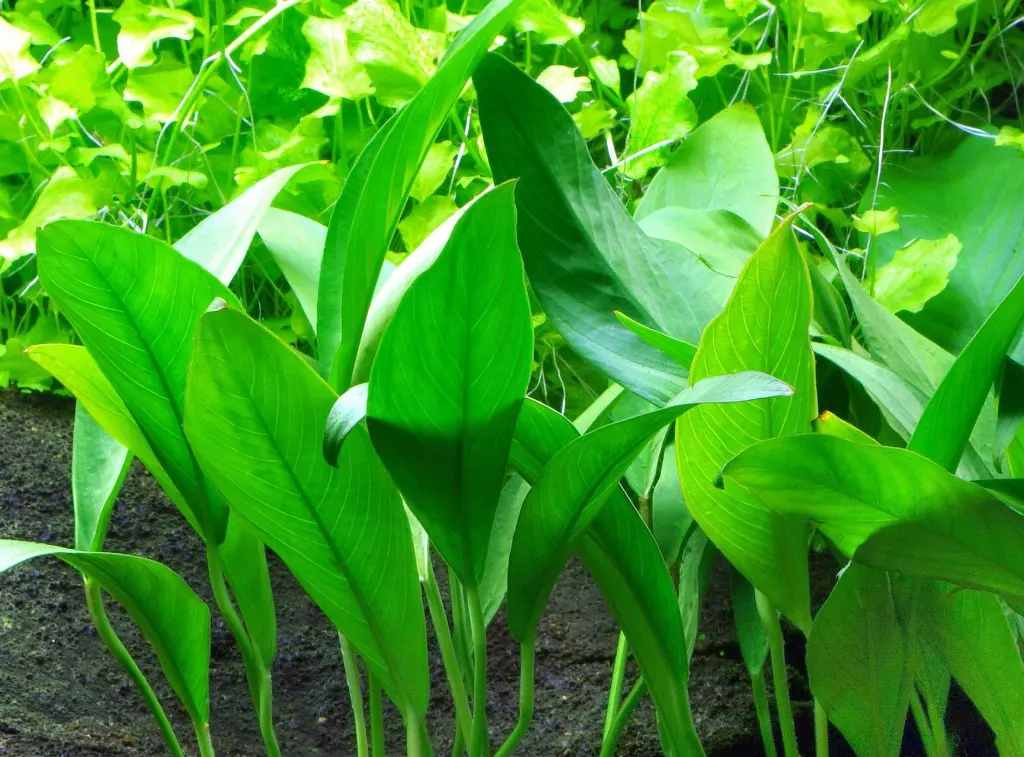
Anubias barteri var. angustifolia
(Narrow Leaf Anubias)Difficulty: Easy
A narrow-leafed variety that stays relatively slim; perfect for filling tight vertical gaps.
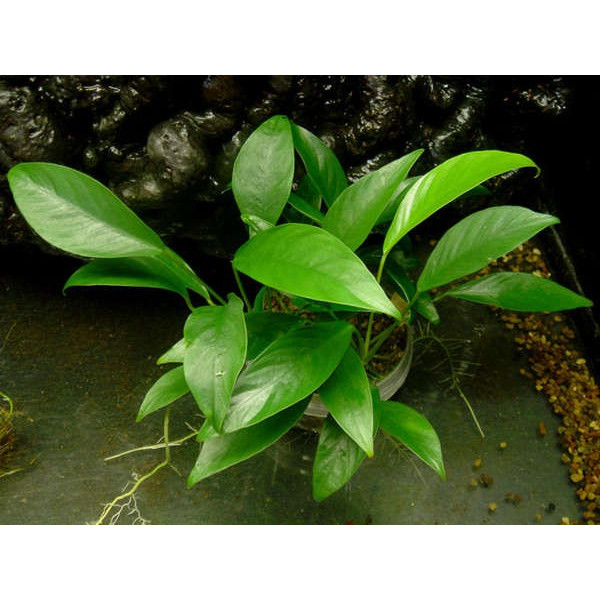
Anubias afzelii
(Sword-leaf Anubias)Difficulty: Easy
A slow grower with upright, sword-shaped leaves. Can reach impressive heights over time.
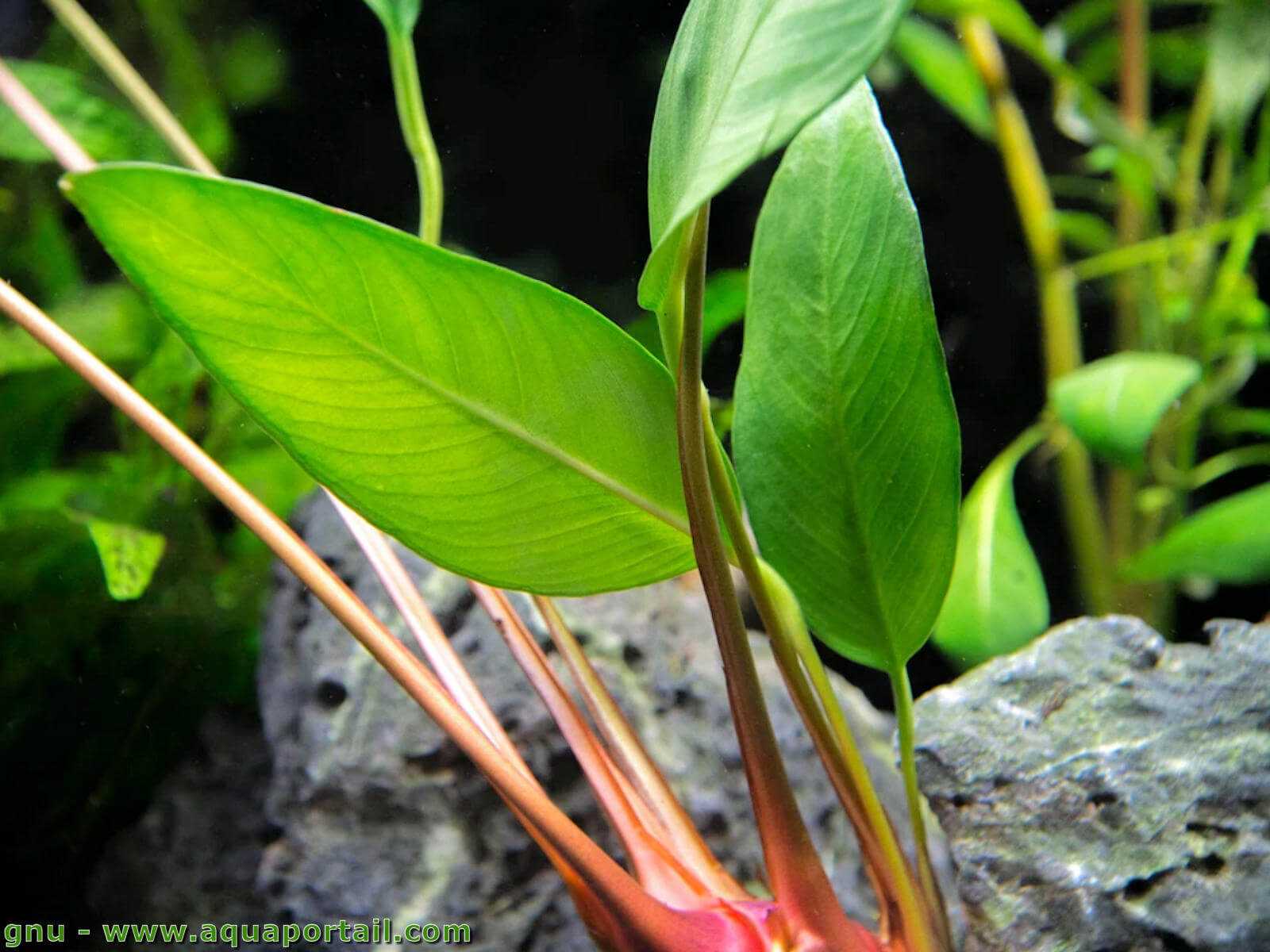
Anubias 'Frazeri'
(Frazer's Anubias)Difficulty: Easy
A robust and relatively tall hybrid variety (A. barteri x A. heterophylla) with elegant, long, lance-shaped leaves. Highly durable and ideal for vertical hardscape placement in the midground of larger setups.
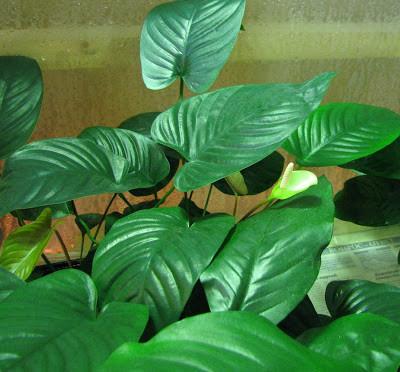
Anubias gigantea
(Giant Anubias)Difficulty: Easy
The largest species in the genus. Requires a massive amount of space to reach its full potential.
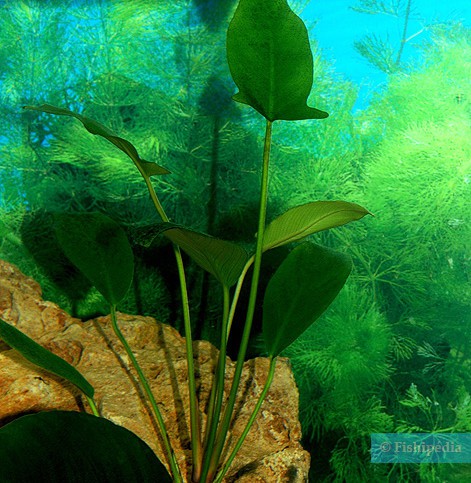
Anubias gilletii
(Gillet's Anubias)Difficulty: Easy
Features "ear-like" lobes at the base of the leaves; very hardy and tolerates extremely low light.
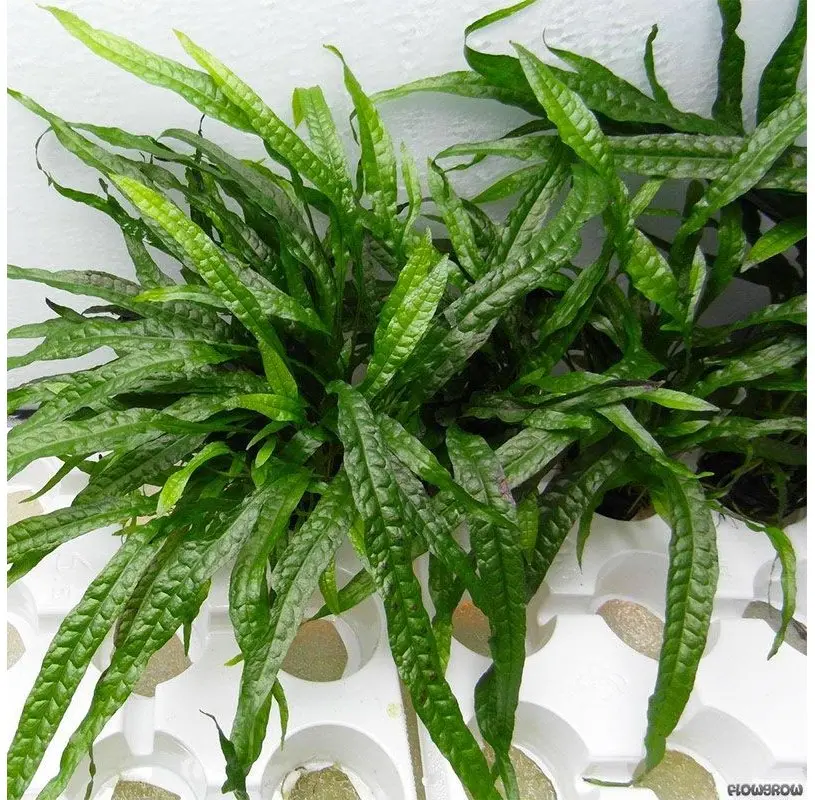
Microsorum pteropus 'Narrow'
(Narrow Leaf Java Fern)Difficulty: Easy
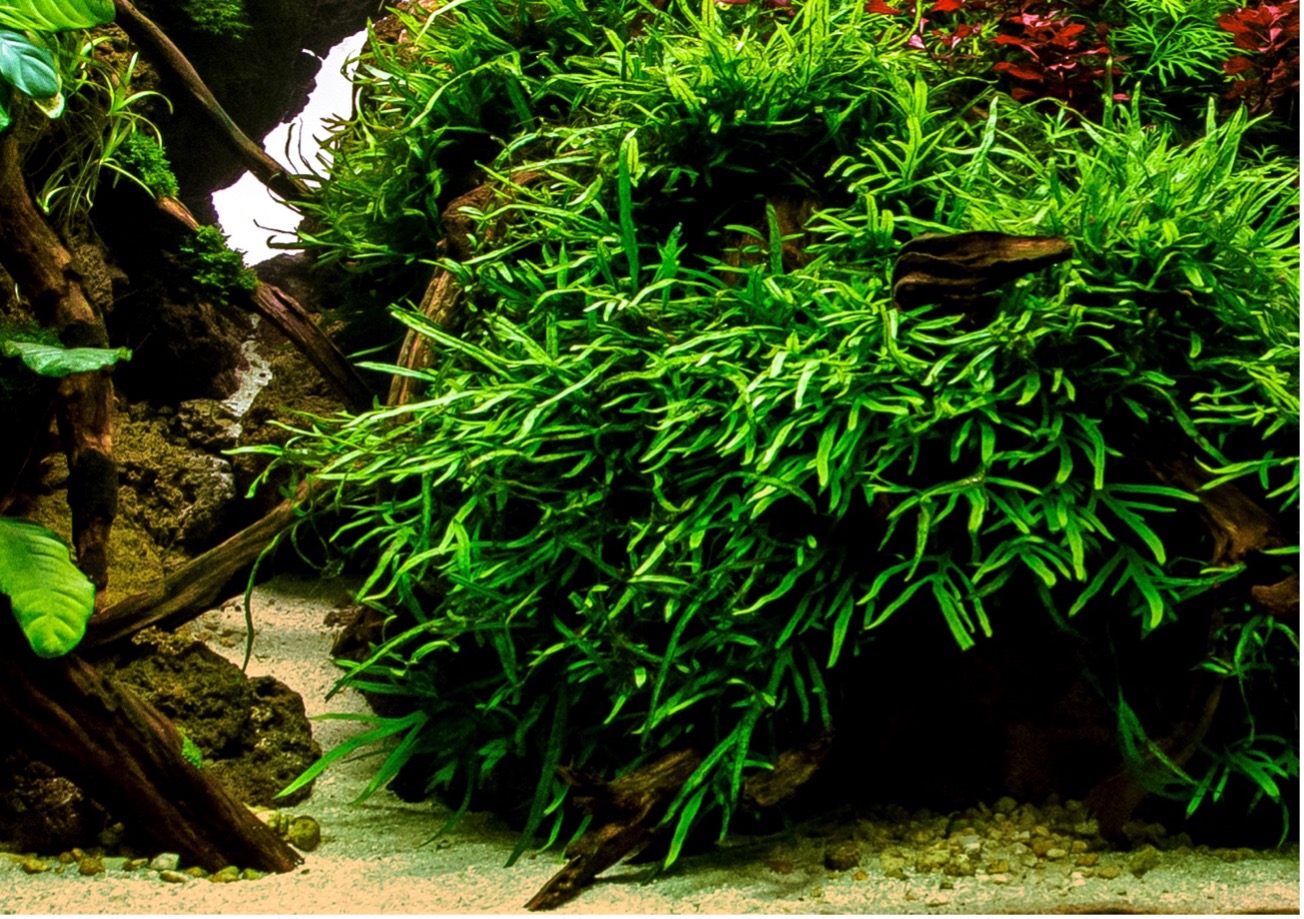
Microsorum pteropus 'Trident'
(Trident Java Fern)Difficulty: Easy
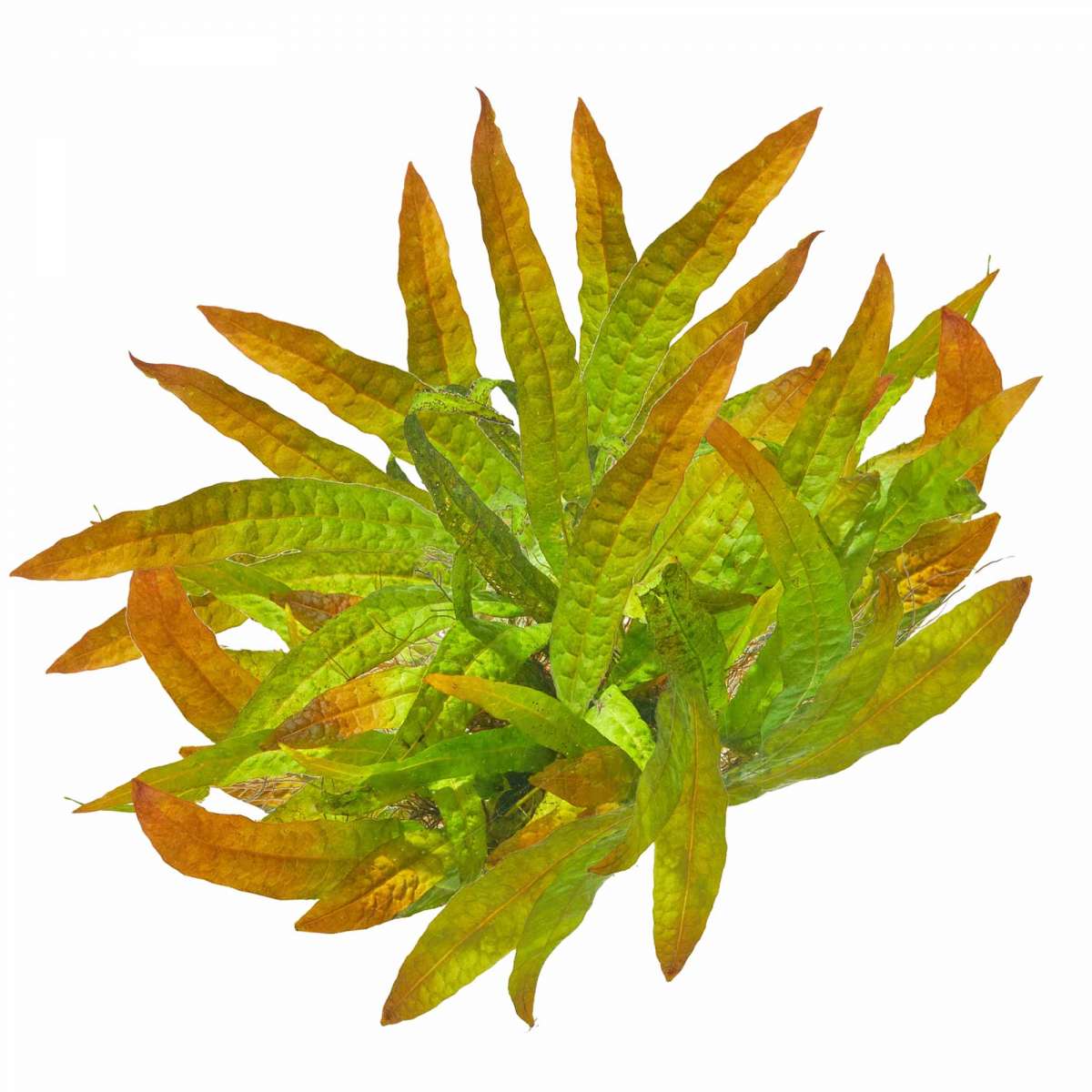
Microsorum pteropus 'Orange Narrow'
(Orange Narrow Java Fern)Difficulty: Easy
A unique variant where new leaf growth often displays a distinct bronze or orange hue before turning green.
Riparian Staples & Houseplants
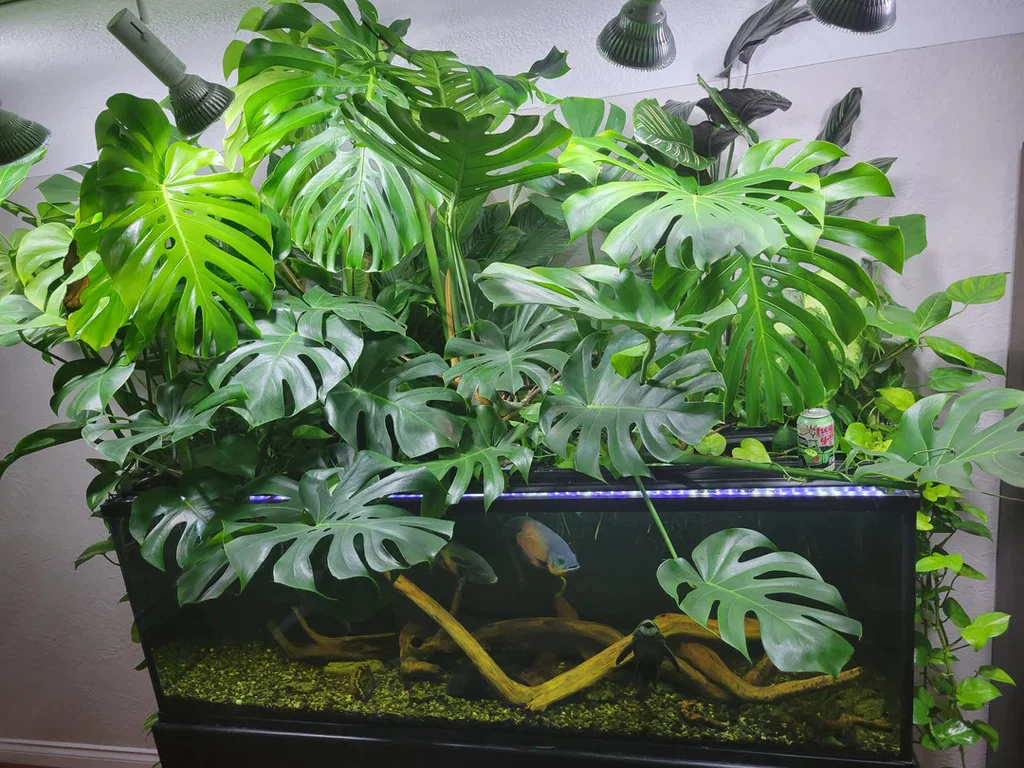
Monstera deliciosa
(Swiss Cheese Plant)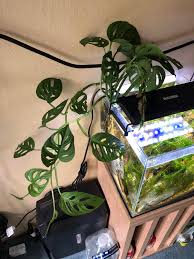
Monstera adansonii
(Swiss Cheese Vine)Faster growing and lighter than the Deliciosa. Its trailing vines look incredible hanging over the sides of a tank.
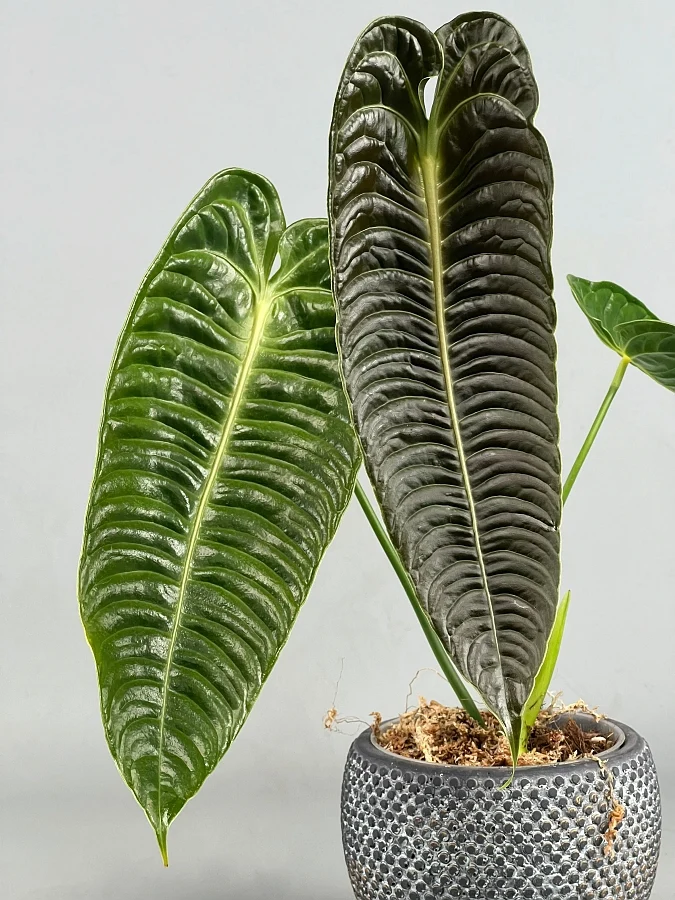
Anthurium veitchii
(King Anthurium)An epiphytic aroid native to Colombian rainforests, featuring long, heavily corrugated, metallic-green leaves. It adapts well to bare-root water growth, but the crown must remain elevated and completely dry above the waterline to avoid rot.
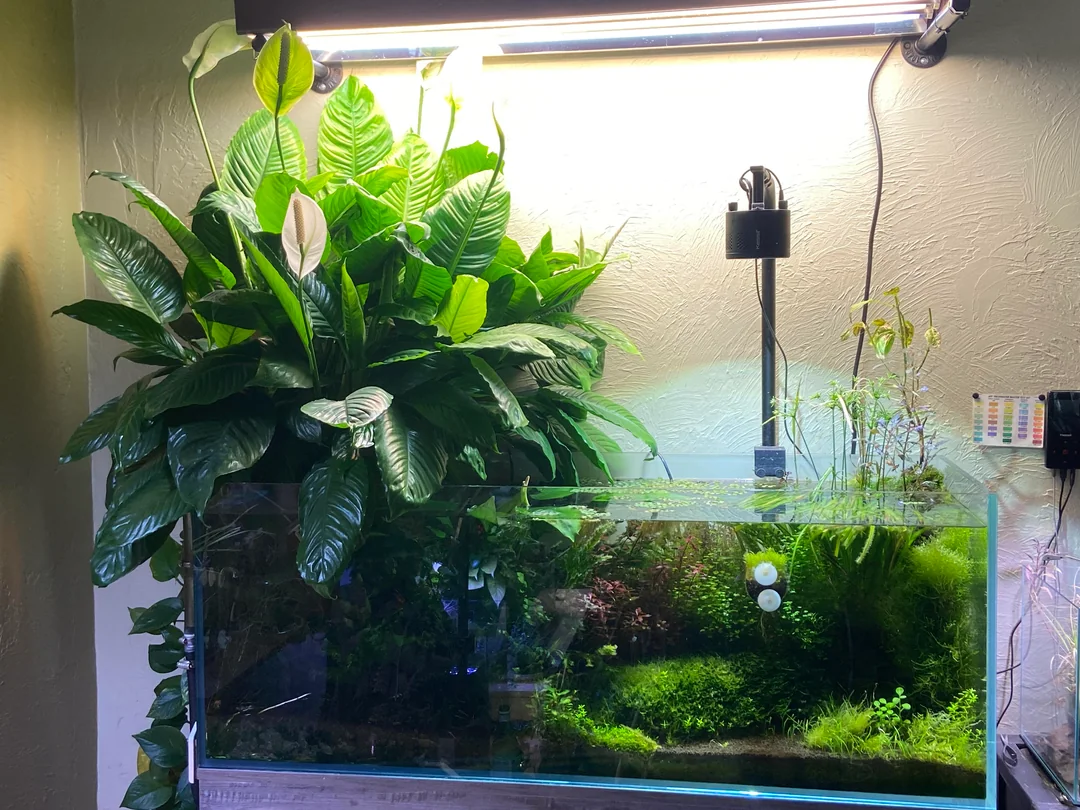
Spathiphyllum wallisii
(Peace Lily)Highly valued for its elegant white blooms and dark green foliage. It is an excellent nitrate sponge that thrives with its root system fully submerged in aquarium water.
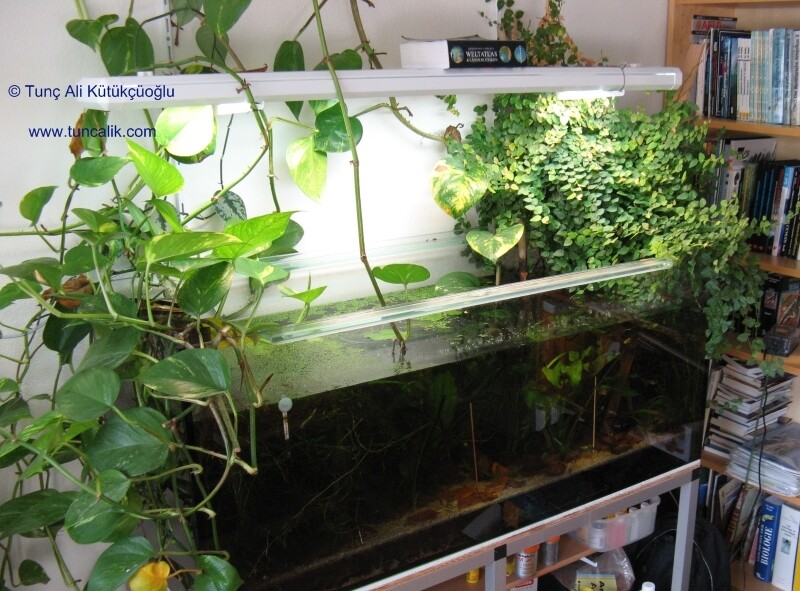
Epipremnum aureum
(Pothos / Devil's Ivy)The classic riparium plant. It grows rapidly, producing long trailing vines and massive root networks that effectively filter the water and provide refuge for fish.
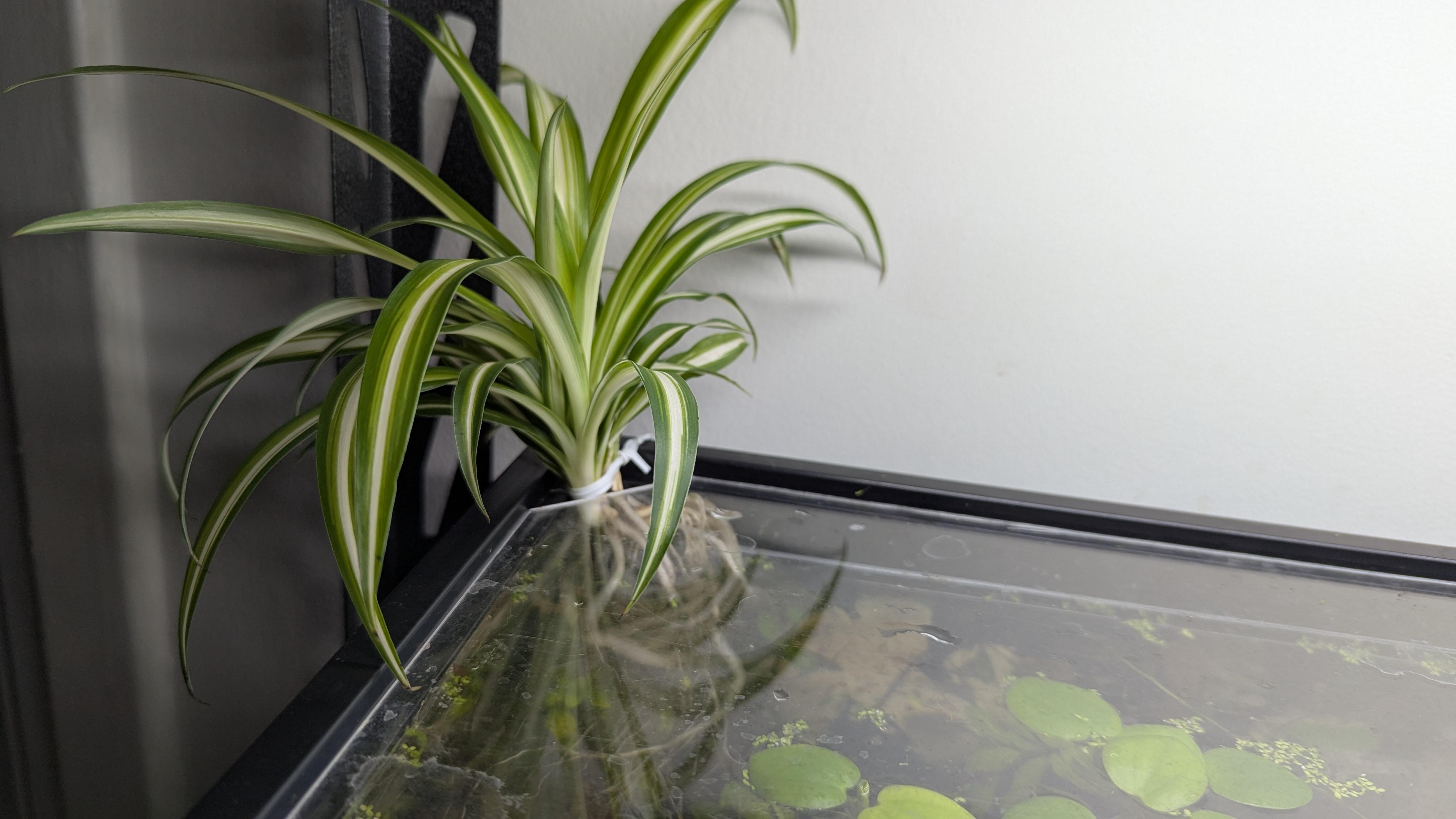
Chlorophytum comosum
(Spider Plant)Highly adaptable and easy to grow. It produces hanging offshoots (plantlets) that can be rooted directly in water, where they quickly develop a thick network of robust, white roots.
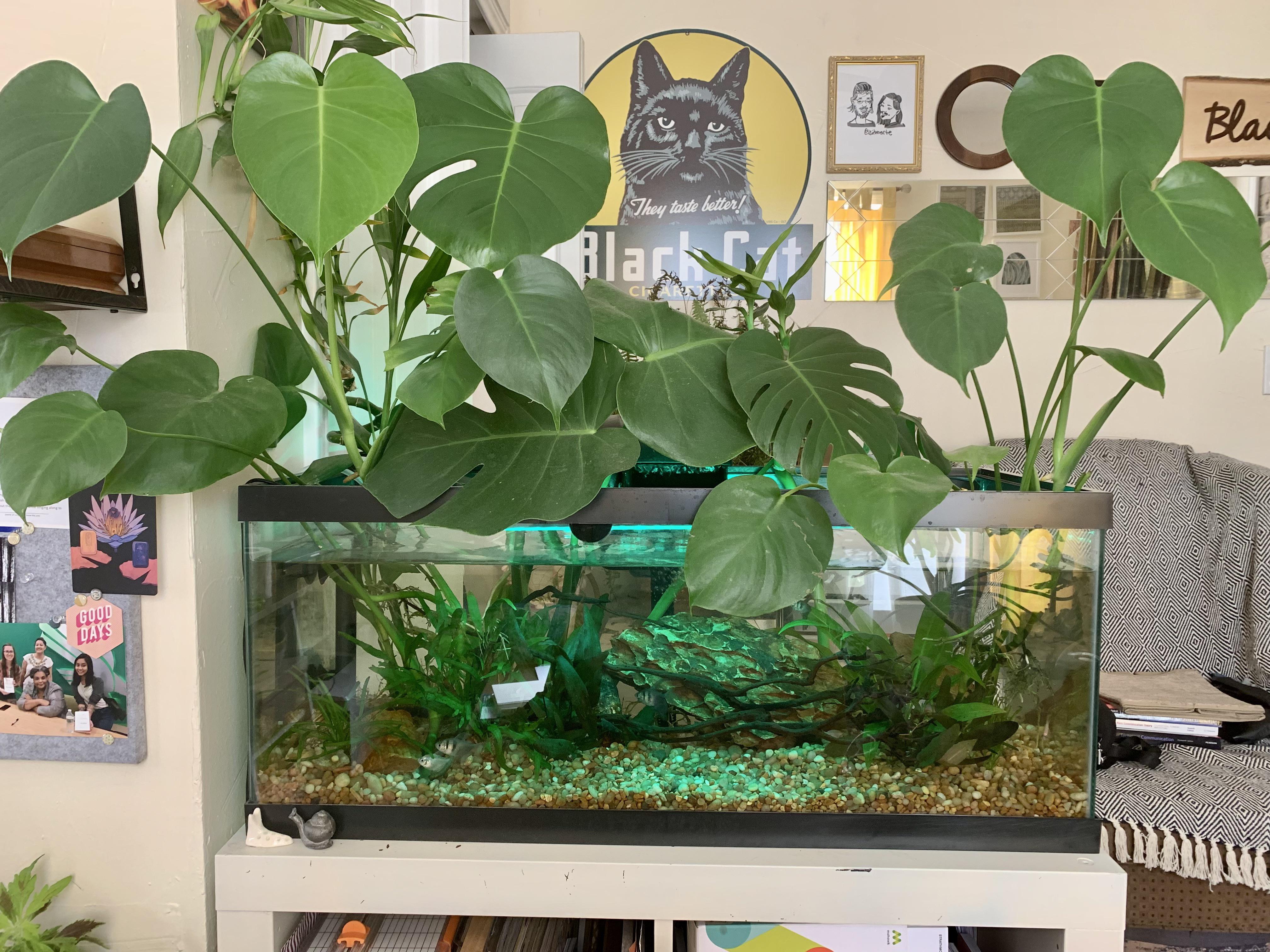
Philodendron hederaceum
(Heartleaf Philodendron)A classic, robust trailing vine with glossy, heart-shaped leaves. It is incredibly tolerant of low-light conditions and cascades gracefully over the outer walls of the aquarium.
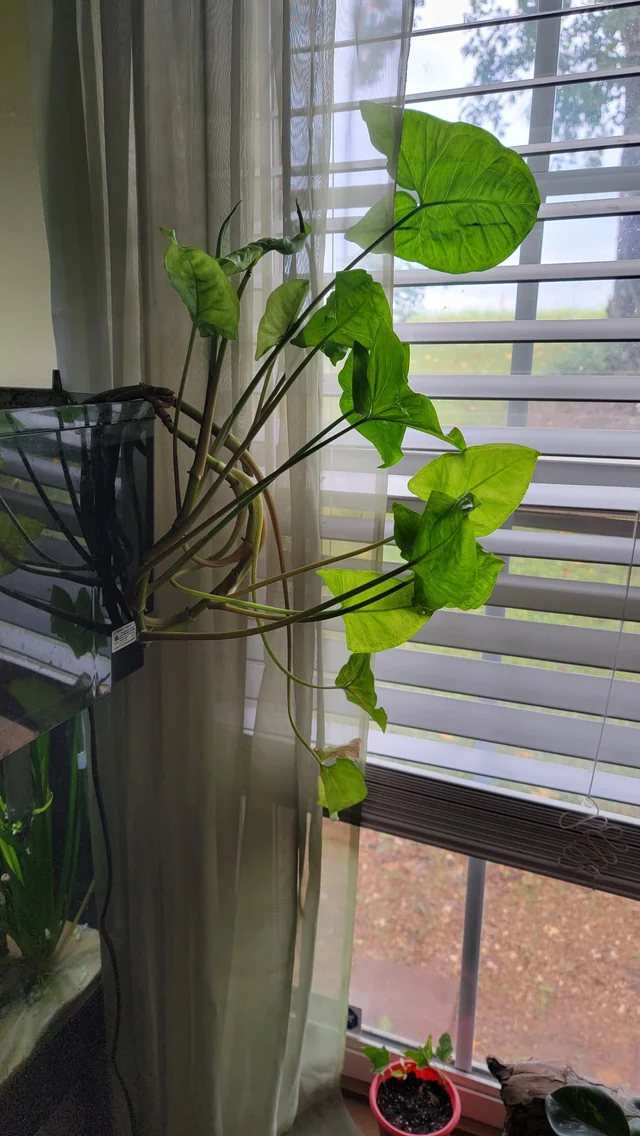
Syngonium podophyllum
(Arrowhead Vine)Extremely hardy. It transitions to water growth very quickly and develops a massive, white root system that fish love to hide in.
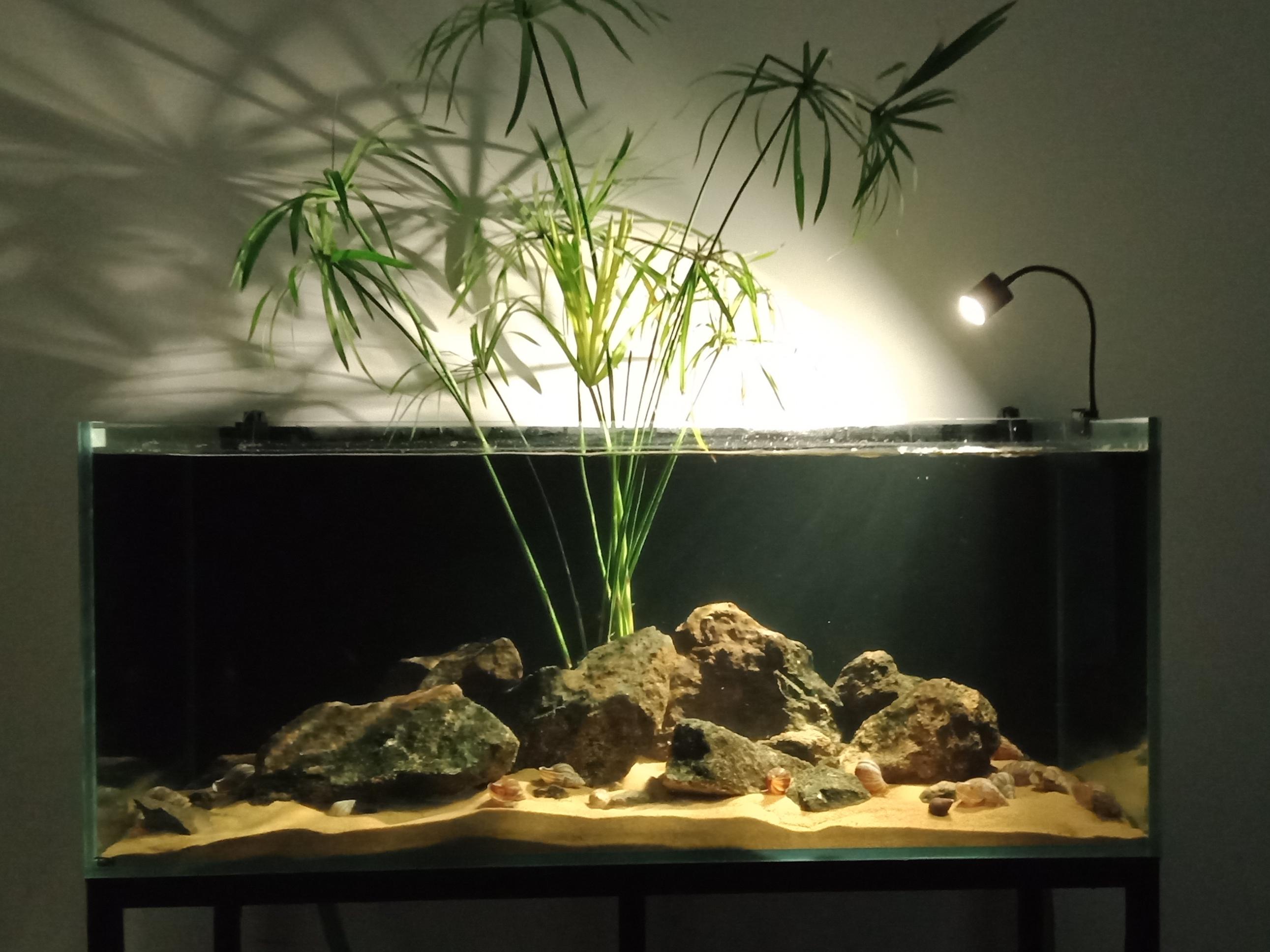
Cyperus alternifolius
(Umbrella Papyrus)A classic "bog plant." It grows tall and provides a prehistoric look. Excellent at removing nitrates from the water.
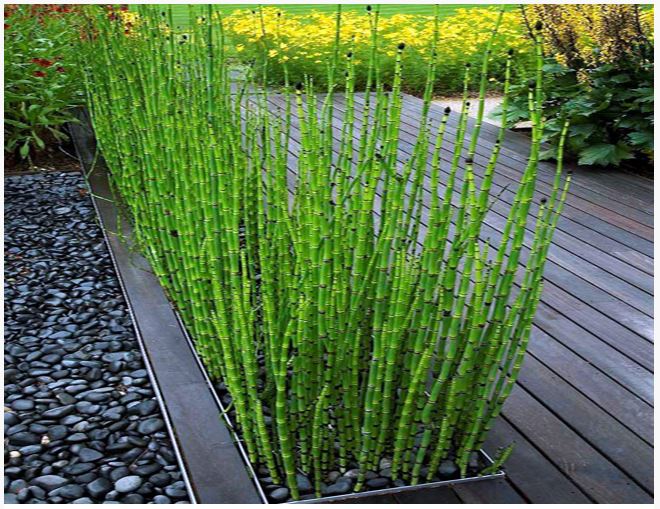
Equisetum hyemale
(Rough Horsetail / Scouring Rush)A striking, prehistoric bog plant with segmented, hollow green stems. Excellent at consuming nitrates, it provides a highly structured, architectural look to riparian setups.
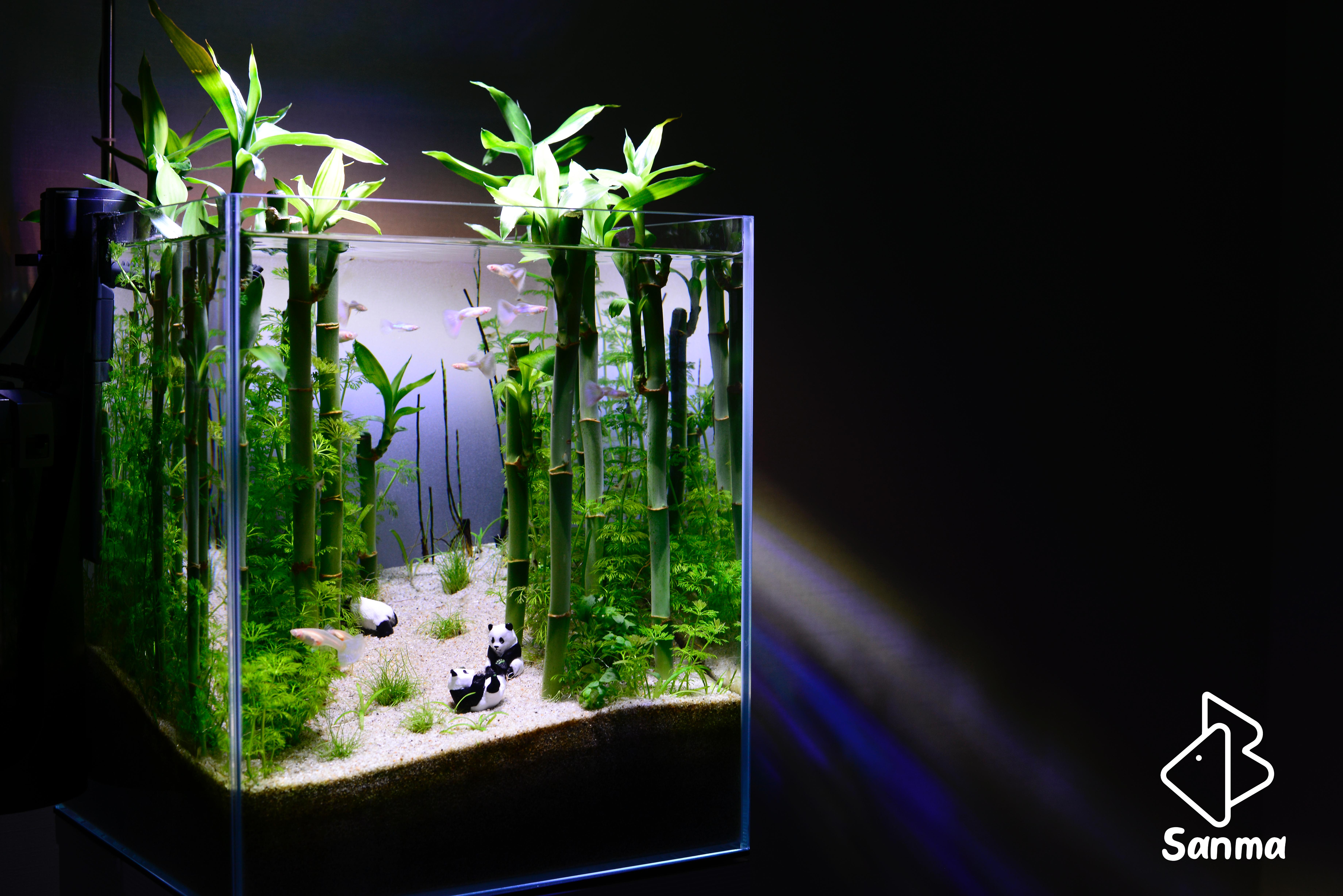
Dracaena sanderiana
(Lucky Bamboo)A popular choice that adds a clean, upright structure. It can grow with its stalks partially submerged, though the leaves must stay above the water to avoid rot.
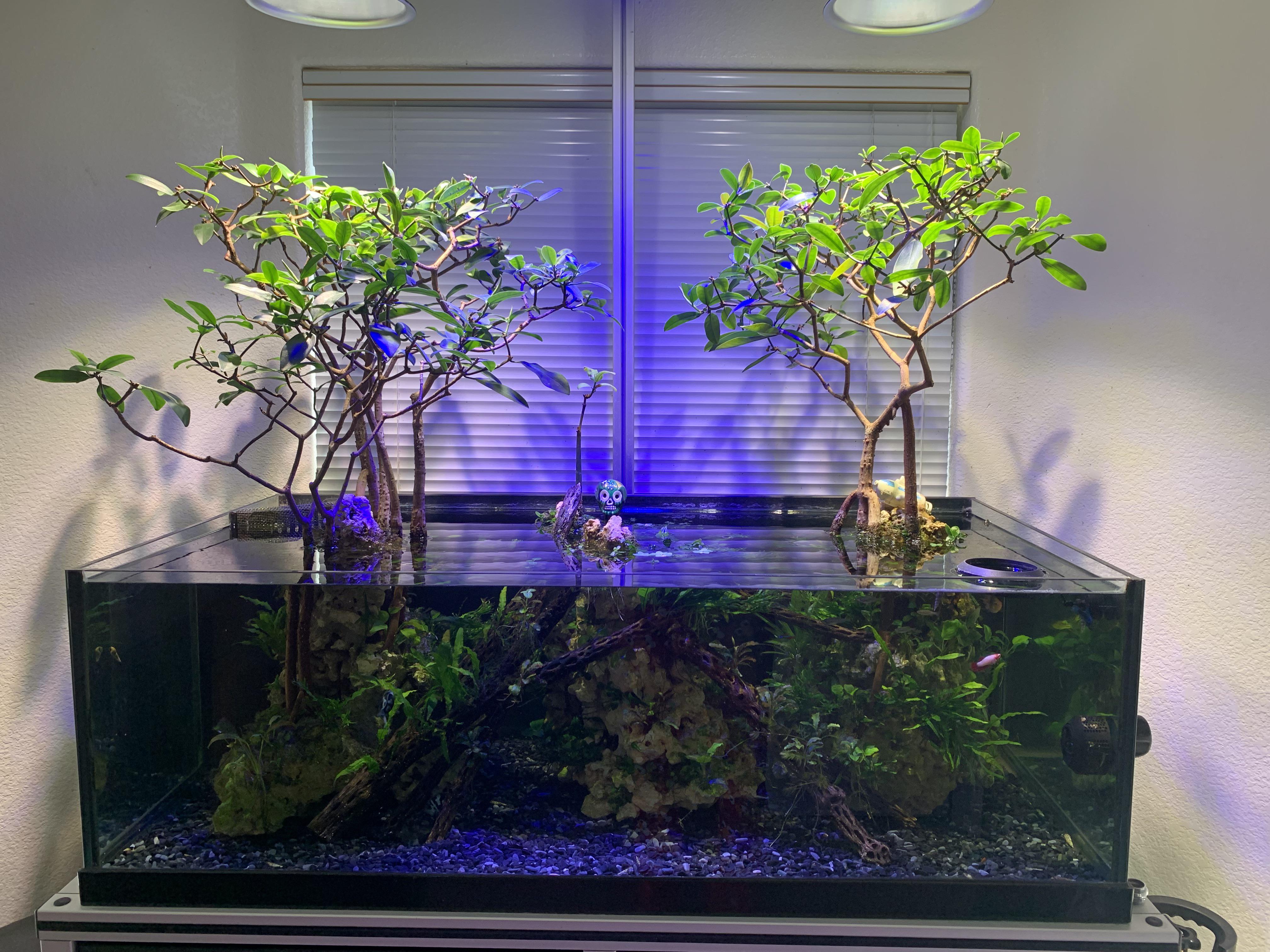
Rhizophora mangle
(Red Mangrove)Can be grown in fresh or saltwater. Its "prop roots" create a naturalistic coastal look. Slow growing but very rewarding.
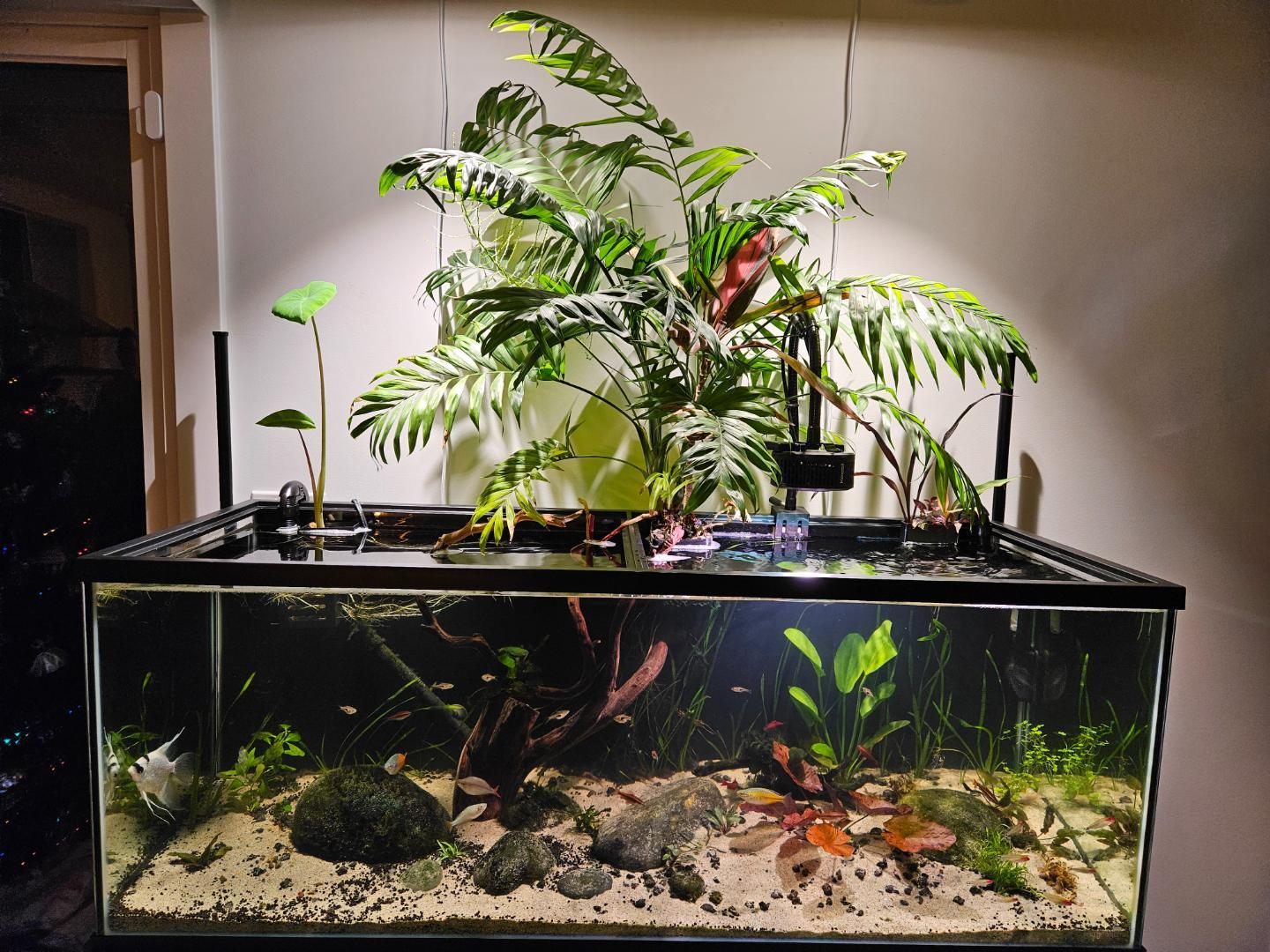
Chamaedorea elegans
(Parlor Palm / Bella Palm)An elegant, slow-growing palm that brings a tropical, feathery texture to the tank's rim. It adapts well to water roots as long as the crown is kept dry.
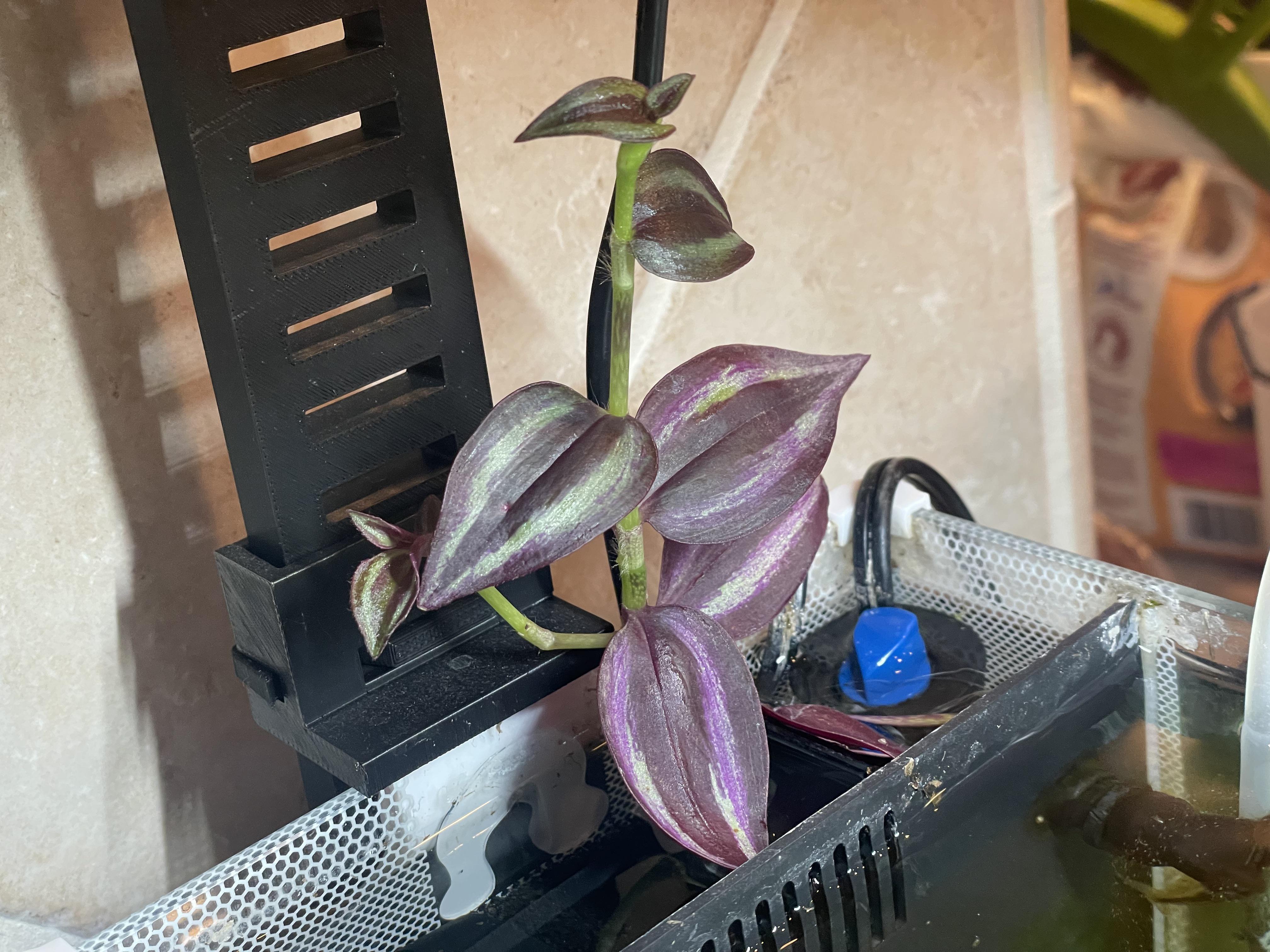
Tradescantia zebrina
(Inch Plant / Tradescantia)Striking purple-and-silver variegated leaves that cascade beautifully. It roots exceptionally fast from simple stem cuttings placed directly in the aquarium.
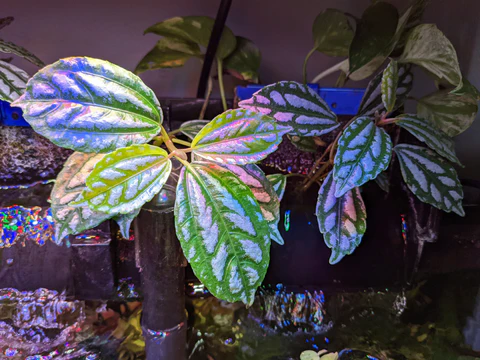
Pilea cadierei
(Aluminum Plant)Features unique green leaves decorated with raised, metallic-silver patterns. It thrives in high-humidity setups and grows well when its roots are submerged.
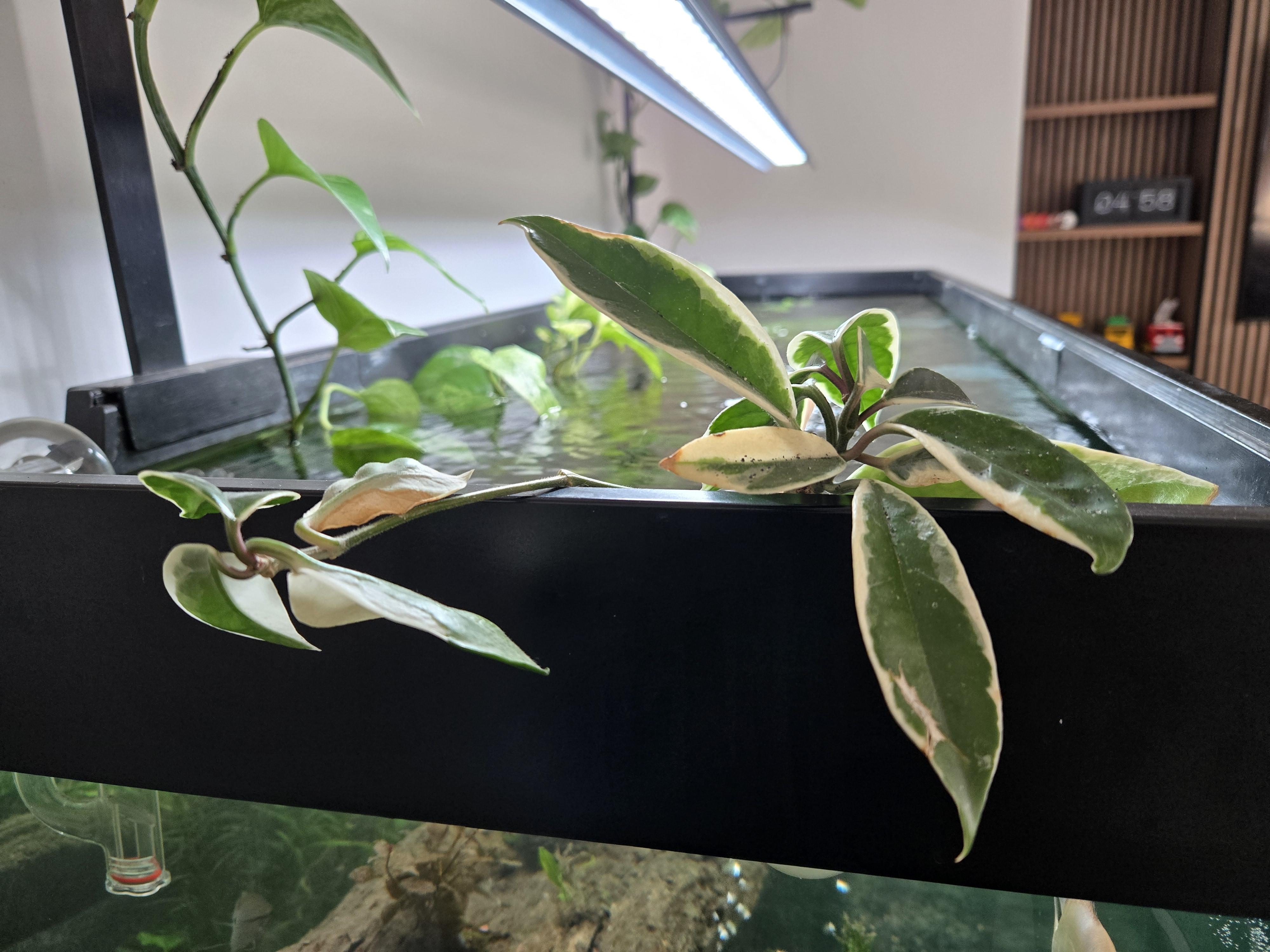
Hoya carnosa
(Hoya / Wax Plant)A semi-succulent trailing vine with thick, waxy leaves. It prefers a slightly drier crown, but its roots can adapt to clean, oxygen-rich aquarium water.
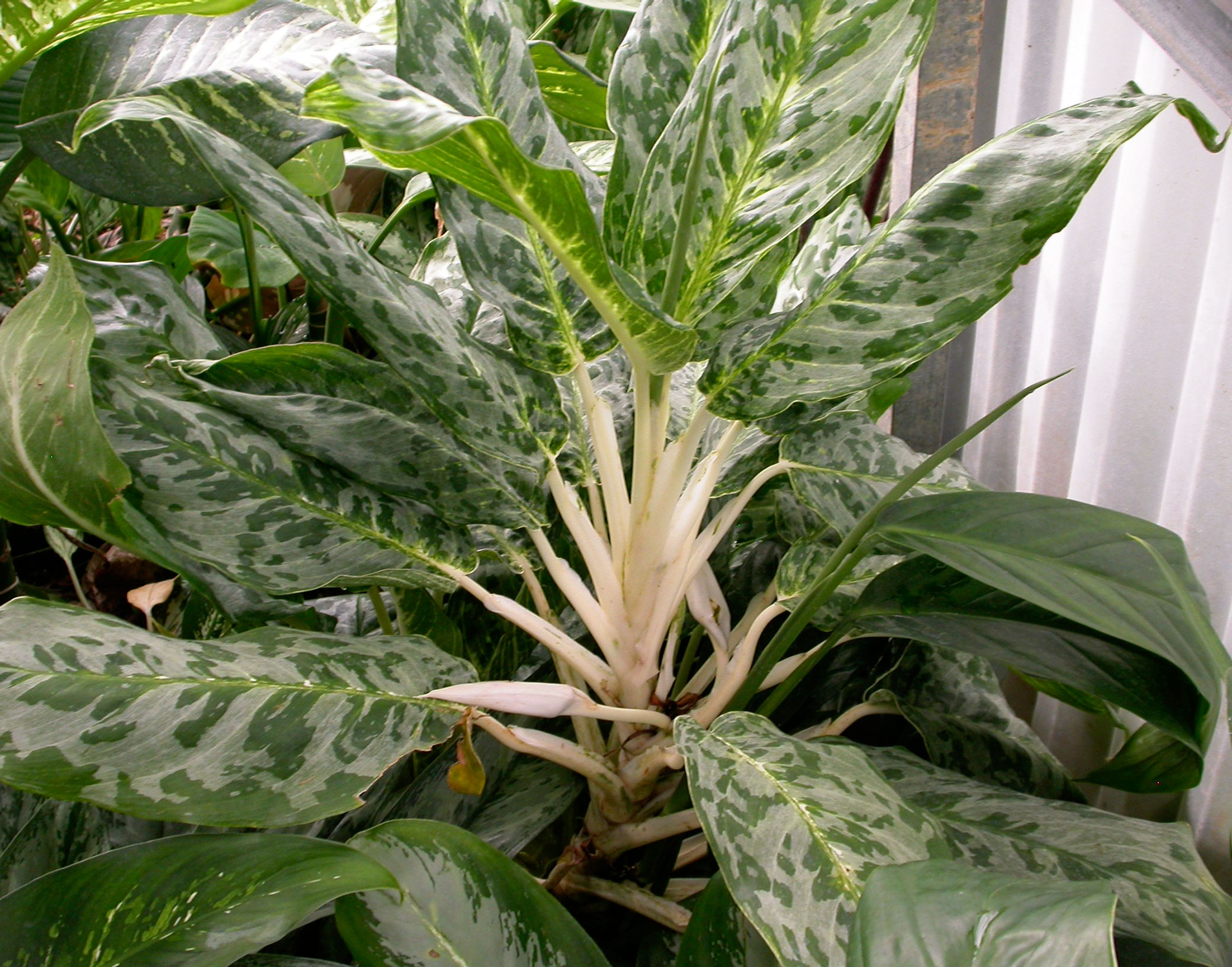
Aglaonema spp.
(Chinese Evergreen)An incredibly hardy plant with beautifully variegated foliage. It tolerates very low light conditions and develops a highly robust root system in water.
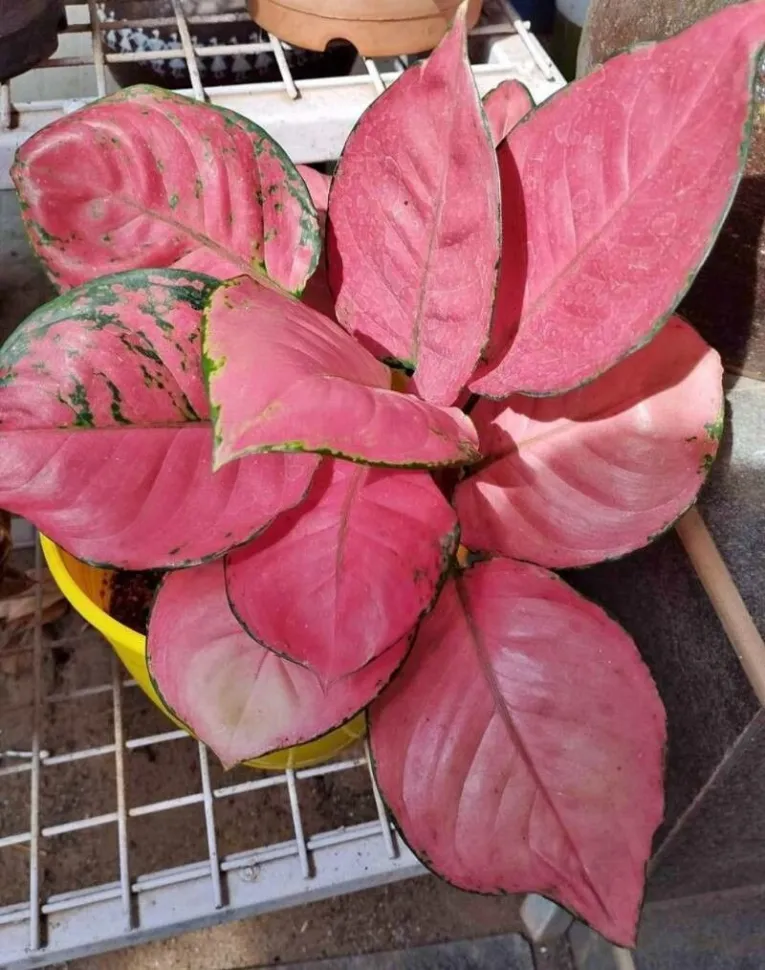
Aglaonema spp. pink
(Pink/Red Chinese Evergreen)A colorful variation of the standard Aglaonema featuring bright pink or red patterns. It is highly resilient and adds a striking splash of warm color.
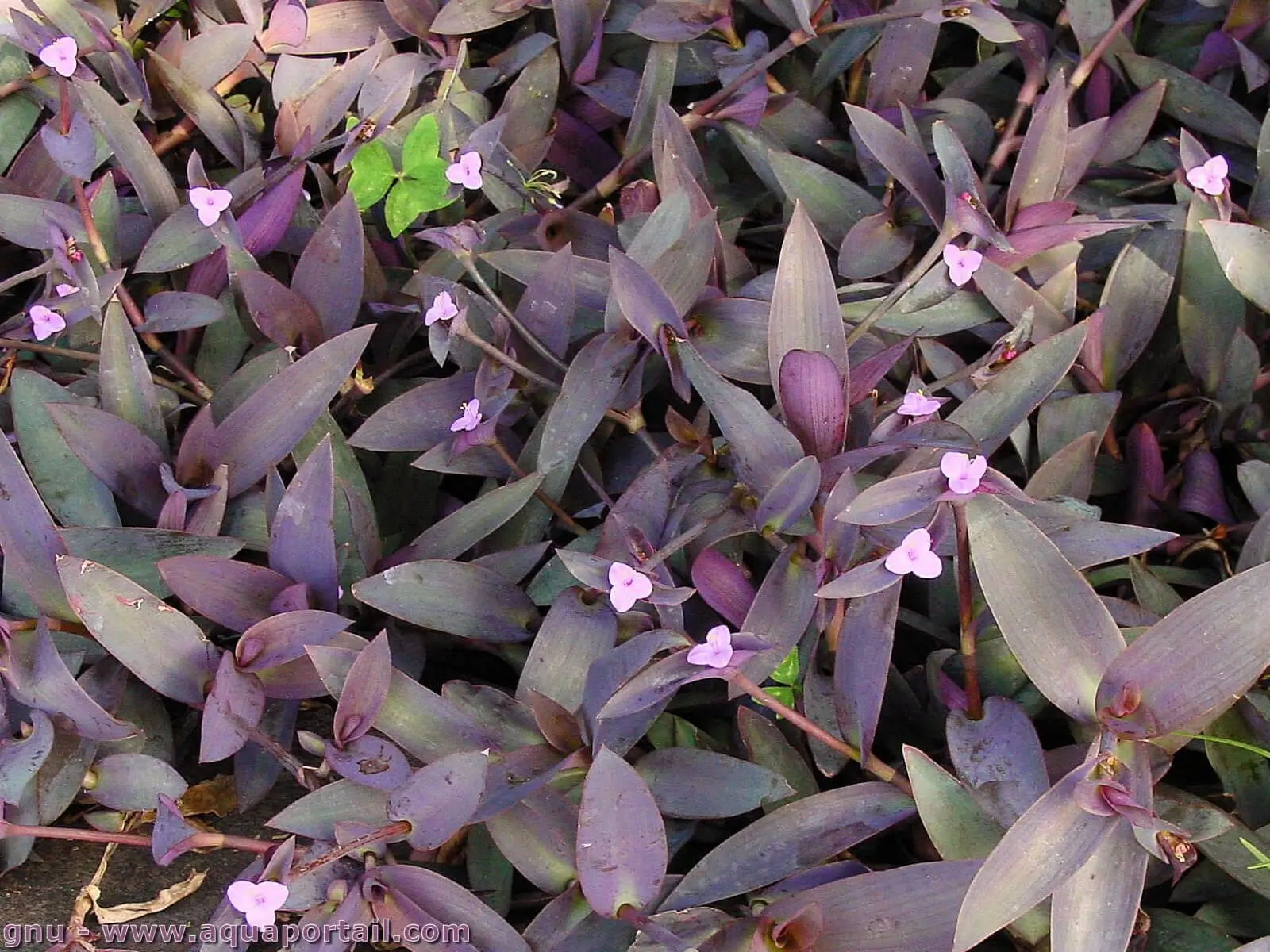
Tradescantia pallida
(Purple Heart Plant)A vibrant, fast-growing relative of the Inch Plant with deep purple stems and leaves. It adds an intense pop of dark color over the rim of the tank.
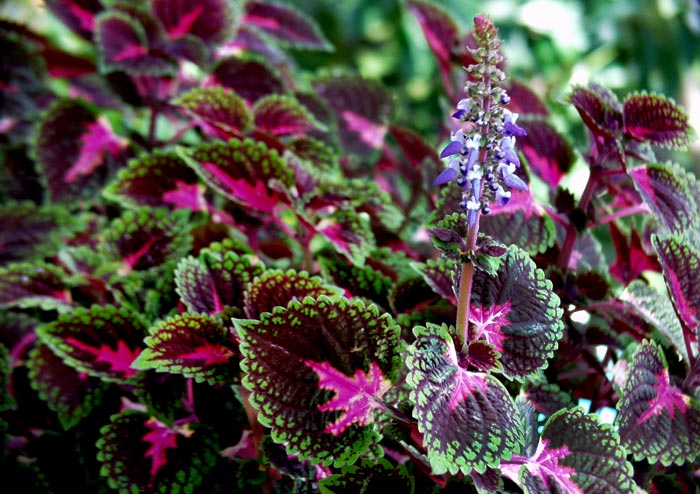
Coleus scutellarioides
(Coleus)Famous for its vibrant, velvety foliage in shades of red, purple, and green. It roots almost instantly from stem cuttings and absorbs nutrients rapidly.
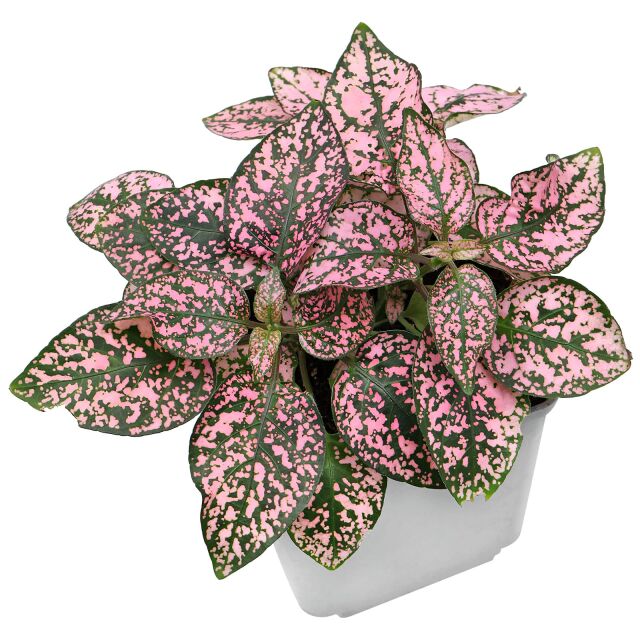
Hypoestes phyllostachya
(Polka Dot Plant)Features delicate leaves speckled with contrasting pink, red, or white dots. It behaves as a colorful, compact accent when grown along the aquarium's edge.
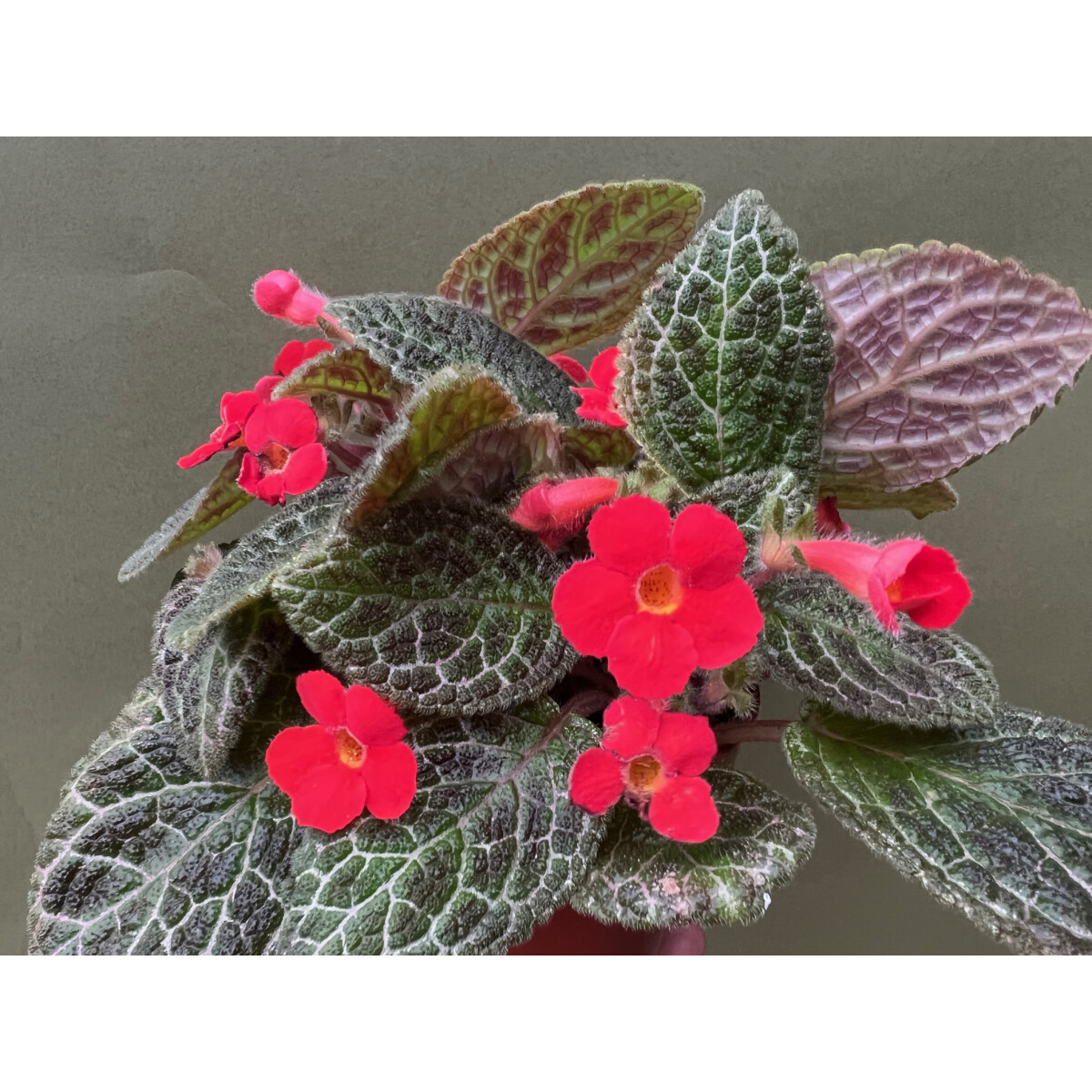
Episcia cupreata
(Flame Violet)A beautiful relative of the African Violet with shimmering, copper-green foliage. It loves high humidity and sends out small runners that drape over the edge.
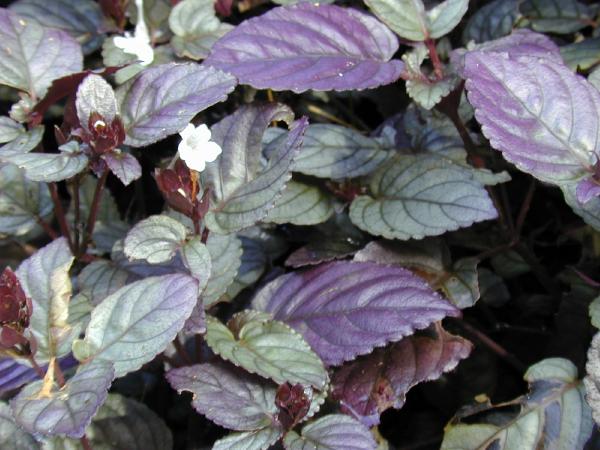
Hemigraphis alternata
(Purple Waffle Plant)Recognized by its textured, puckered leaves with deep purple undersides. It is highly efficient at filtering nutrients and adds a unique, dark texture.
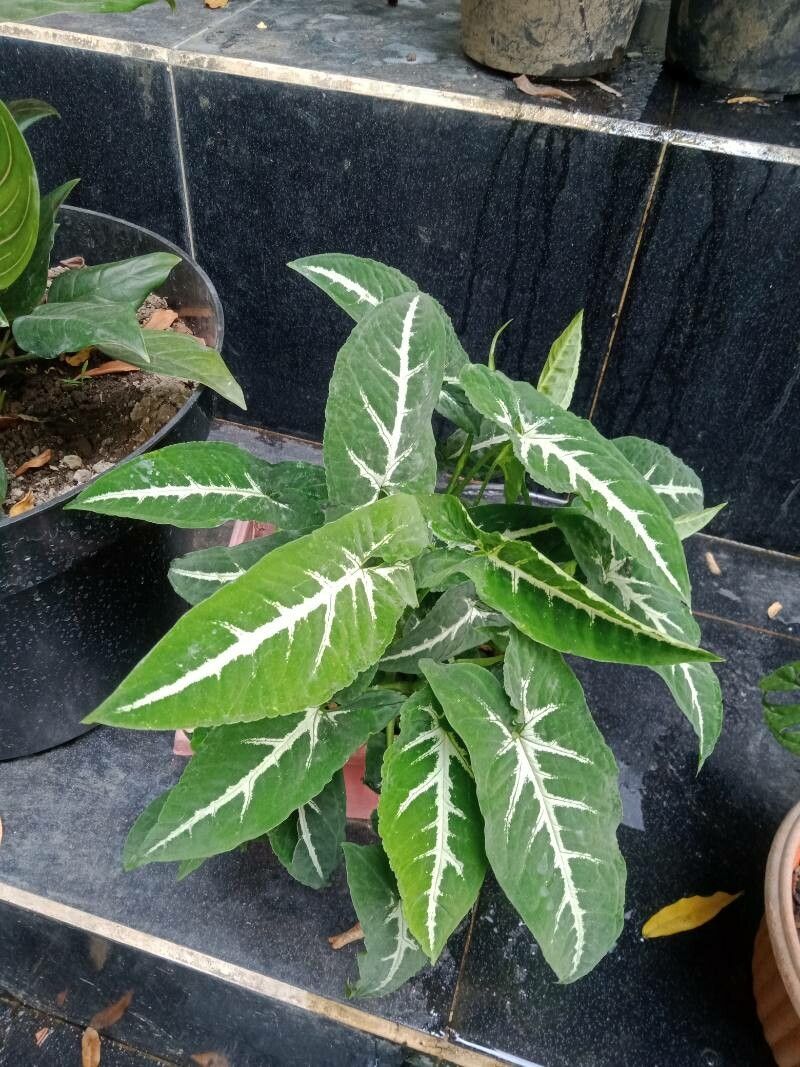
Syngonium wendlandii
(Silver Goosefoot Plant)A slower-growing variety featuring velvety, dark green arrowhead leaves with a distinct silver-white central vein. It forms decorative, compact root bundles when grown in water.
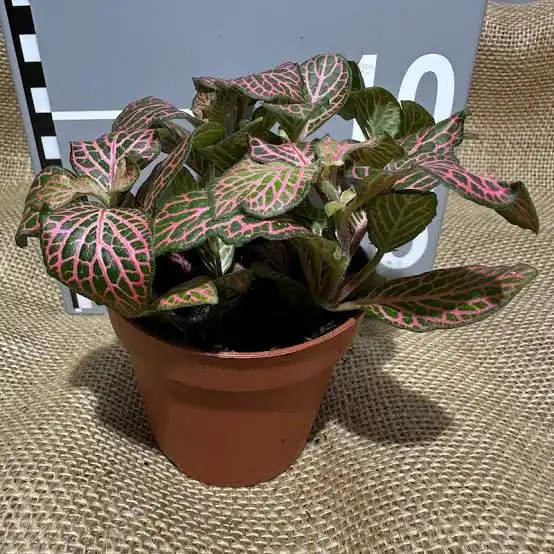
Fittonia albivenis
(Nerve Plant - Red/Pink)Features striking, high-contrast pink or red leaf venation. It thrives in high humidity and adapts readily to riparian setups, provided its foliage is kept dry.
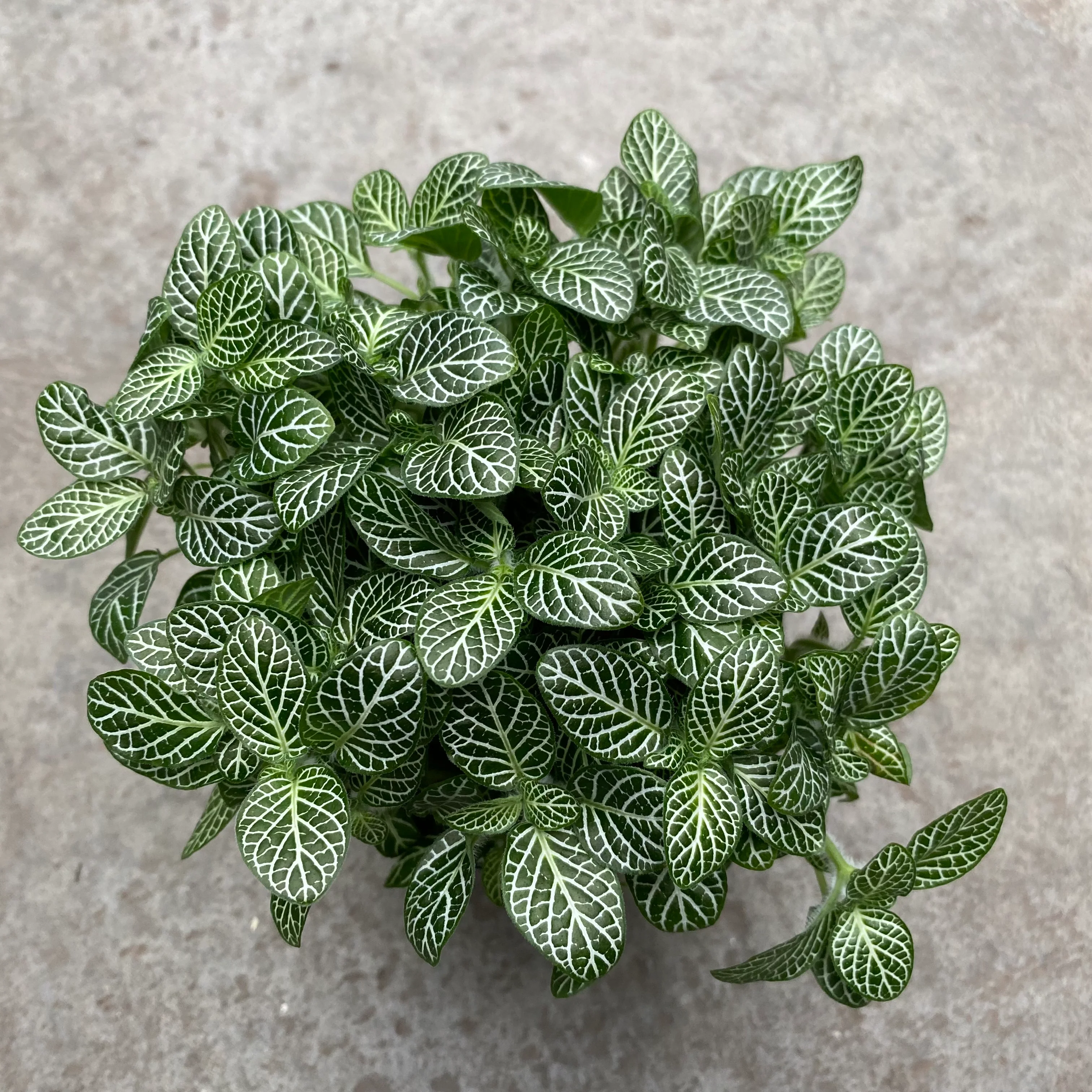
Fittonia albivenis 'White'
(White Nerve Plant)A clean, white-veined cultivar of the classic Nerve Plant. Its mosaic-like pattern makes it a lovely, compact accent to tuck into gaps along the tank's rim.
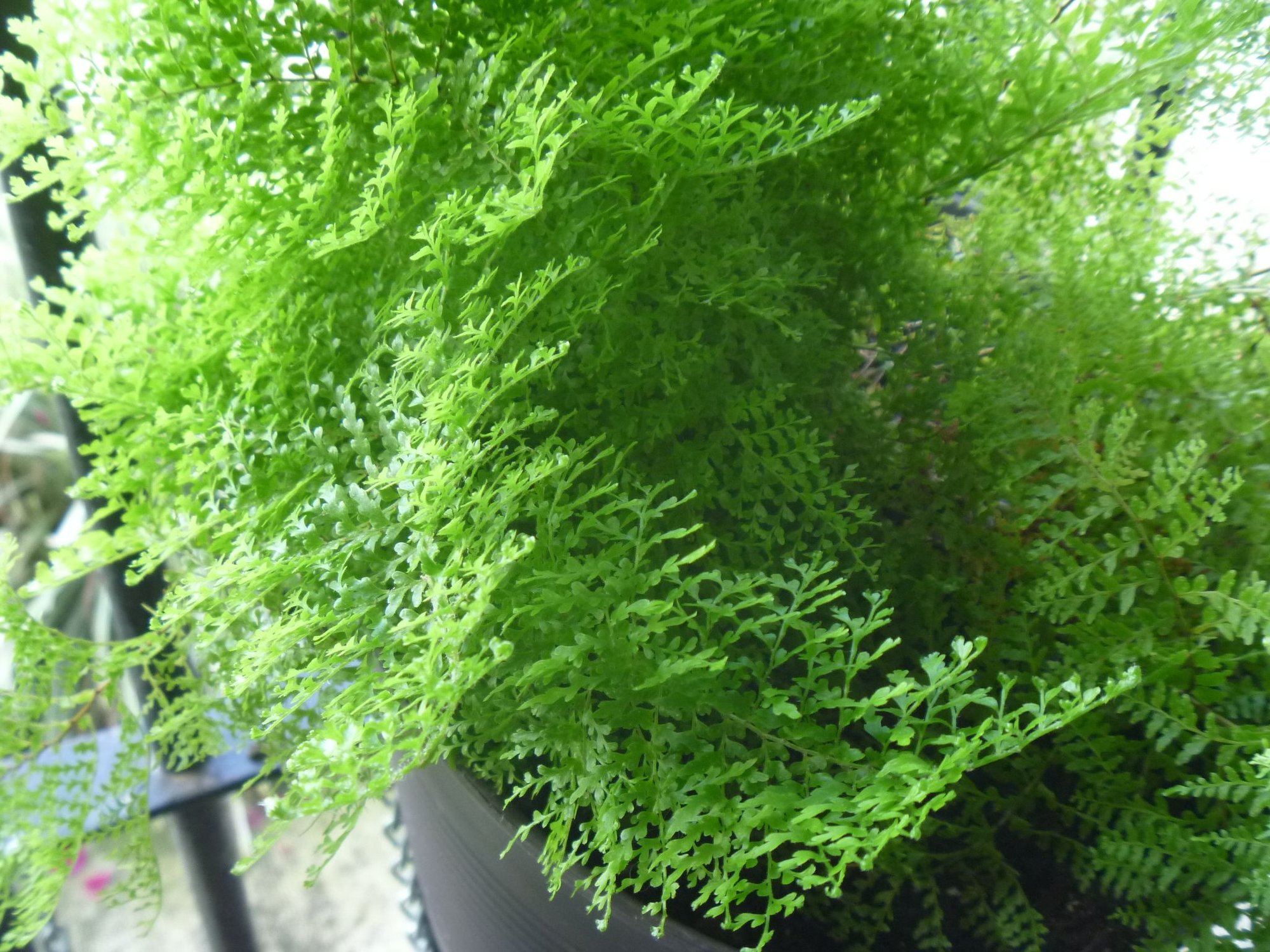
Nephrolepis exaltata 'Smithii'
(Cotton Candy Fern)Known for its exceptionally soft, fluffy, and dense pale-green fronds. It flourishes under high ambient humidity and creates an airy, cloud-like texture over the waterline.
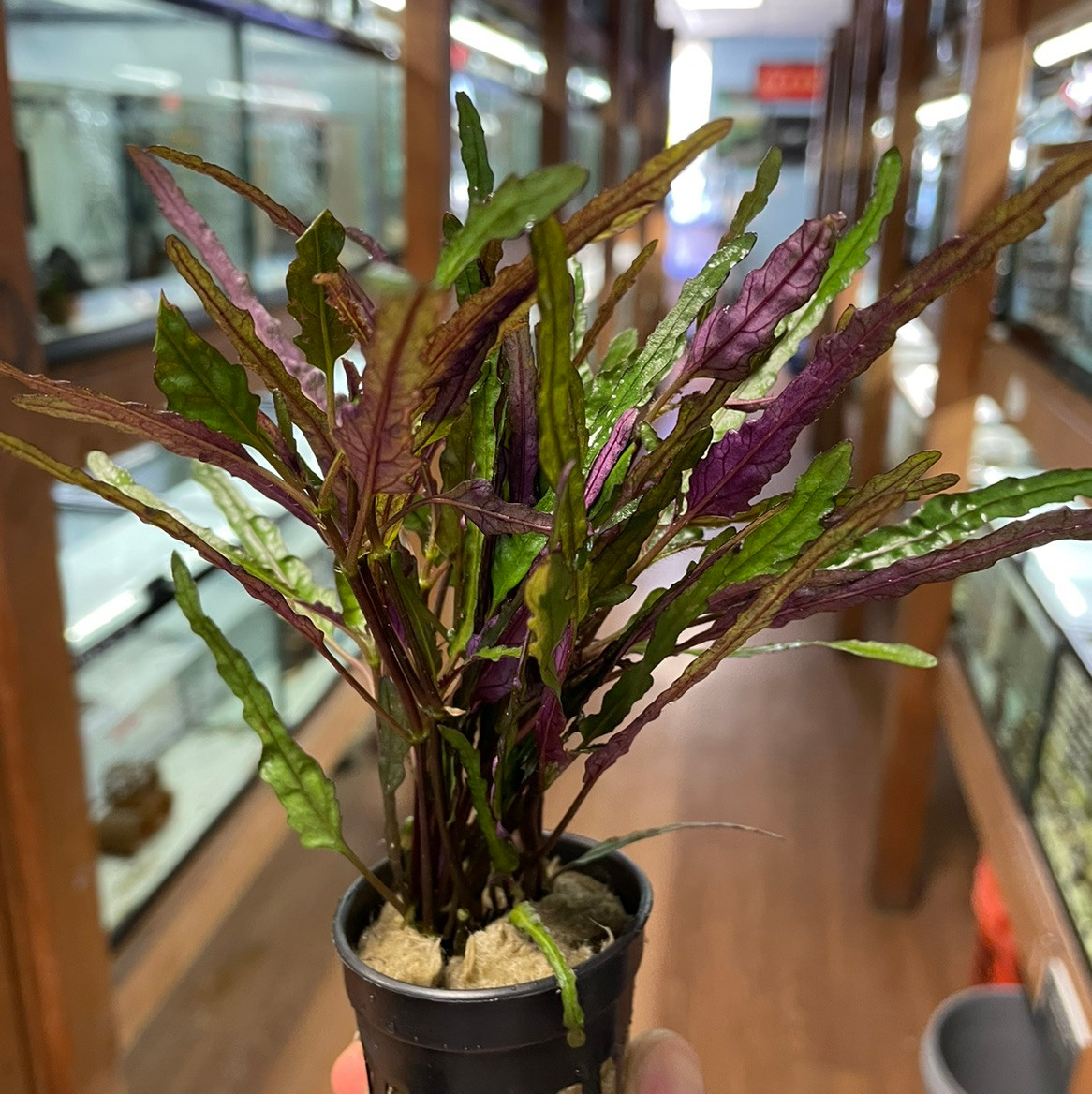
Hemigraphis repanda
(Dragon's Tongue)A textured plant with slender, rippled leaves displaying deep purple and forest green hues. Its low, grass-like growth habit is highly effective at absorbing nitrates.
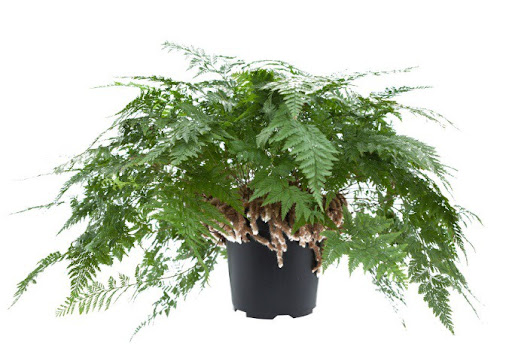
Davallia fejeensis
(Rabbit's Foot Fern)Famous for its creeping, fuzzy surface rhizomes that resemble rabbit's feet. It grows well when mounted on damp driftwood just above the water, sending out delicate, lacy fronds.
The Transformers (Heterophylly)
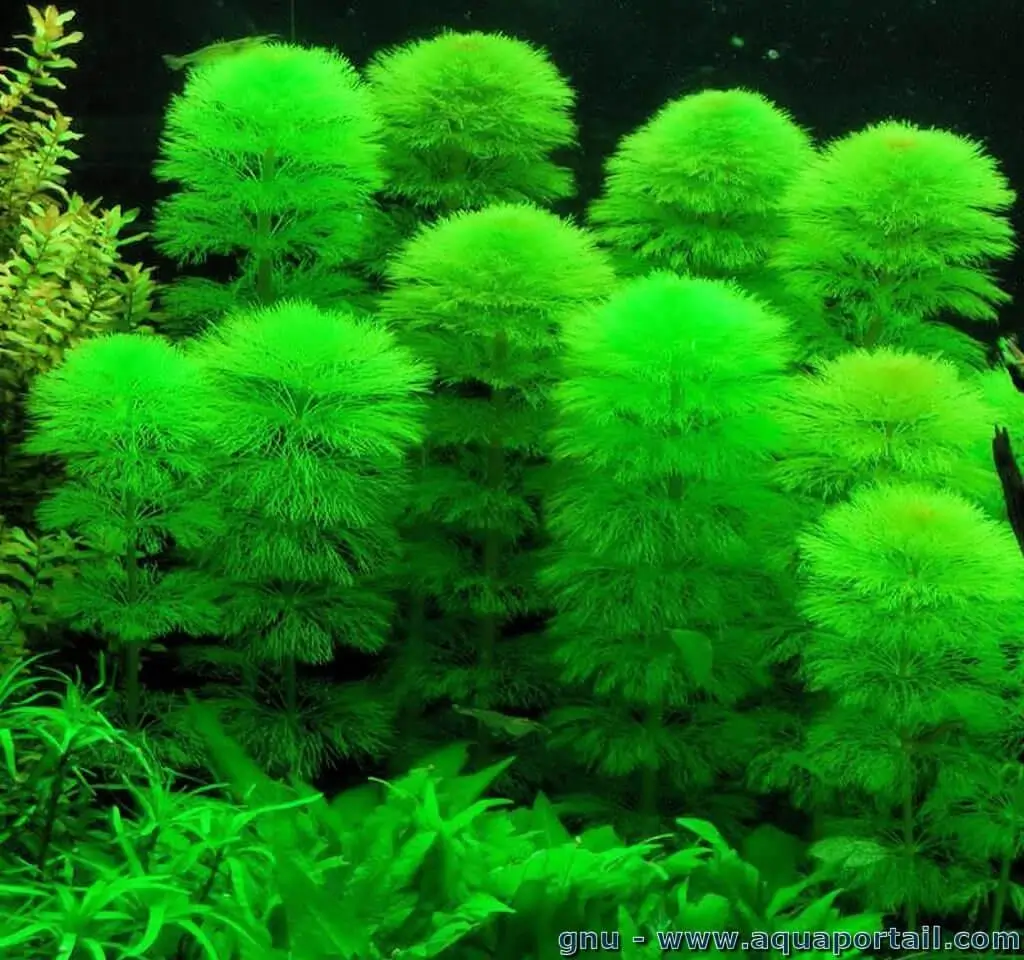
Limnophila aquatica
(Giant Ambulia)Submersed: Fine, soft needles like Hornwort. Emersed: Sturdy mint-like leaves.
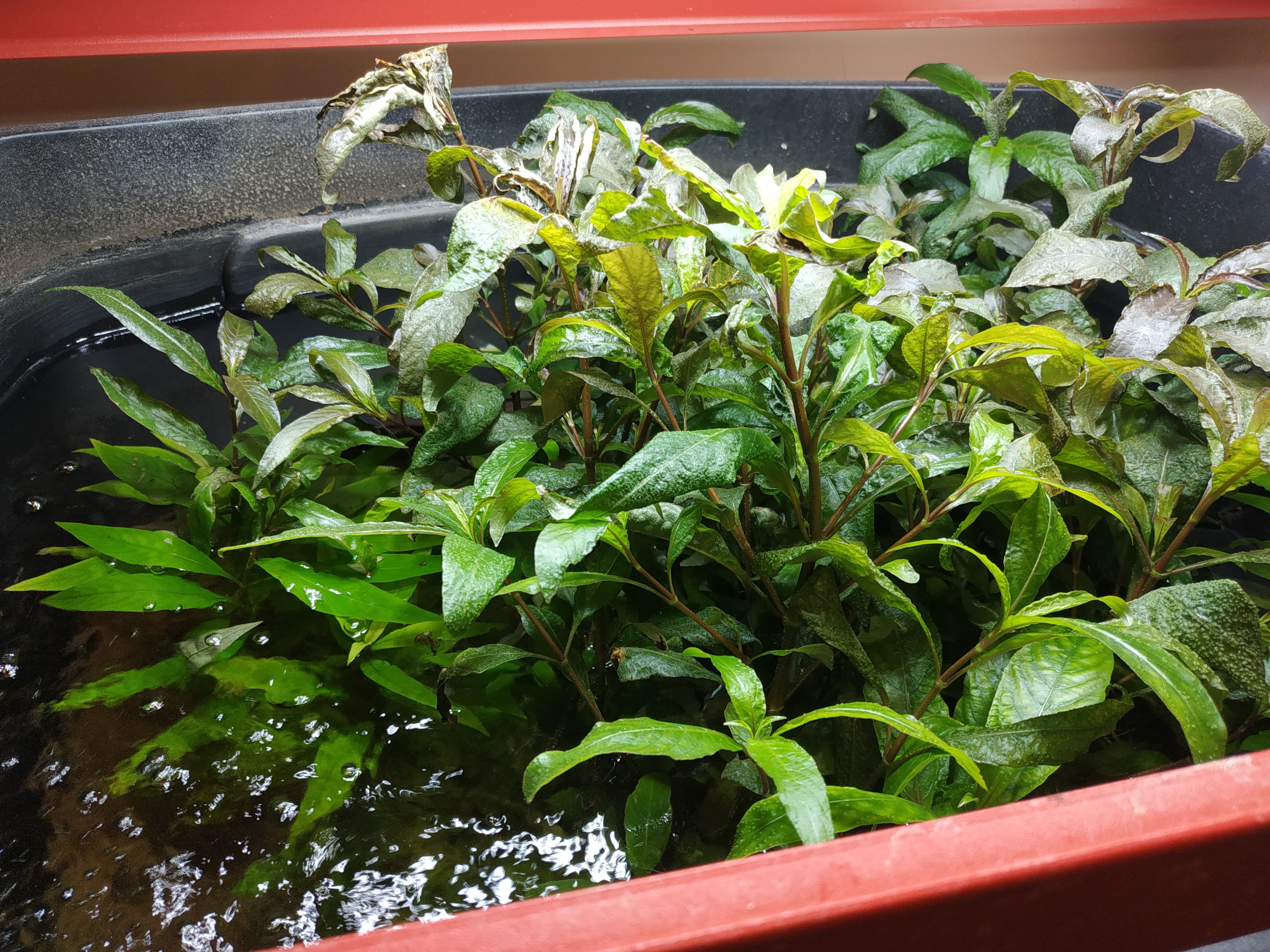
Hygrophila corymbosa 'Willow'
(Willow Leaf Hygro)Submersed leaves are long and narrow; emersed leaves grow short and bushy.
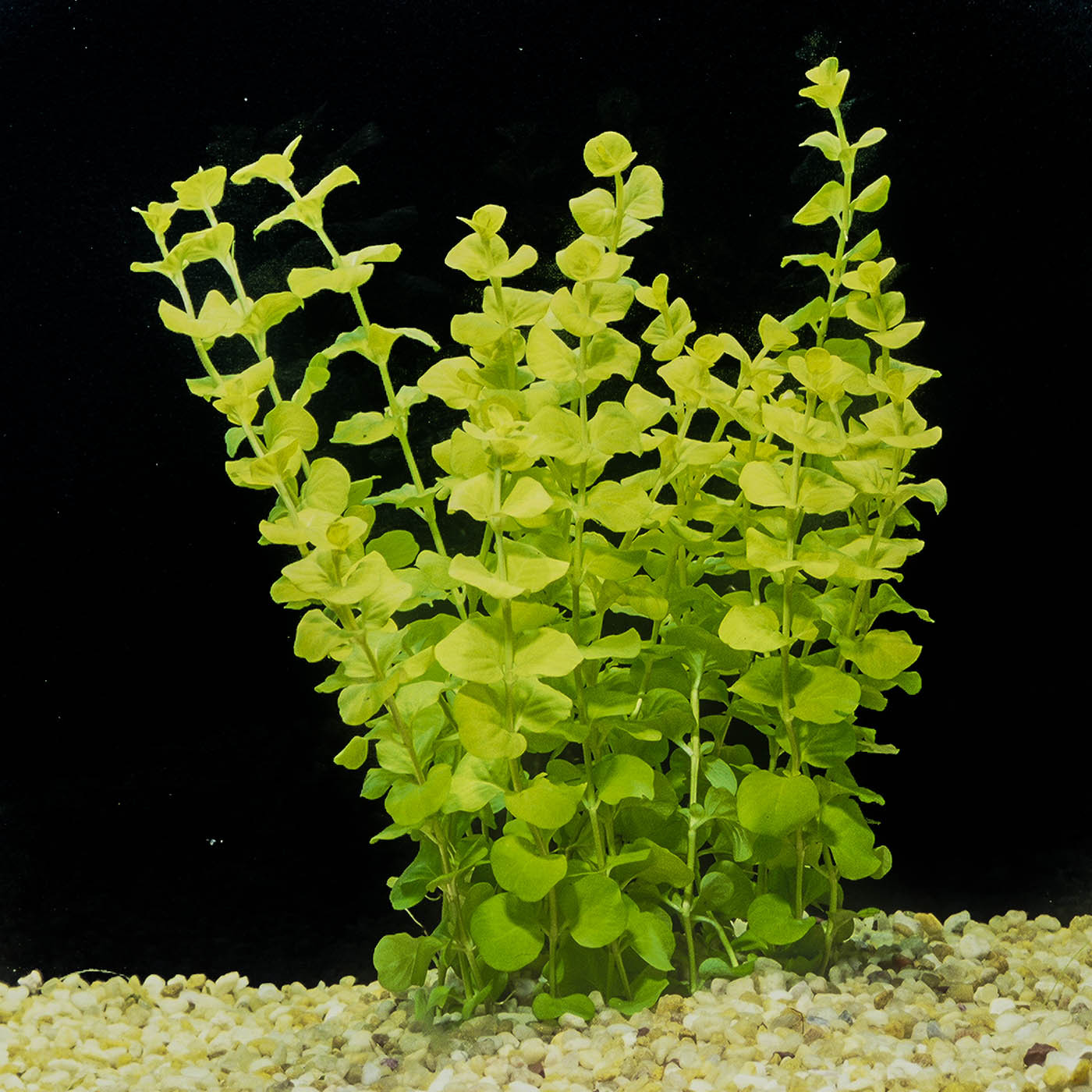
Lysimachia nummularia 'Aurea'
(Golden Creeping Jenny)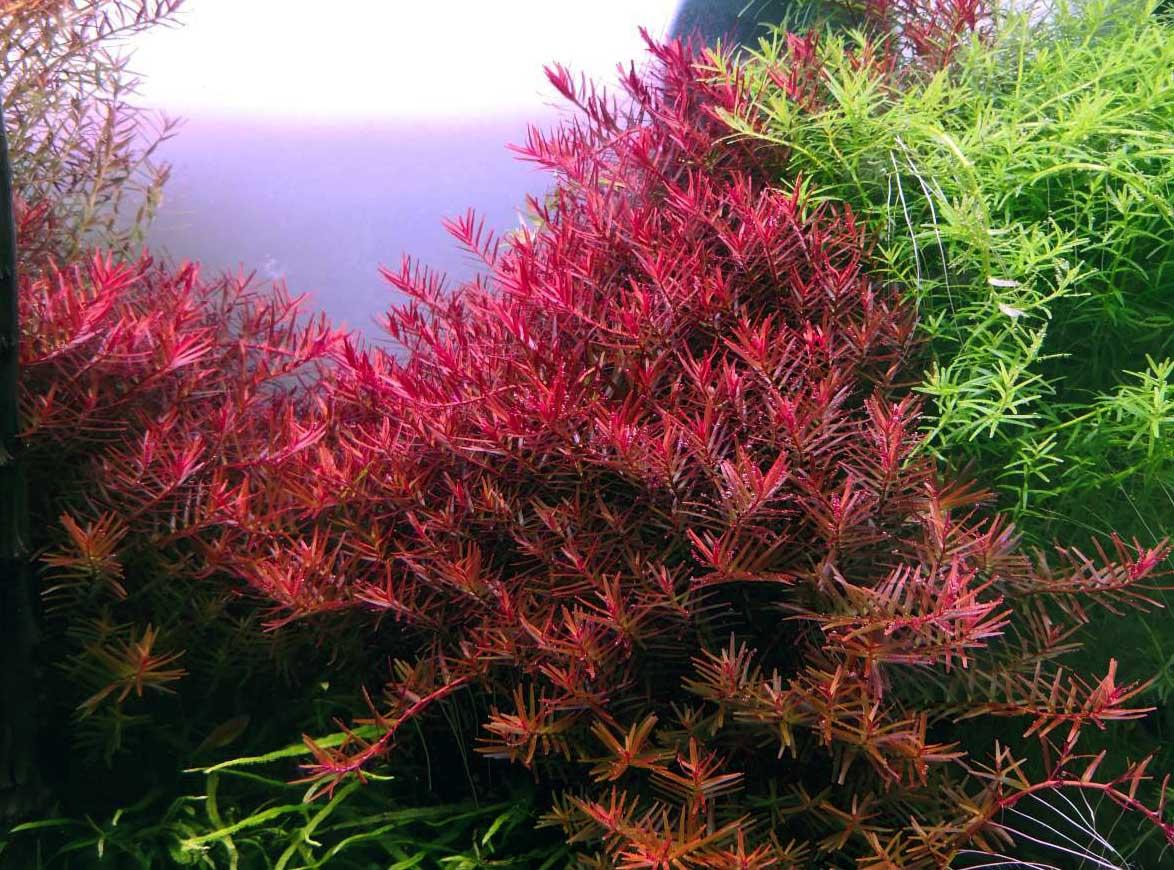
Rotala rotundifolia
(Roundleaf Rotala)Transition: Submersed leaves are long, thin, and red. Emersed leaves are perfectly round and bright green.
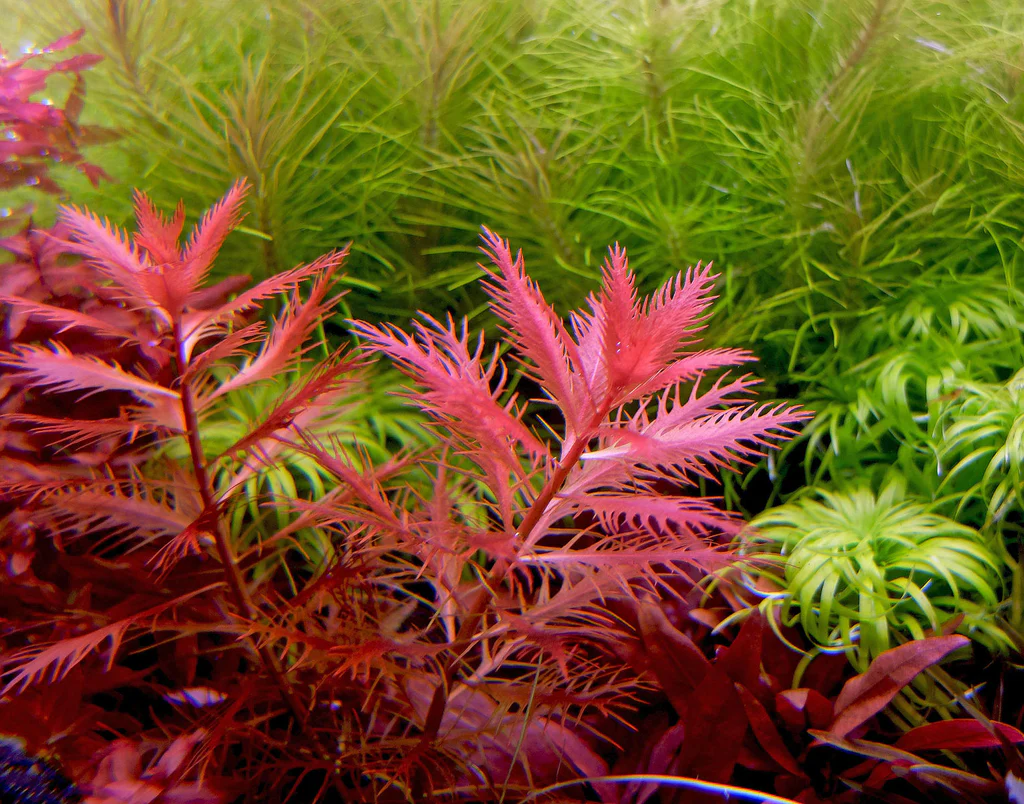
Proserpinaca palustris
(Mermaid Weed)Transition: Submersed leaves look like fine, copper-colored combs. Emersed leaves are broad with saw-tooth edges.
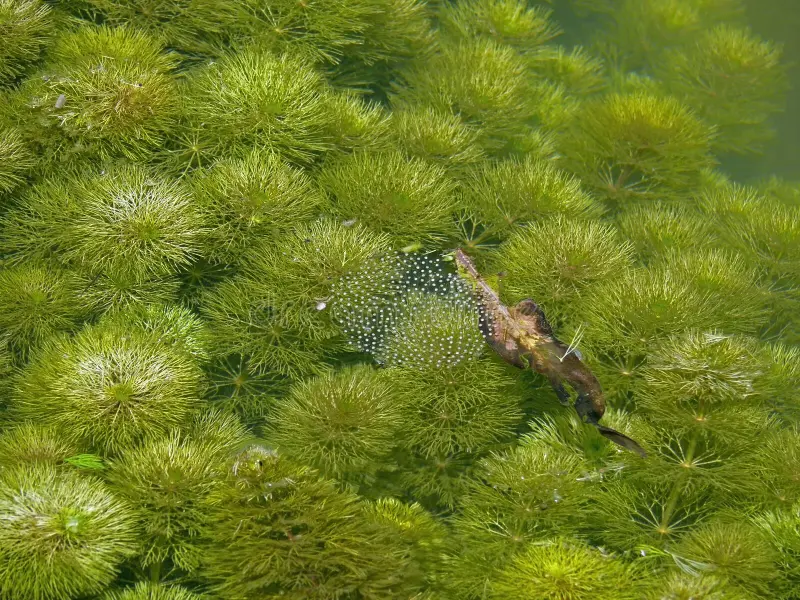
Myriophyllum aquaticum
(Parrot's Feather)Transition: Submersed is a delicate feathery cloud. Emersed becomes a stiff, water-repellent blue-green "miniature pine tree."
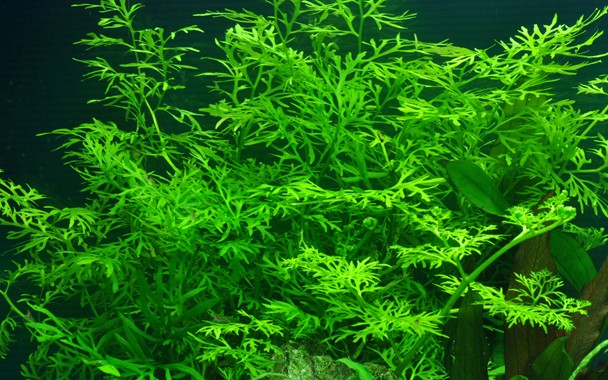
Ceratopteris thalictroides
(Water Sprite)Transition: Submersed leaves are lacy and thin. Emersed leaves are thick, fleshy, and much broader.
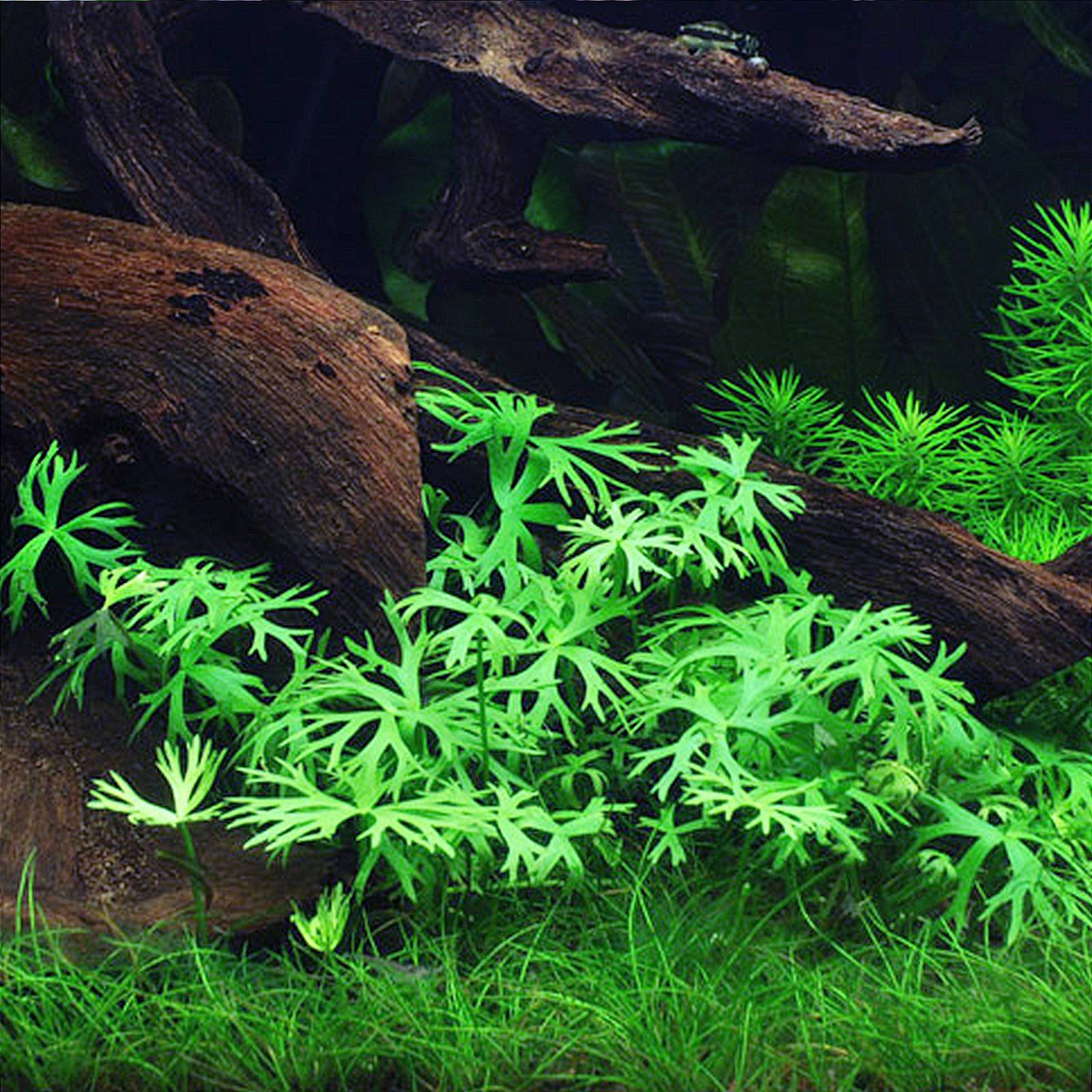
Ranunculus inundatus
(River Buttercup)Transition: Submersed leaves are beautiful multi-split umbrellas. Emersed leaves simplify into more solid, rounded clover shapes.
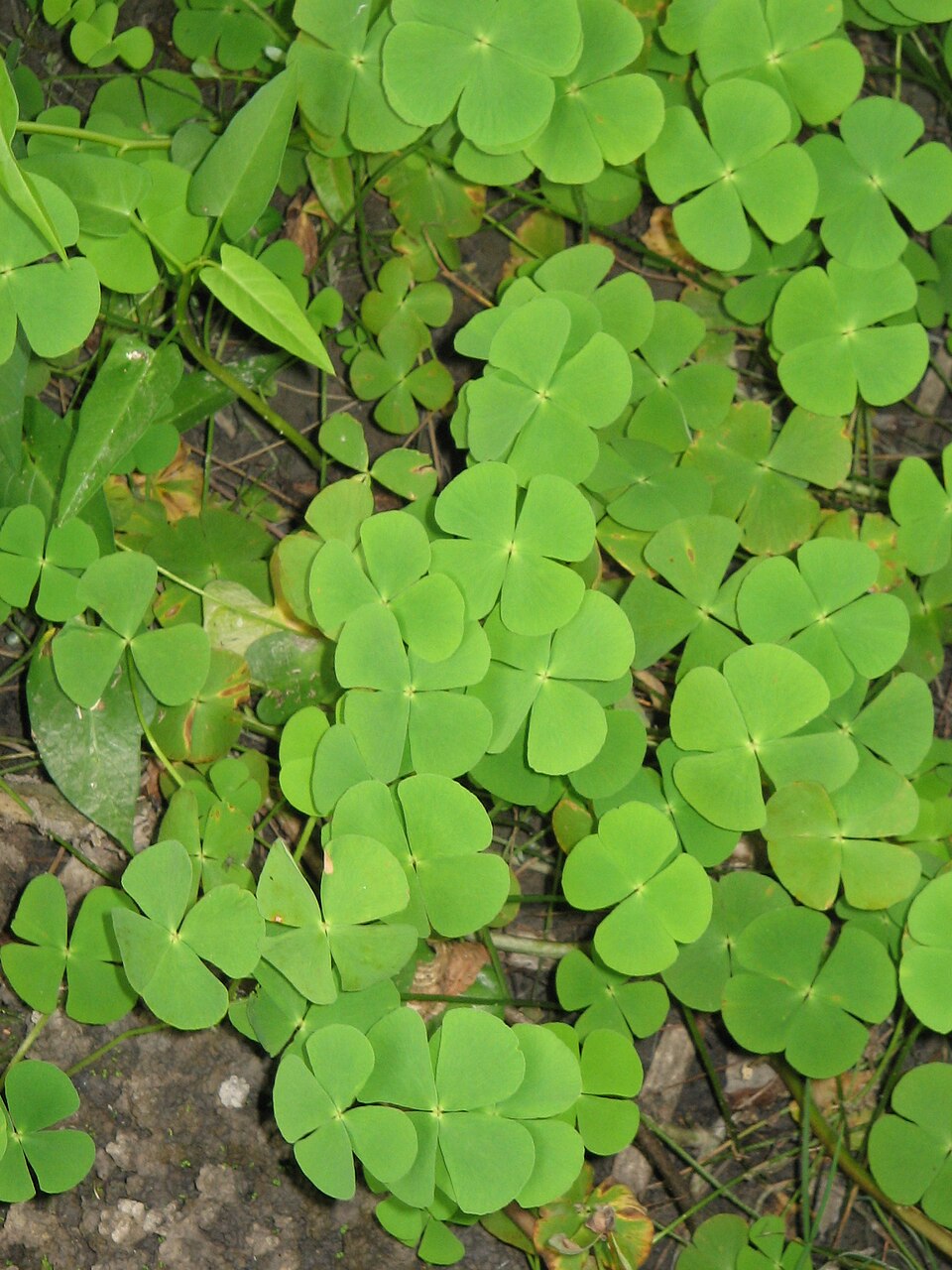
Marsilea crenata
(Thai Water Clover)Difficulty: Easy
Transition: Submersed leaves are typically tiny single-lobed "spoons." When it reaches the surface, it transforms into the iconic four-leaf clover shape.
Note: This species is also edible and frequently used in Southeast Asian salads.
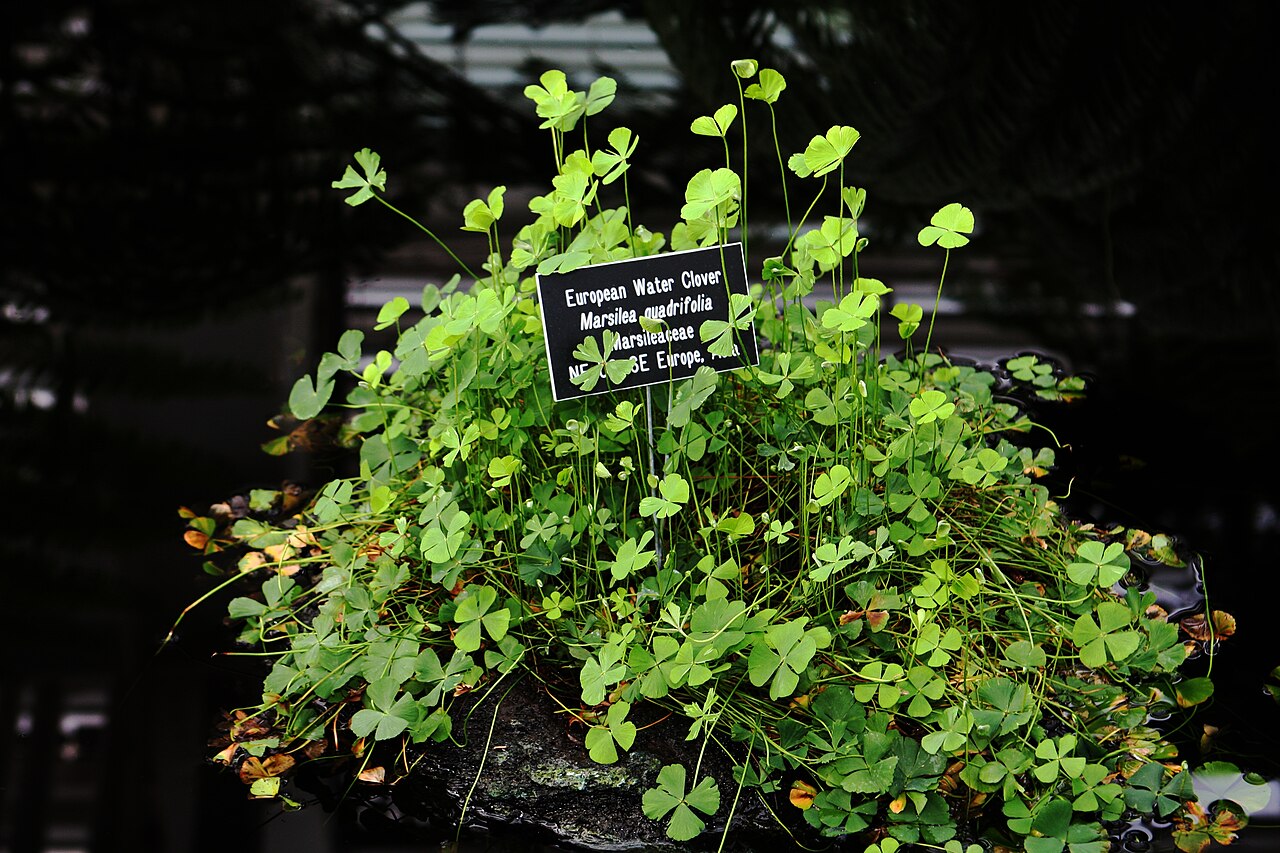
Marsilea quadrifolia
(European Water Clover)Difficulty: Easy
Transition: One of the most dramatic clovers. Floating leaves are large and leathery clovers; submersed growth is much smaller and can look like a green carpet of grass.
The Edible Garden
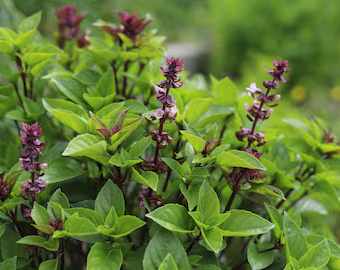
Ocimum basilicum 'Thai'
(Thai Basil)Edible: Aromatic leaves used in cooking and teas for a sweet, anise-like flavor.
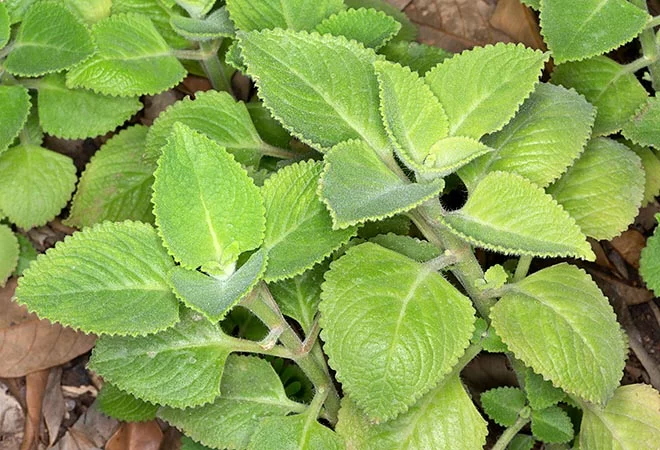
Plectranthus amboinicus
(Cuban Oregano)Edible: Thick, fuzzy leaves used as a potent seasoning for meats, stews, or herbal teas.
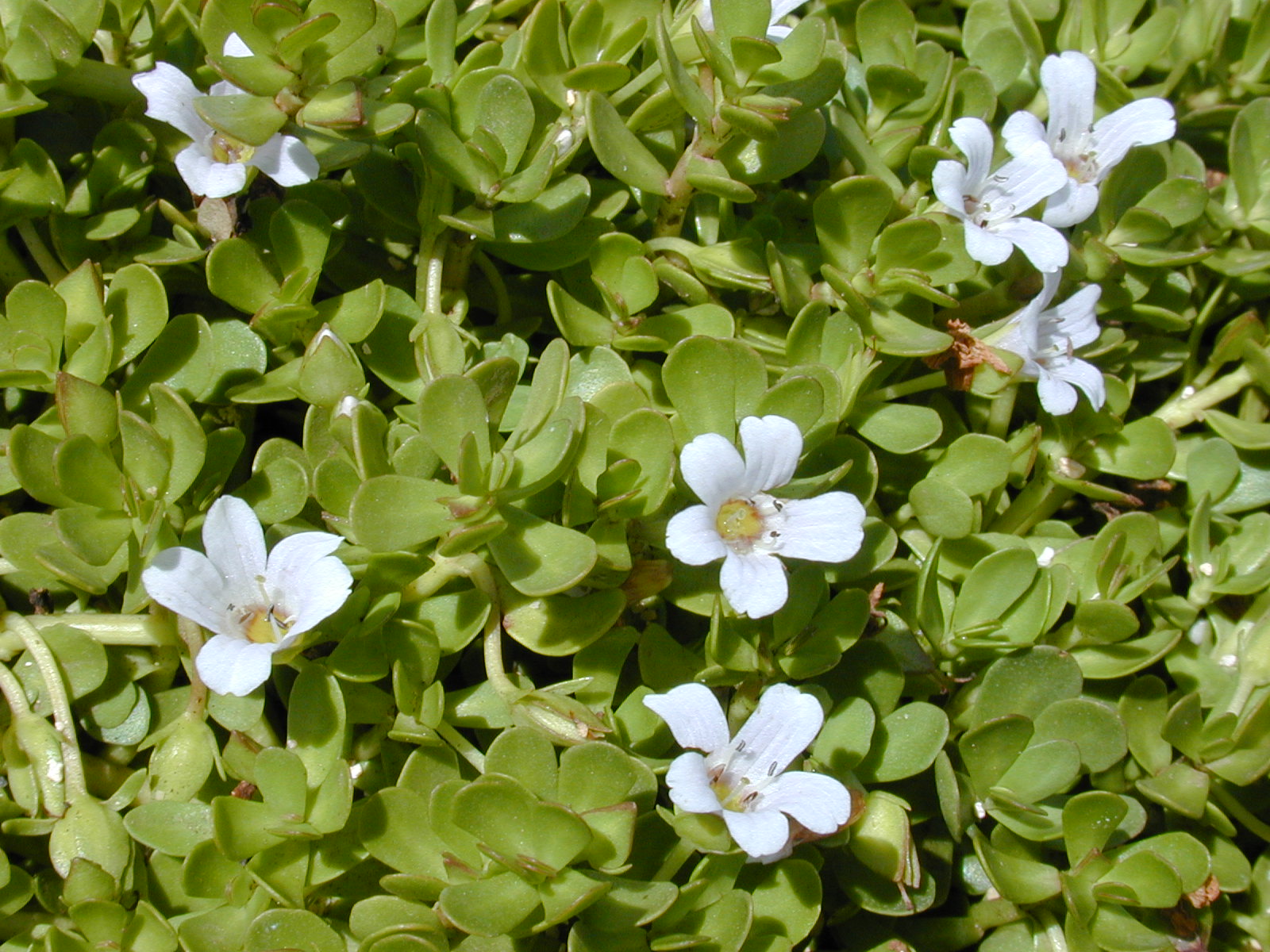
Bacopa monnieri
(Brahmi / Moneywort)Edible: Bitter leaves often used in traditional medicine or brewed into "memory-boosting" teas.
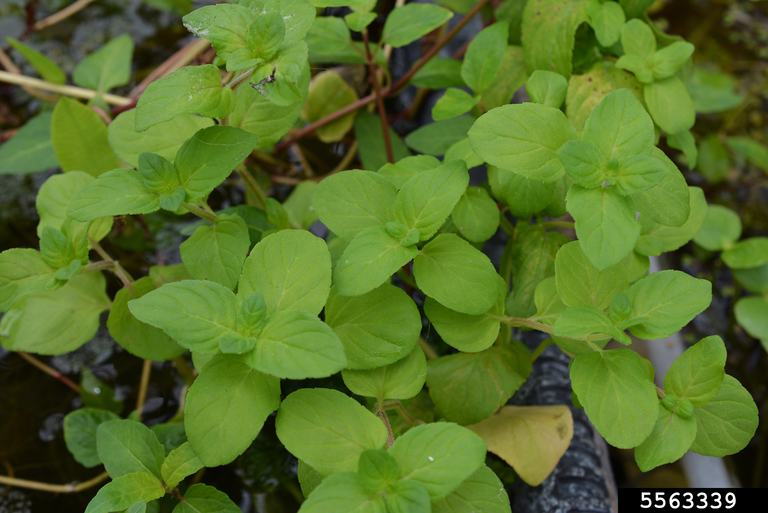
Mentha aquatica
(Water Mint)A true aquatic mint. It smells amazing and produces purple flowers. It will quickly "carpet" the top of your aquarium filter or rim.
Edible: Fragrant leaves used to make refreshing peppermint-style teas or salads.
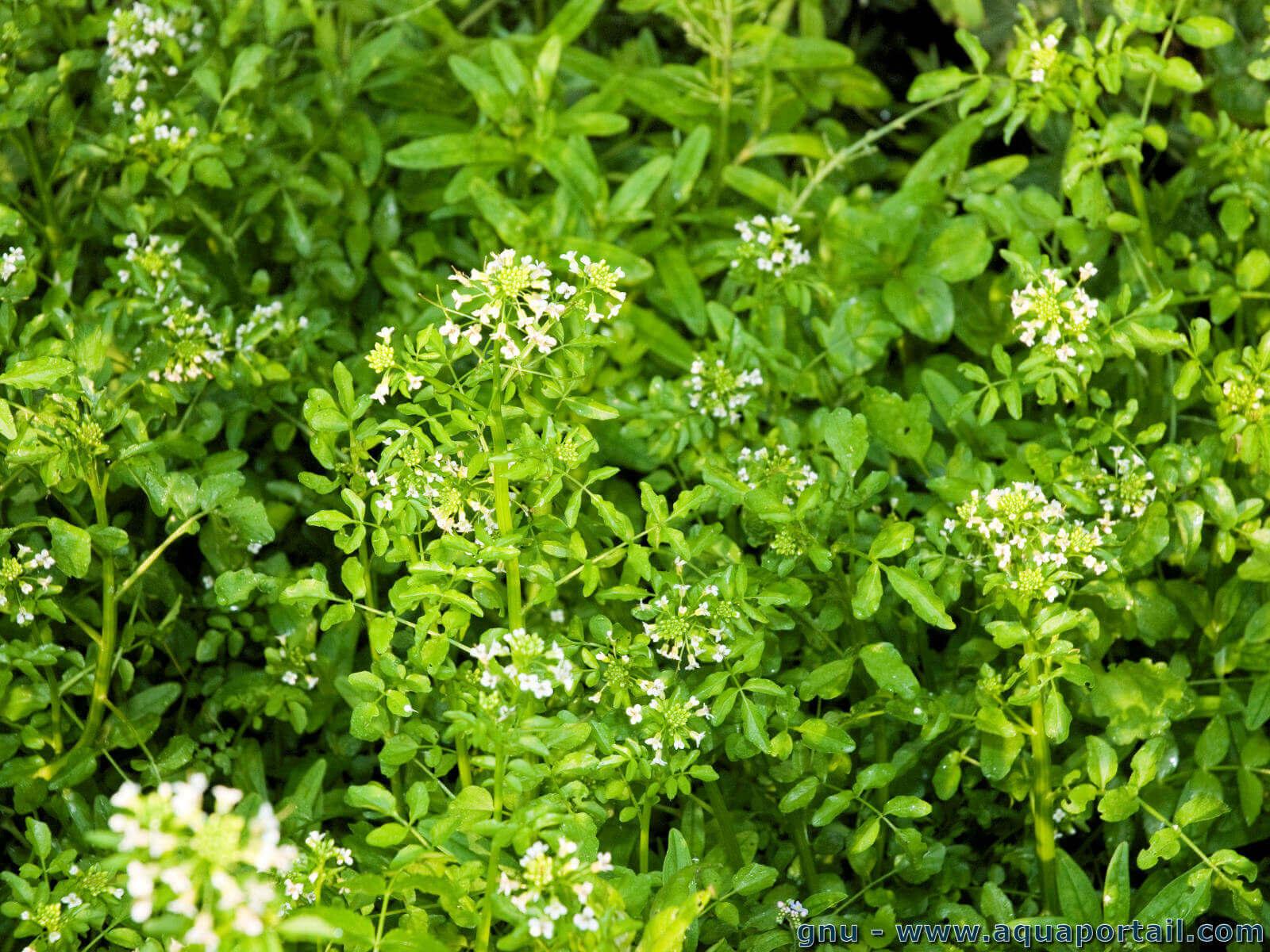
Nasturtium officinale
(Watercress)One of the fastest-growing edibles. It thrives in the high-nitrate environment of an aquarium and is great for shrimp to graze on.
Edible: Peppery leaves and stems packed with vitamins; perfect for salads and sandwiches.
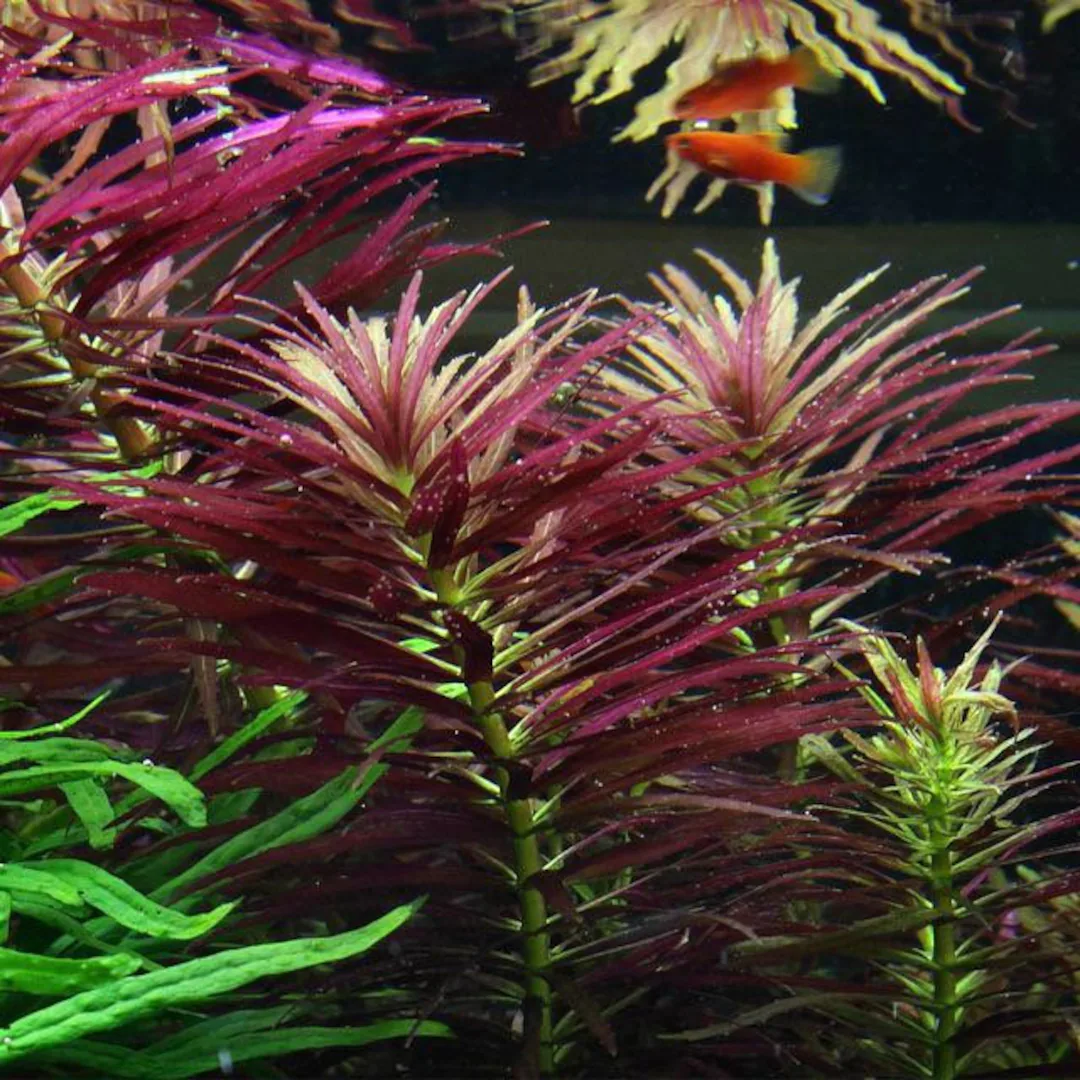
Limnophila aromatica
(Rice Paddy Herb)Edible: A staple in Vietnamese sour soups; has a unique flavor profile of citrus and cumin.
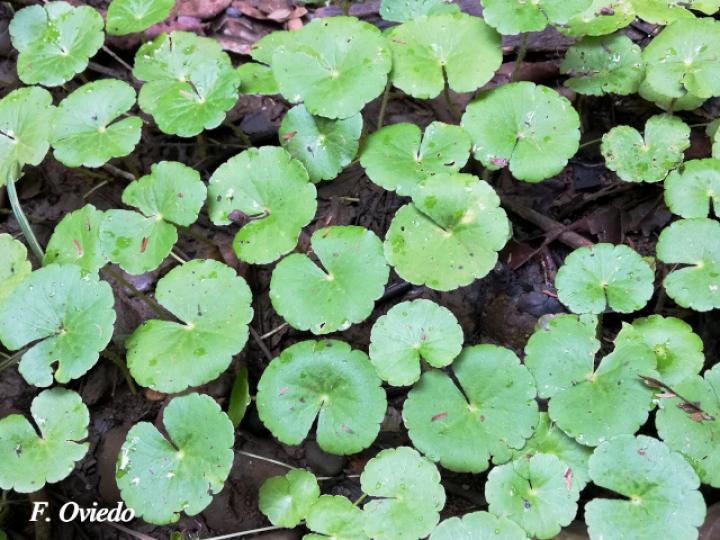
Hydrocotyle leucocephala
(Brazilian Pennywort)Edible: The entire plant is edible and often used in South American and Asian cooling drinks or garnishes.
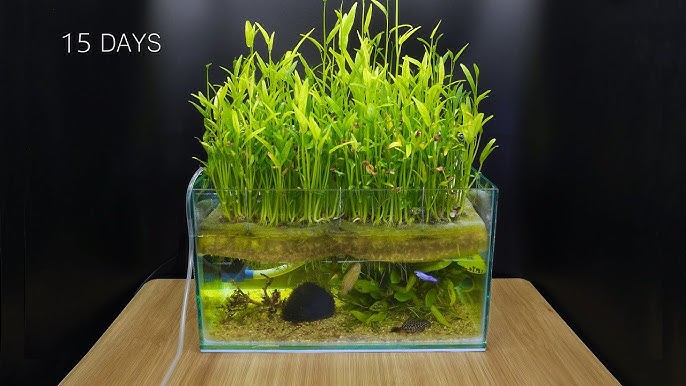
Ipomoea aquatica
(Water Spinach / Kang Kong)An incredible nitrate sponge. It grows hollow, floating stems that can quickly cover the surface or trail down the sides of the tank.
Edible: Highly nutritious leaves and crunchy hollow stems; a staple for stir-fries and Southeast Asian cuisine.
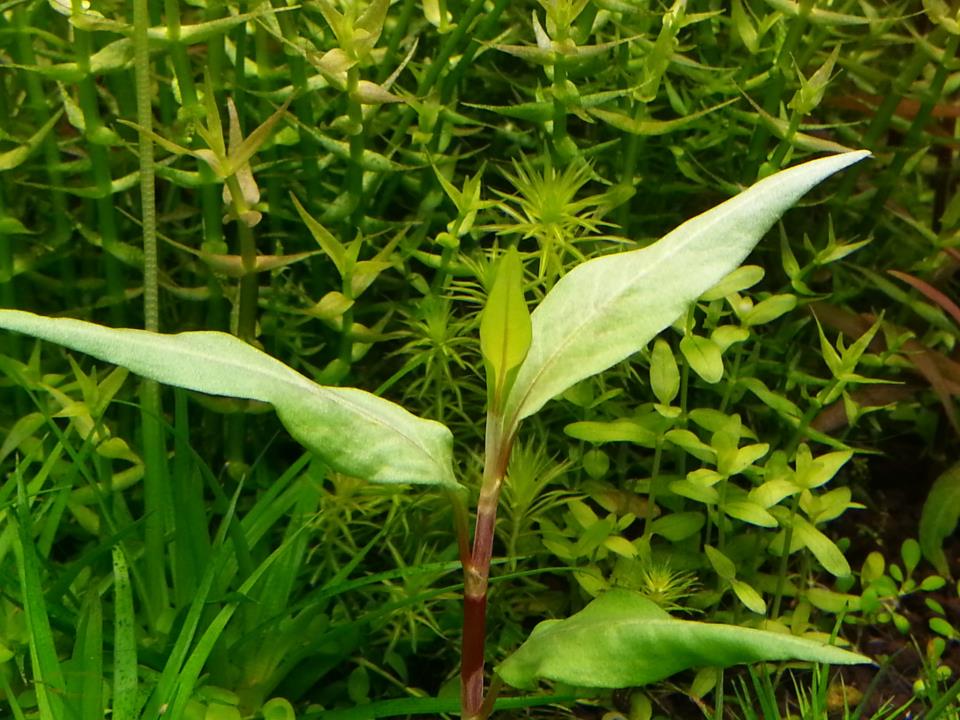
Persicaria odorata
(Vietnamese Coriander / Hot Mint)Unlike regular cilantro, this loves "wet feet." It produces beautiful pointed leaves with dark markings.
Edible: Features a spicy, peppery, and citrusy flavor; essential for many Southeast Asian soups and salads.
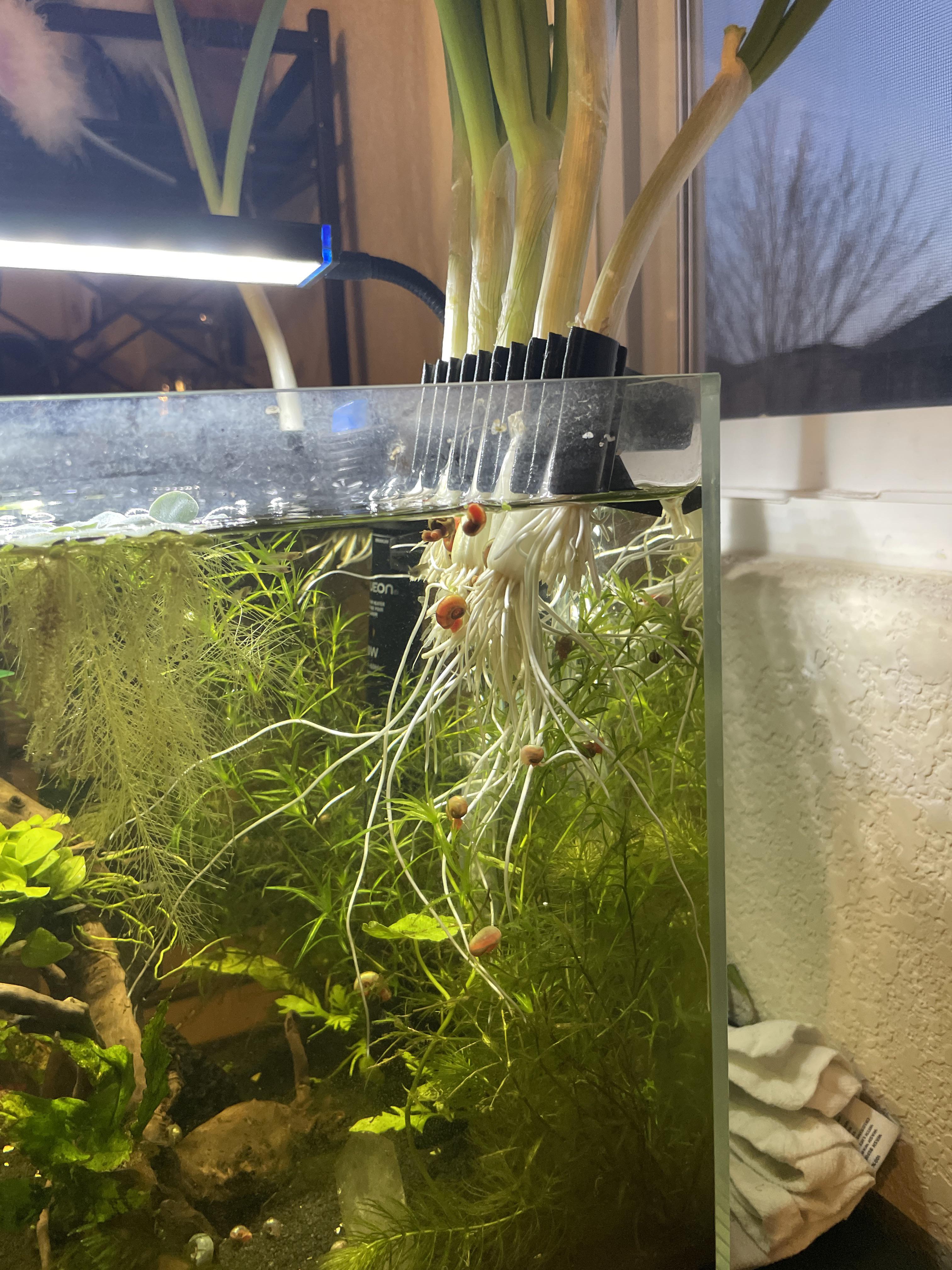
Allium fistulosum
(Green Onions / Scallions)One of the easiest to grow. You can even use the bottom white parts of grocery store scraps to start them.
Edible: The hollow green stalks provide a mild onion flavor; perfect for garnishing almost any dish.
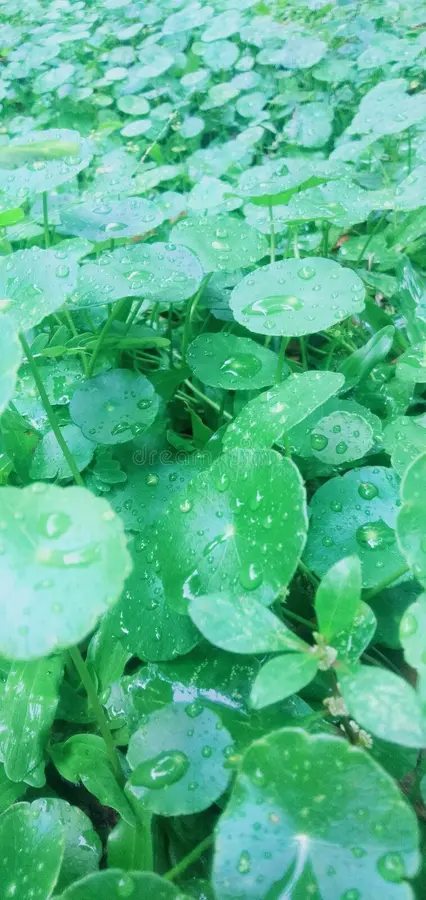
Centella asiatica
(Gotu Kola)Often called the "Herb of Longevity." It looks very similar to Pennywort with its round, fan-shaped leaves.
Edible: Used in cooling summer drinks, salads, and as a medicinal herb in many cultures.
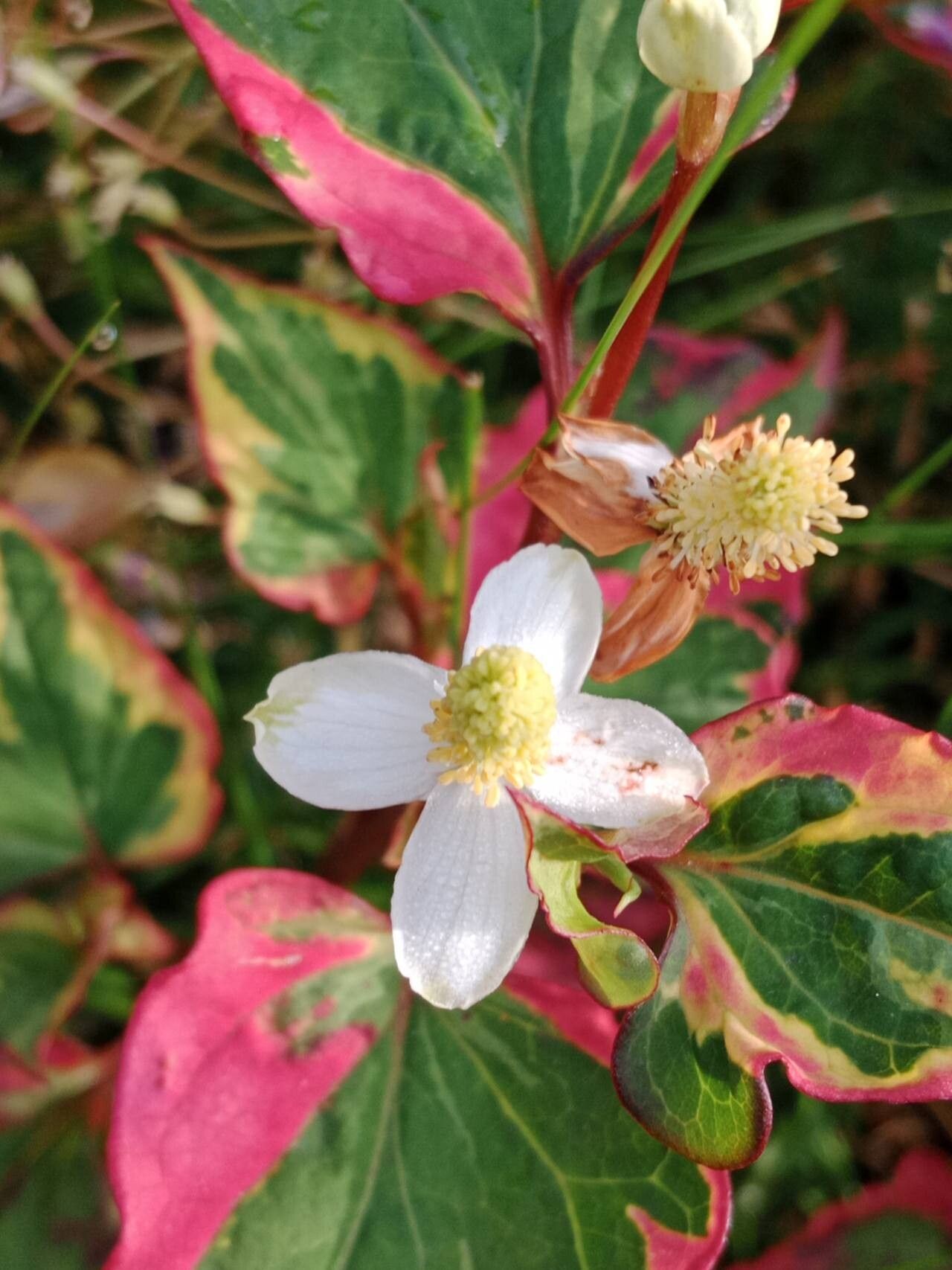
Houttuynia cordata
(Fish Mint / Chameleon Plant)A very hardy plant that can develop stunning red, yellow, and green variegated leaves in high light.
Edible: Named for its unique fish-like aroma; the leaves are used in salads and chutneys across Asia.
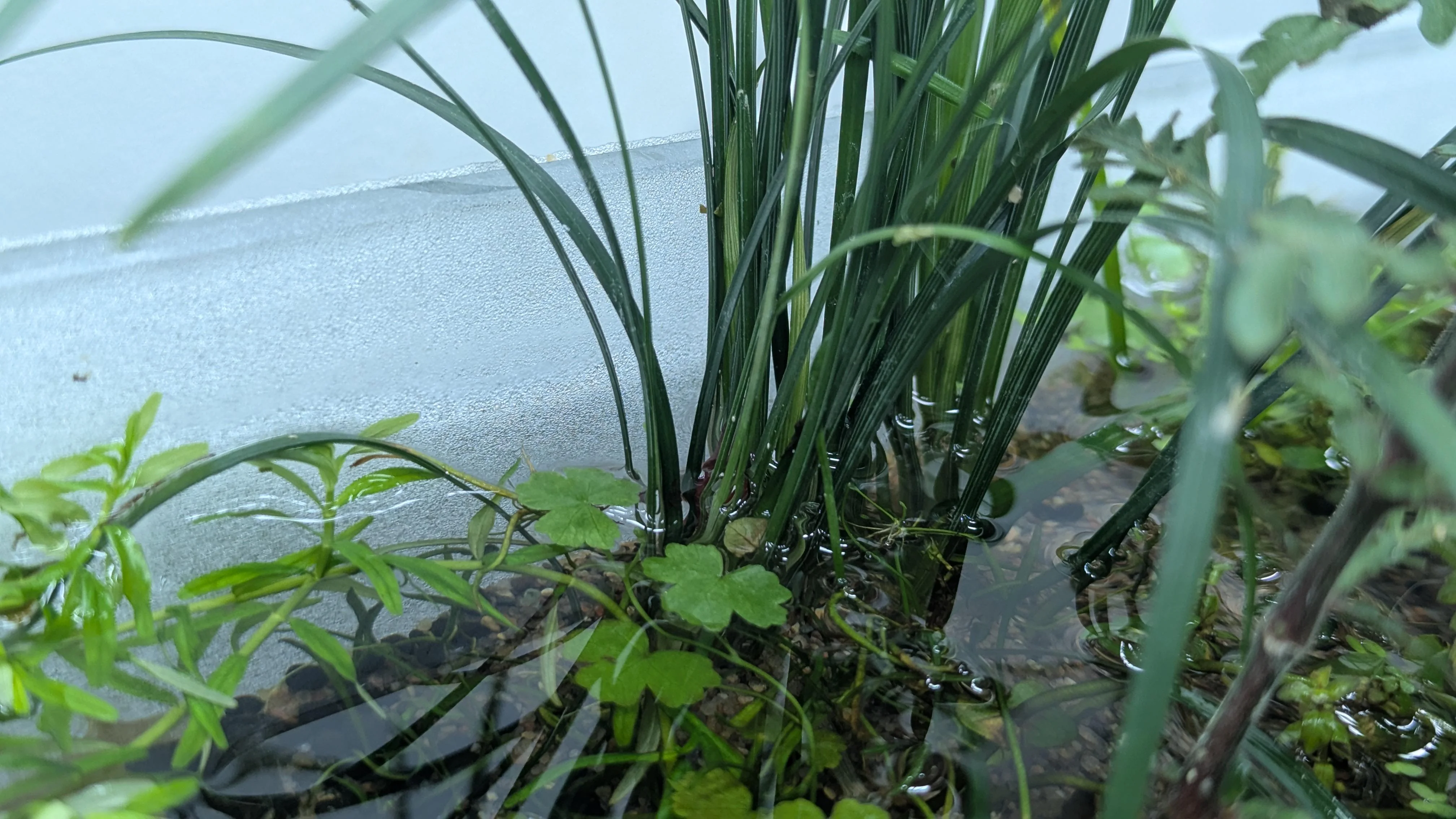
Cymbopogon citratus
(Lemongrass)Acts as a tall, grassy background. Its massive root system is one of the best for cleaning aquarium water.
Edible: The woody stalks are crushed and used to infuse citrusy flavors into teas, curries, and soups.
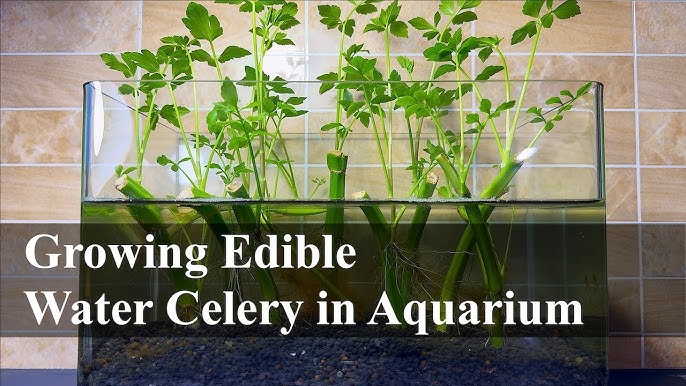
Apium graveolens
(Celery)Celery grows surprisingly well in water. It produces thinner, more aromatic stalks than the ones found in stores.
Edible: Both the crunchy stalks and the leaves are edible, providing a strong, savory flavor.
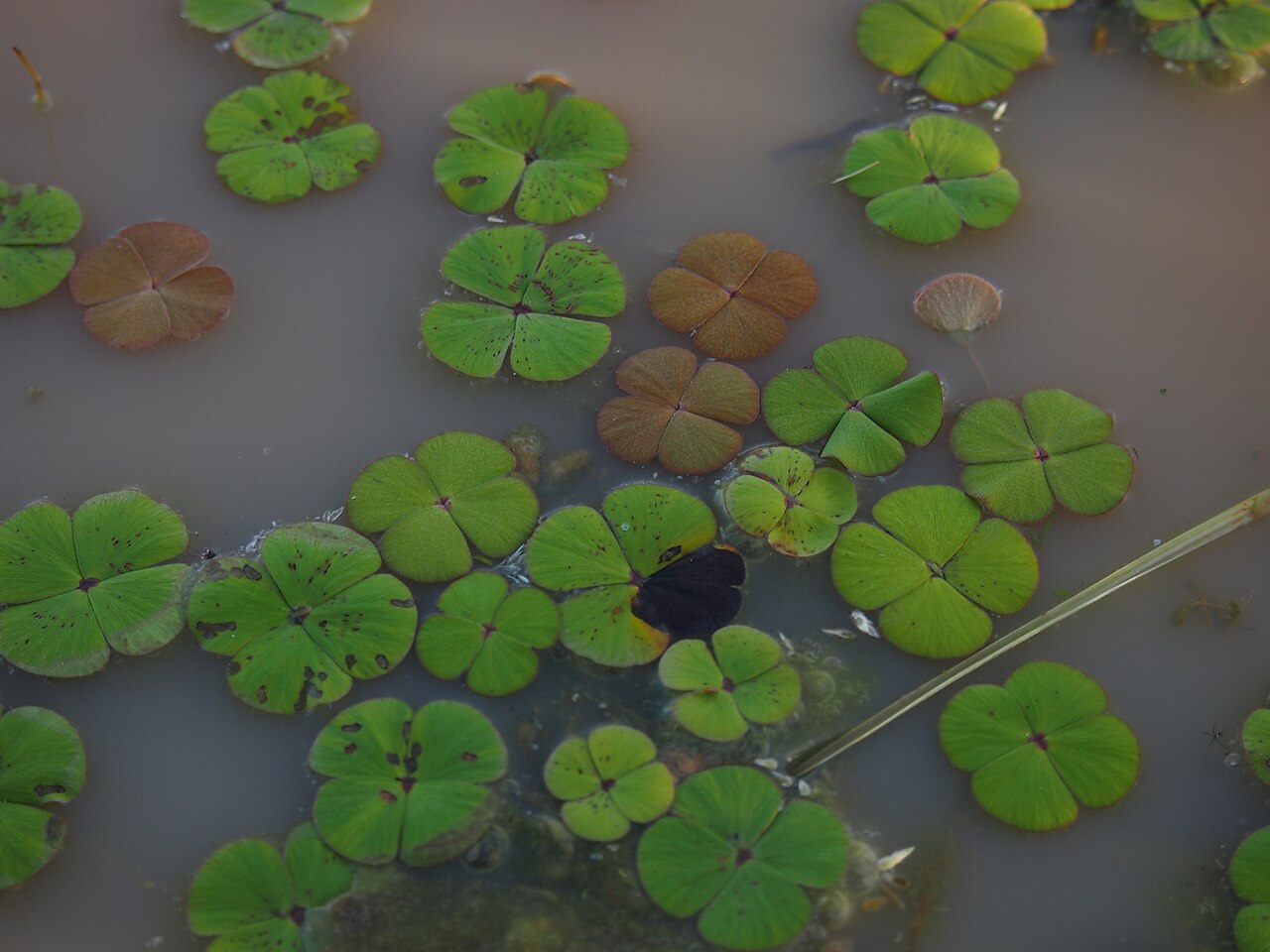
Marsilea drummondii
(Nardoo / Silver Water Clover)A stunning Australian fern with fuzzy, silver-grey leaves. It is very effective at oxygenating the water as it creeps along the surface.
Edible: The seed-pods (sporocarps) were historically ground into flour for bread. Note: Must be roasted/prepared correctly to be safe!
Optical Bridges
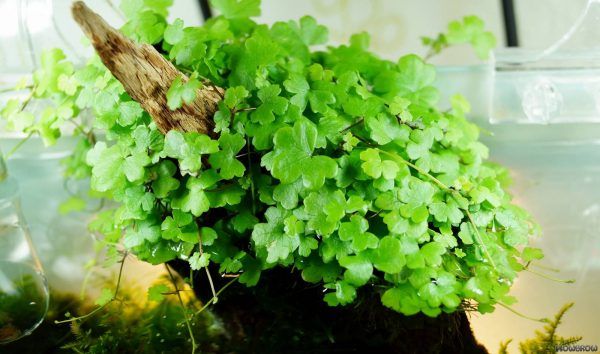
Hydrocotyle tripartita
(Pennywort 'Japan')Remarkable for having submersed and emersed forms that are nearly identical.
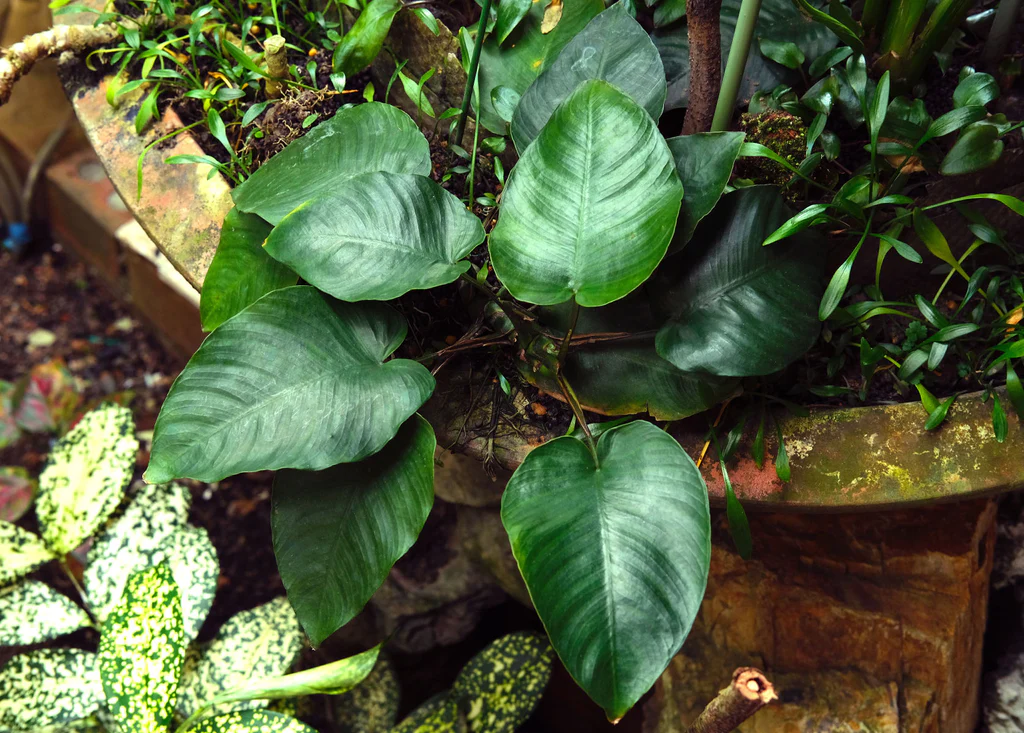
Anubias barteri var. nana
(Anubias Nana)Consistency: High. The thick, dark green waxy leaves look exactly the same in both forms. The primary bridge for hardscape.
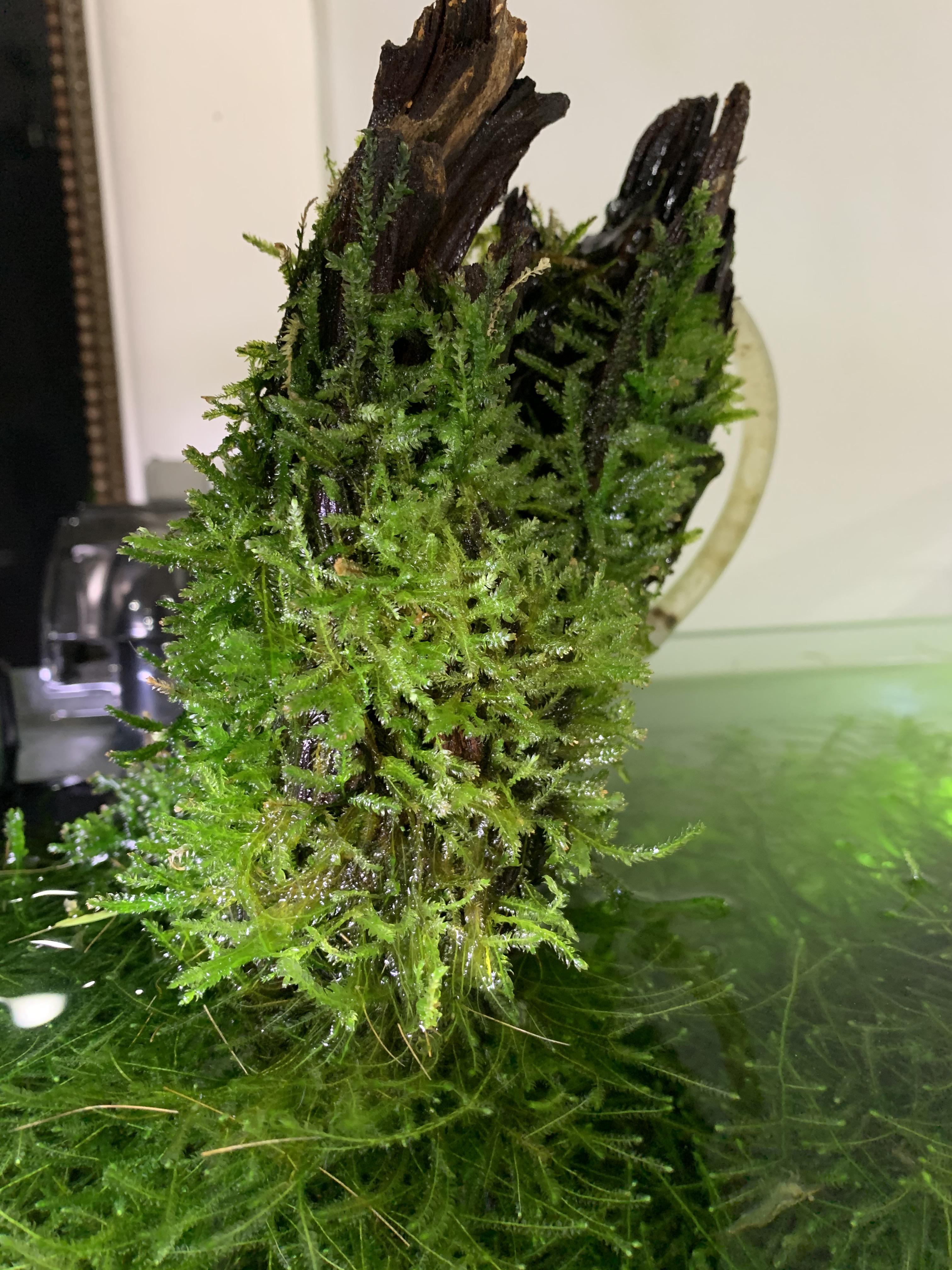
Taxiphyllum barbieri
(Java Moss)Consistency: Medium-High. While it gets "fluffier" underwater, it creates a green carpet over damp wood that mimics its underwater growth perfectly.
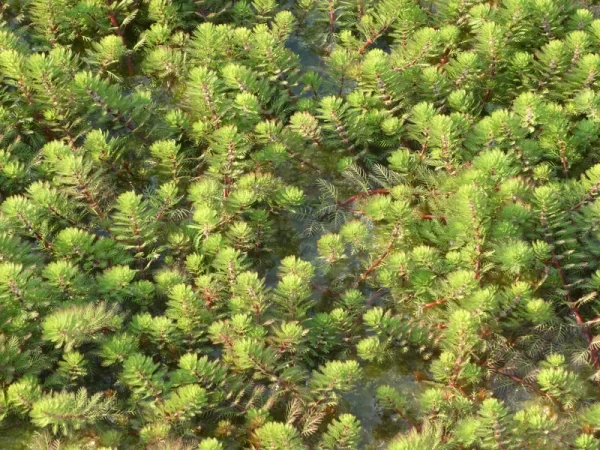
Myriophyllum rubricaule
(Red-stemmed Parrot's Feather)Consistency: High. Maintains its striking reddish-pink stems and finely textured whorled leaves above and below the surface, making it an excellent soft visual bridge across the waterline.
⚠️ Invasive Warning: Many parrot's feather species (such as M. aquaticum) are aggressively invasive. Always dispose of plant trimmings safely in the trash, and never release them into local waterways or the wild.