Underwater Plant Guide
Mastering the art of submerged growth and aquascaping.
Foundation & Setup
Substrate Choice & Depth
The Layered Method: Use ~6–7 cm of aquasoil as your main nutrient layer. Add ~1 cm of fine sand on top to "cap" it. This keeps the soil from floating and looks much cleaner.
Depth Warning: Avoid making substrate excessively deep (10+ cm). Compacted deep layers can create anaerobic zones, producing toxic hydrogen sulfide gas.
Aquasoil Leaching
New Aquasoil often "leaches" high amounts of Ammonia for the first 4–6 weeks. While this is excellent for fishless cycling, it is lethal for livestock. Perform frequent water changes during this initial phase until levels stabilize.
The Sand "Cap"
A 1–2 inch (3–6 cm) sand cap over soil (or 1cm over aquasoil) traps nutrients in the substrate and out of the water column. This reduces algae growth and creates a natural aesthetic. Sand can also be used alone if you add root tabs for nutrition.
Preventing Gas Buildup
• Don't overly compact the substrate when placing it.
• Use plants with strong roots to oxygenate the soil.
• Add burrowing snails (like MTS) to turn the top layer.
• Occasionally moving stems or replanting releases trapped gas safely.
Rock Placement Tip
Always place rocks heavier than 200g directly on top of the aquasoil before adding the sand. Then, surround the rocks with sand. This prevents the hardscape from shifting or collapsing as the sand settles over time.
Substrate Safety
Be extremely cautious with "colorful" or "painted" gravel found in big-box stores; these often contain toxic dyes that can leach into the water over time. Natural pond substrates can be a viable, budget-friendly alternative.
Planting Technique
Tweezers: Use long aquascaping tweezers to grab stems at the base and push them into the soil at a slight angle for better grip.
Weights: Use lead-free weights to keep "bouncy" plants like Hornwort anchored until they establish roots.
The Water Column
Mosses and Ferns have no traditional roots; they eat directly from the water via liquid fertilizers. Conversely, "Rosette" plants (Swords/Crypts) are heavy root feeders and require root tabs or nutrient-rich aquasoil.
Long-Term Nutrition
Aquasoil typically provides enough nutrients for 6 to 12 months. Once the soil is "exhausted," you must begin supplementing with root tabs near the base of your heavy feeders to maintain growth.
Plant Quarantine & Dips
🛡️ Prevent Pests: For plants that are not In-Vitro (tissue culture), it is vital to perform a dip to kill leeches, snails, and eggs before they enter your ecosystem.
The Salt Bath (Best for Hardy Plants)
Recipe: Mix 30g of pure salt per 1 liter of water. Soak plants for exactly 10 minutes.
Salt Choice: Use Aquarium Salt or Kosher Salt. Avoid salts with anti-caking agents like E-535 or E-536.
Safe for: Anubias, Java Fern, Windelov, and Crypts.
The Alum Soak (Best for Moss/Sensitive)
Recipe: 1 tablespoon of Potassium Alum per 1 liter of water. Soak for 24 hours.
Alum is found in pharmacies or craft stores. It is much gentler on delicate tissues than salt or bleach but highly effective against snails and eggs.
The Bleach Dip (High Risk)
Recipe: 1 part bleach to 20 parts water. Soak for only 90 seconds.
Crucial: Follow with a massive rinse in water treated with 4x the normal dose of dechlorinator. Use only for very tough plants; bleach can easily "melt" live plants.
⚠️ Sensitive Plants: DO NOT SALT DIP
The following plants will likely die or be severely damaged by salt baths:
- Hornwort: Salt causes it to "shatter"—all needles will fall off, creating a massive mess.
- Mosses (Spiky/Java/etc): Salt can kill the cells of the moss instantly. Use Alum instead.
- Floating Plants: Frogbit and Red Root Floaters hate getting their leaves wet and are highly intolerant of salt.
Common Plant Problems & Melting
🚨 Problem Melting (TAKE ACTION)
Act immediately if you see:
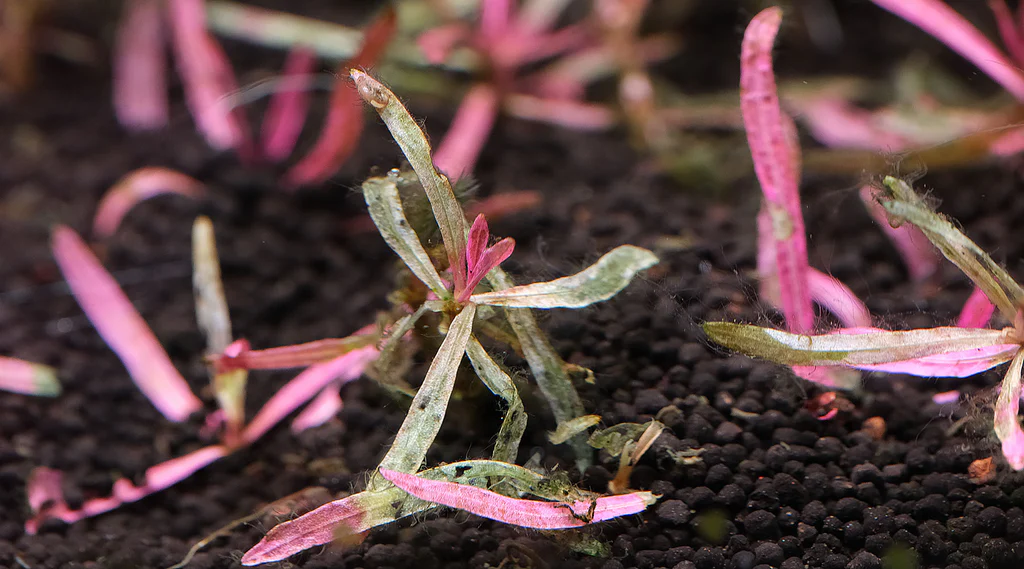
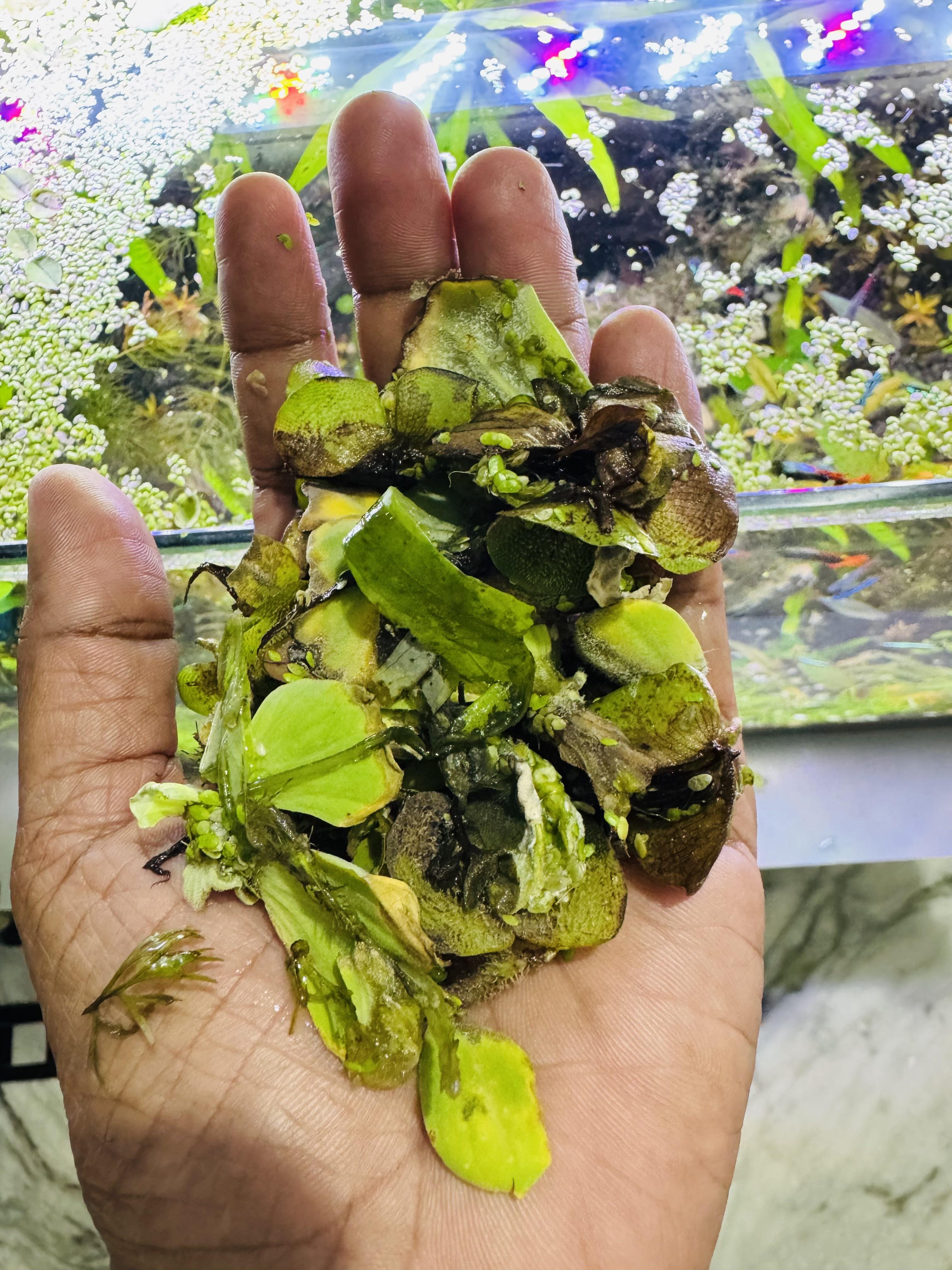
- Rapid decay of multiple plants at once.
- Leaves turning mushy, slimy, or "gooey."
- Plants fully disintegrating into the water.
- Water getting cloudy or smelling like decay.
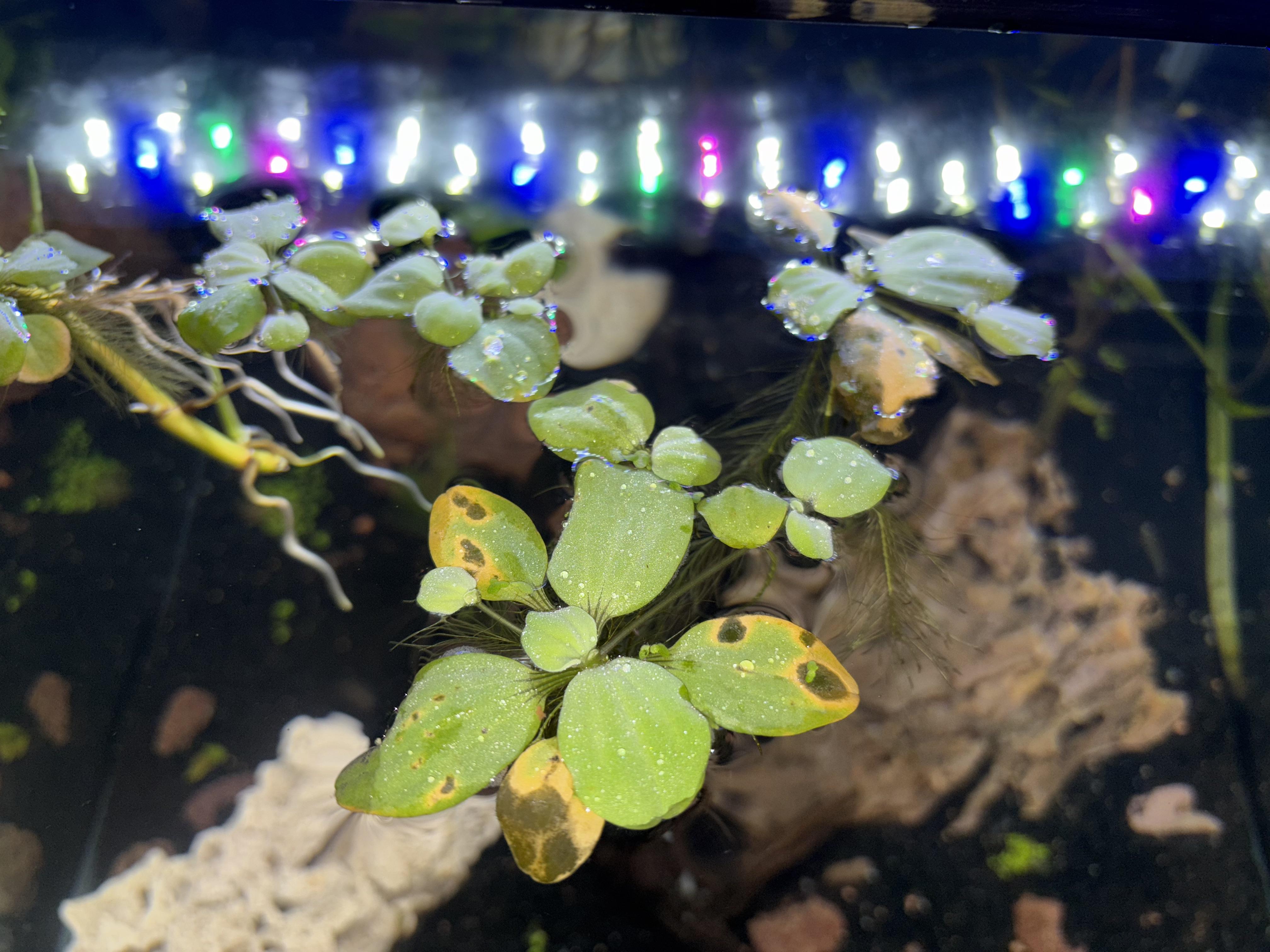
Why: This pollutes the water with ammonia and can stall your nitrogen cycle. Siphon out the decay and perform a water change.
✅ Normal Melting (DO NOTHING)
Relax if you see:
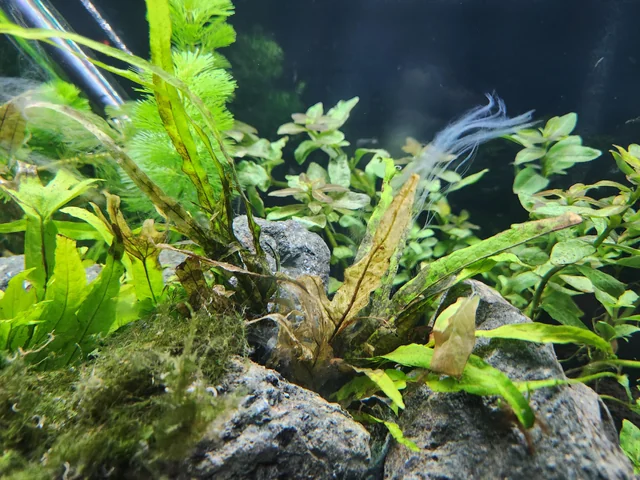
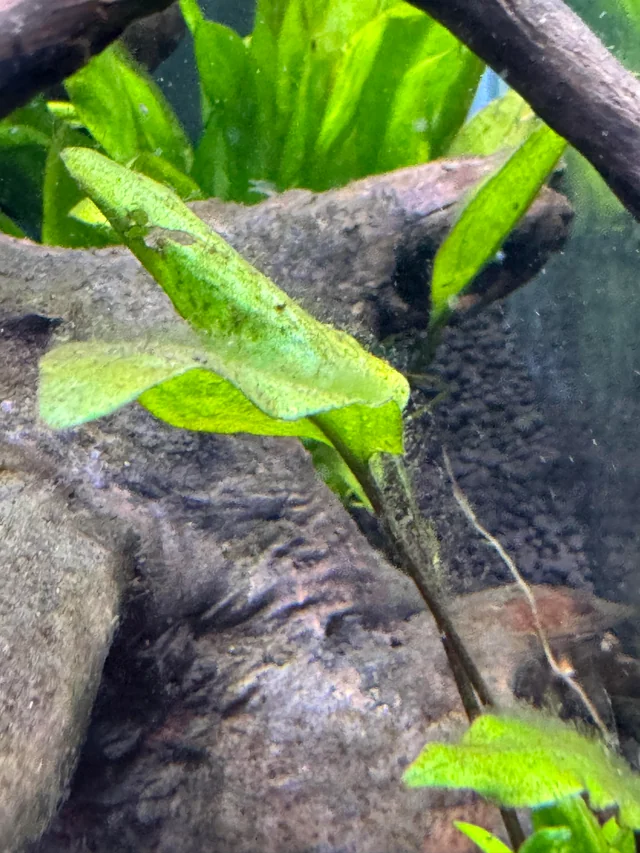
- A few older leaves turning transparent or brown.
- Older leaves melting while new growth appears.
- The plant stays rooted and the stem/rhizome is firm.
Why: Many plants (especially Cryptocoryne) "reset" when moved. Simply trim the dead leaves and let the plant regrow stronger.
Visual Identification of Melting:
Lighting & Nutrition
💡 Lighting Guide
Duration: Aim for 6–8 hours of light per day. Using a timer is highly recommended to maintain consistency.
Warning: Lighting for 10+ hours often leads to massive algae outbreaks. If you have algae, reduce the intensity or the duration.
Intensity: Low-light plants (Moss/Ferns) can sit in corners; high-light plants (Carpets/Red stems) need to be directly under the light.
🧪 Fertilization Tips
When to start: If using rich Aquasoil, wait 1–2 months before adding liquid ferts. If using sand, start immediately.
Methods: Use Liquid Fertilizer for column feeders (Moss, Ferns, Stems) and Root Tabs for heavy root feeders (Swords, Crypts).
CO2: Not required for "Easy" plants, but "Hard" plants will die without a pressurized CO2 system.
🛡️ The Balancing Act
Algae is caused by an imbalance between Light and Nutrients. If you have too much light and not enough plants/nutrients, algae will win. If you have too many nutrients and not enough light, algae will win. Consistency is key!
Mosses (Low Light & Versatile)
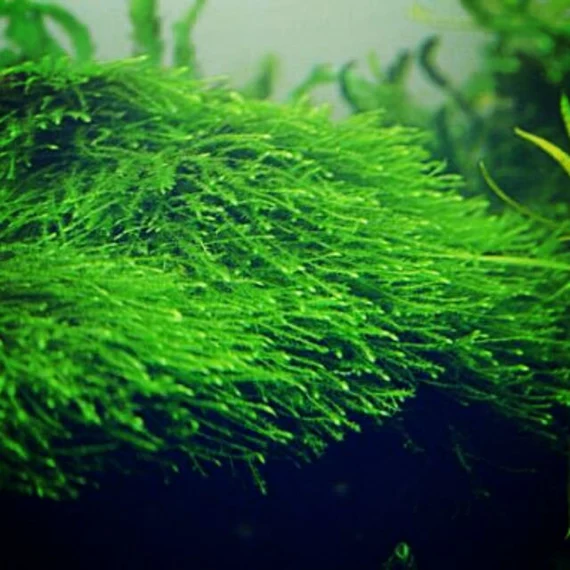
Taxiphyllum barbieri
(Java Moss)Easy
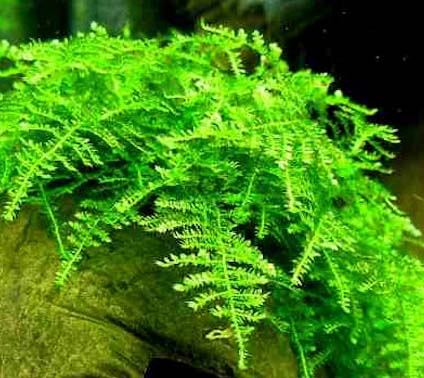
Vesicularia montagnei
(Christmas Moss)Medium
Requires regular pruning to prevent the lower layers from rotting.
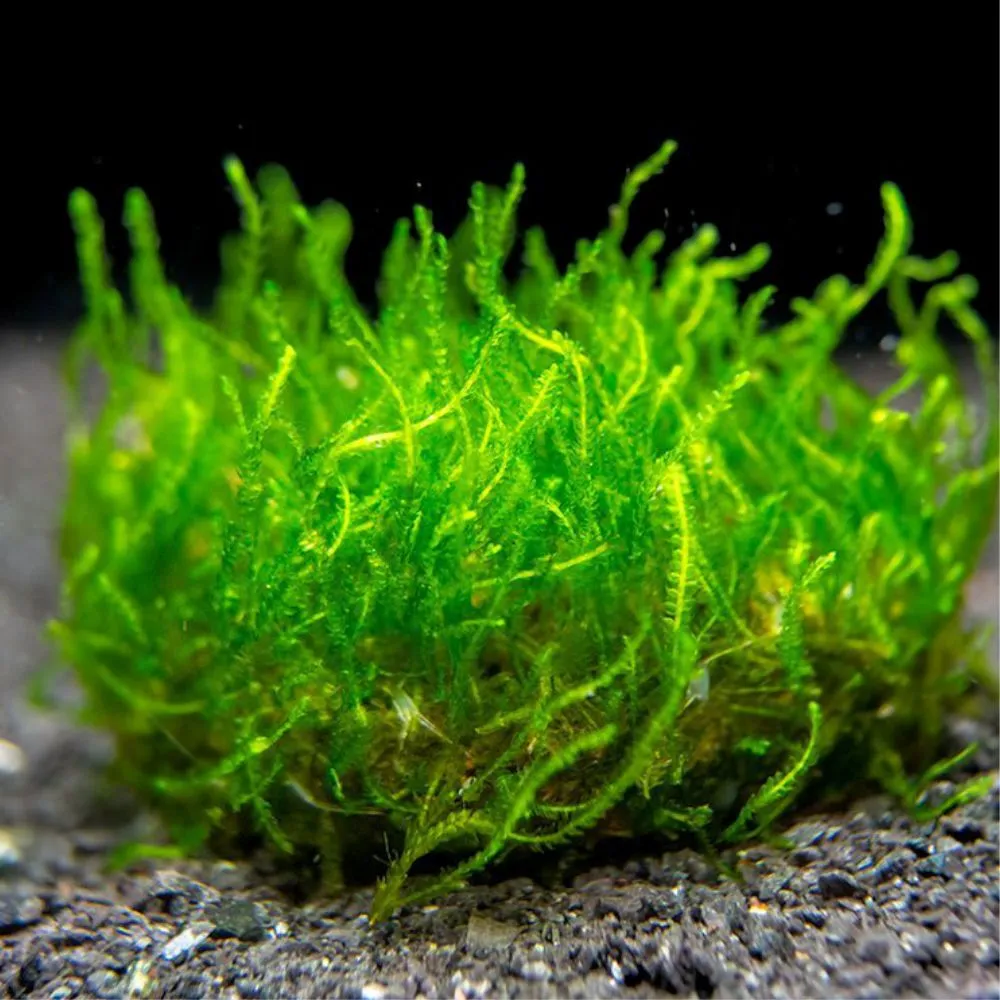
Taxiphyllum 'Flame'
(Flame Moss)Easy
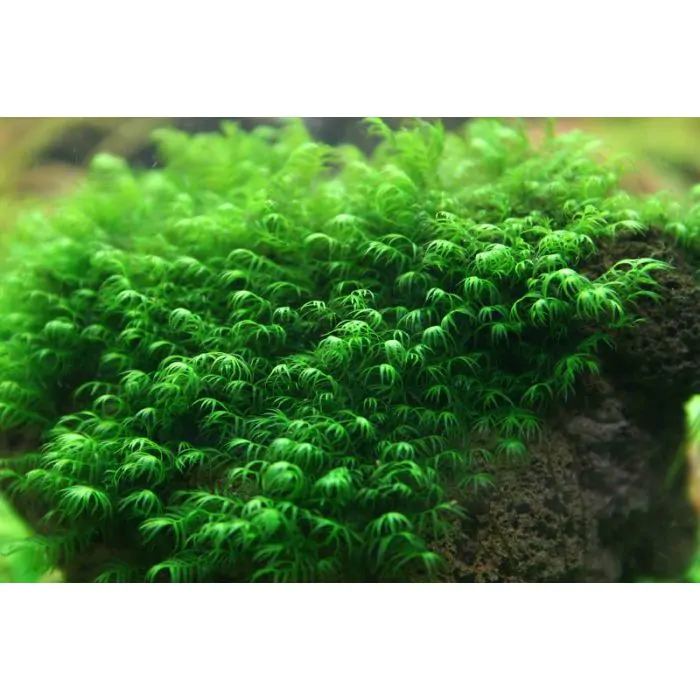
Fissidens fontanus
(Phoenix Moss)Medium
Sensitive to sudden water parameter changes and high temperatures.
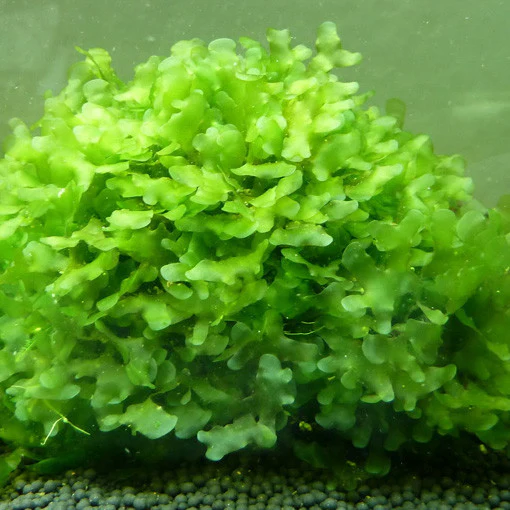
Monosolenium tenerum
(Pellia)Medium
Extremely brittle structure; very difficult to anchor without breaking.
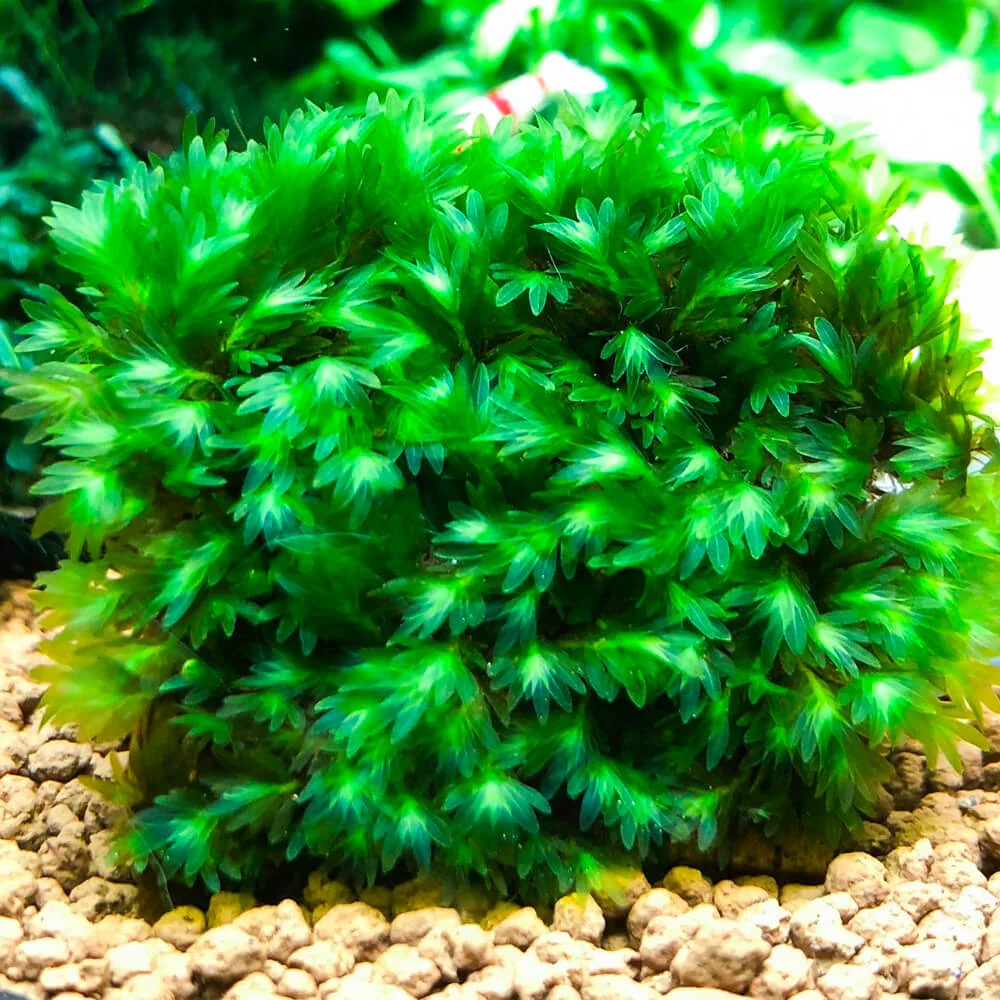
Fissidens sp. 'Miroshaki'
(Miroshaki Moss)Medium
Very slow growth rate makes it highly susceptible to algae growth.
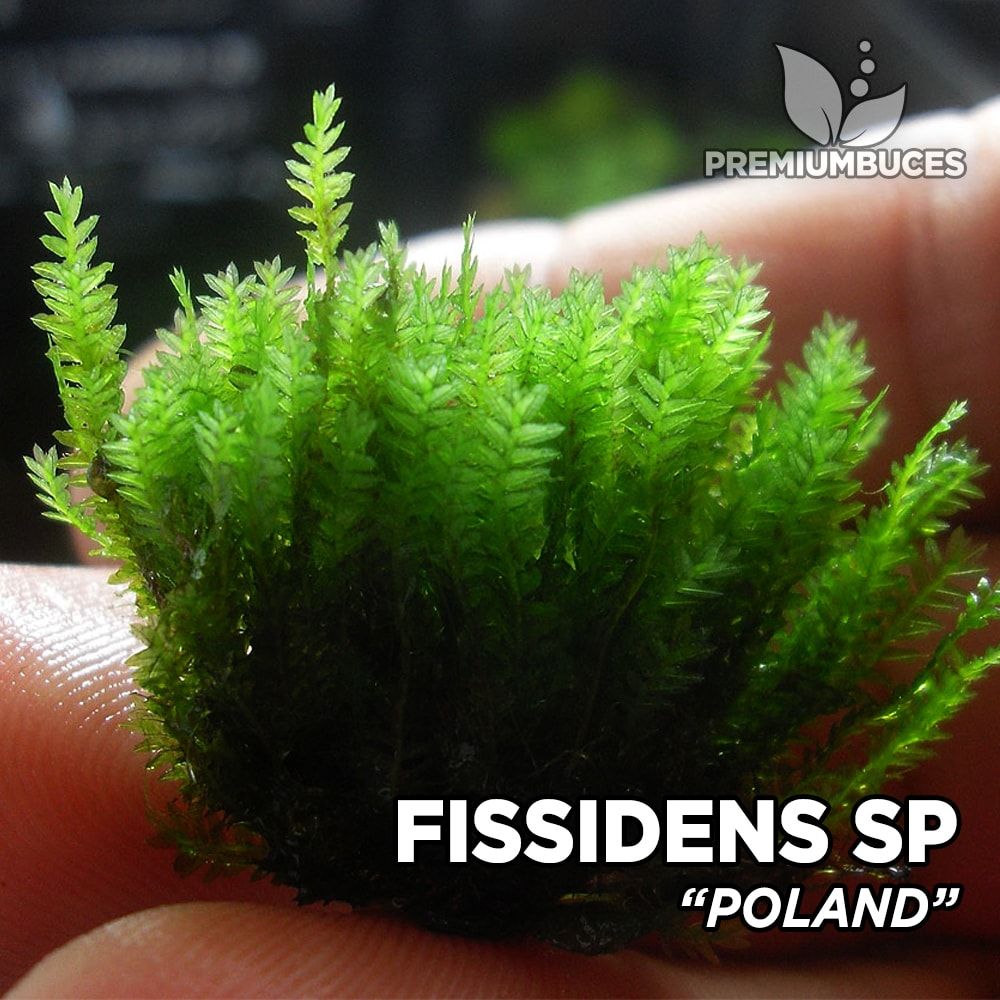
Fissidens sp. 'Poland'
(Poland Moss)Medium
Demands very stable, cool water and high oxygen levels to thrive.
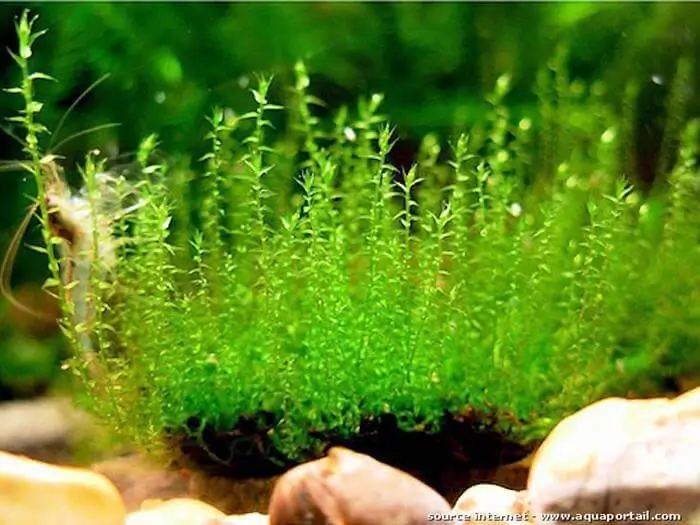
Amblystegium serpens
(Nano Moss)Easy
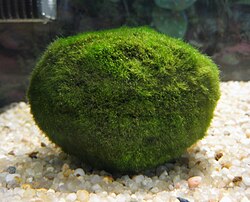
Aegagropila linnaei
(Marimo Moss Ball)Easy
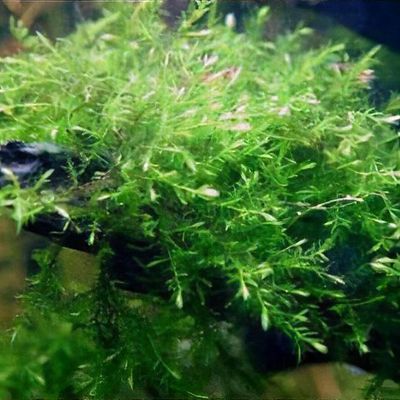
Fontinalis antipyretica
(Willow Moss)Easy
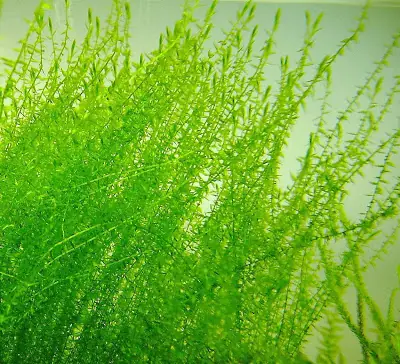
Leptodictyum riparium
(Stringy Moss)Easy
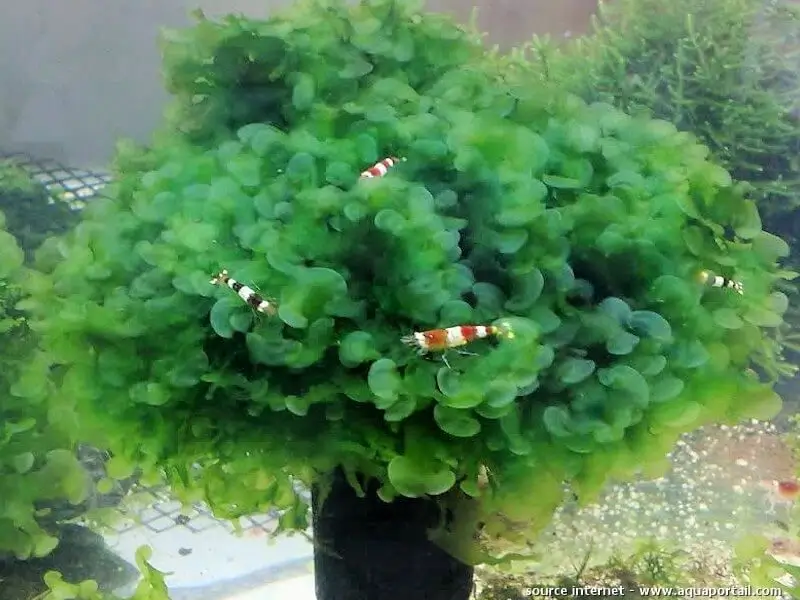
Lomariopsis lineata
(Süsswassertang)Easy
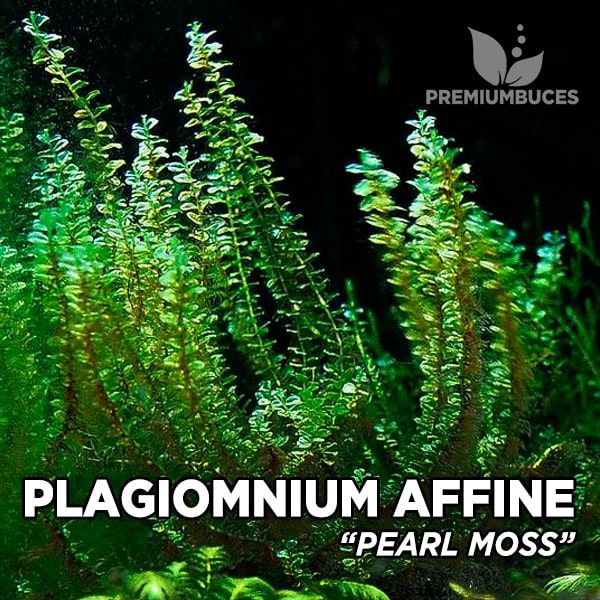
Plagiomnium cf. 'Affine'
(Pearl Moss)Medium
Requires very clean, filtered water and moderate lighting to prevent browning.
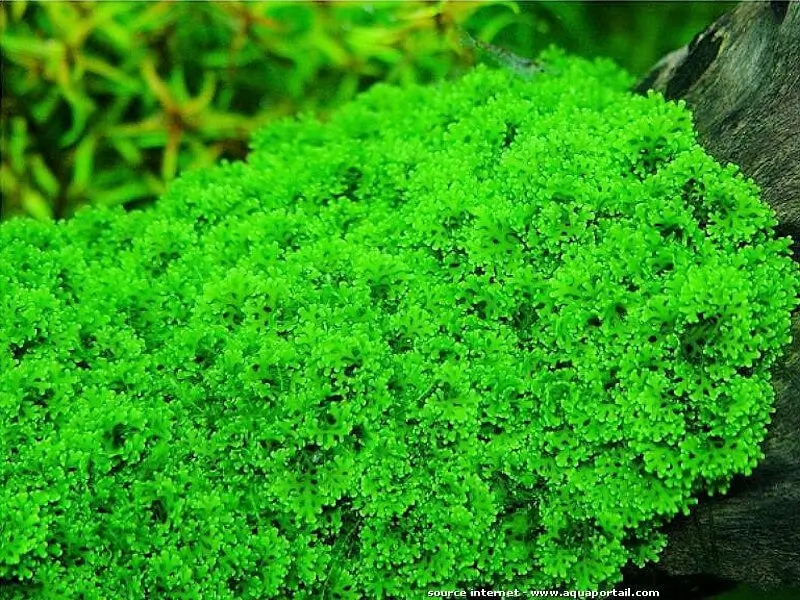
Riccardia chamedryfolia
(Coral Moss / Mini Pellia)Medium
Sensitive to liquid CO2 (Glutaraldehyde) and very slow to establish.
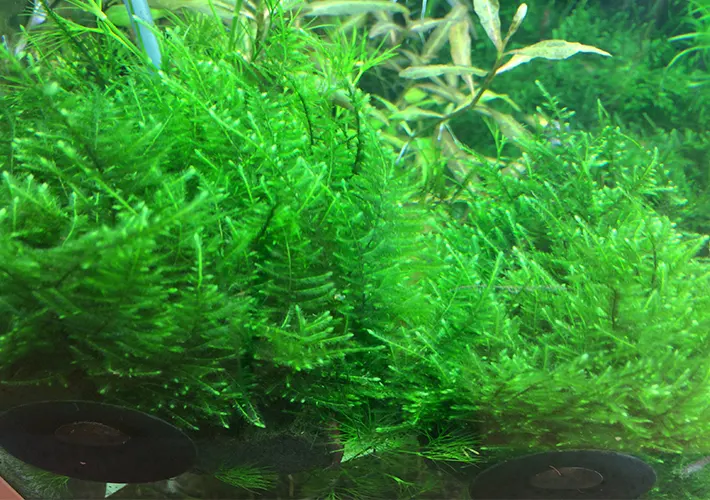
Taxiphyllum alternans
(Taiwan Moss)Easy
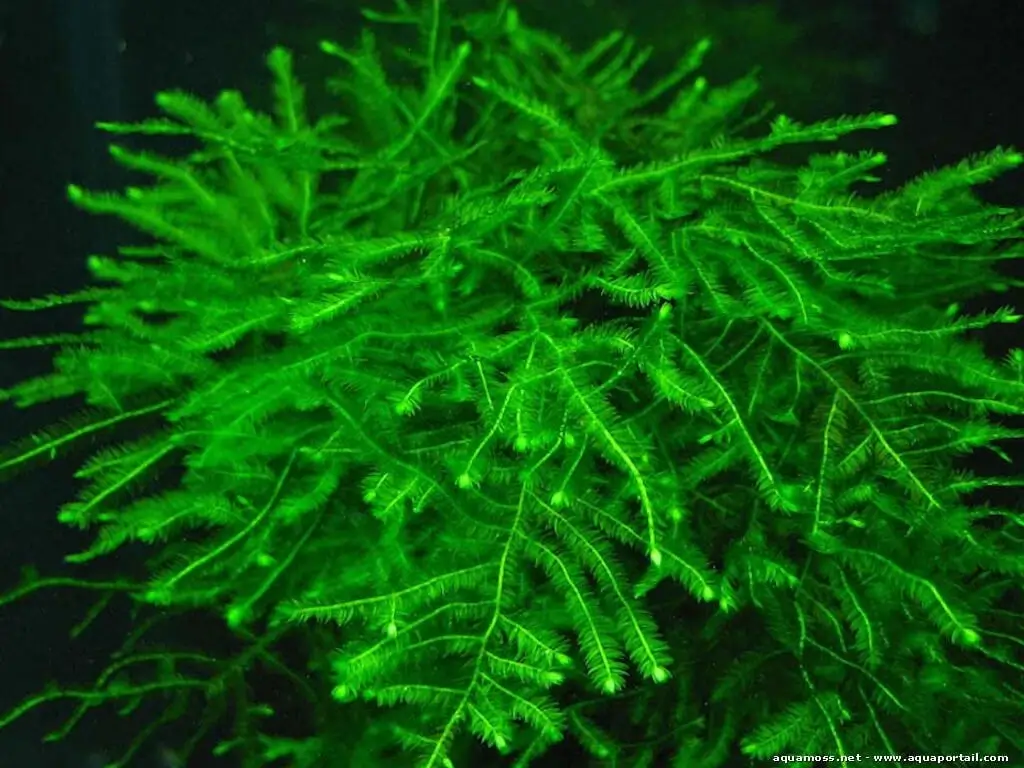
Taxiphyllum sp. 'Spiky'
(Spiky Moss)Easy
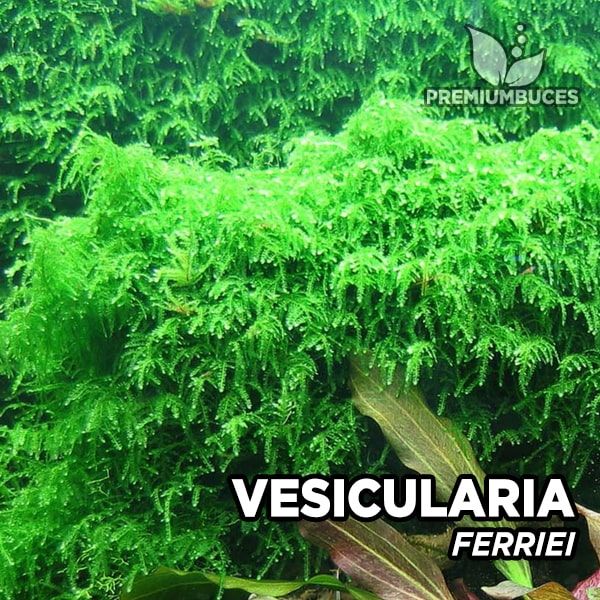
Vesicularia ferriei
(Weeping Moss)Medium
Traps detritus easily; needs consistent water flow to keep the fronds clean.
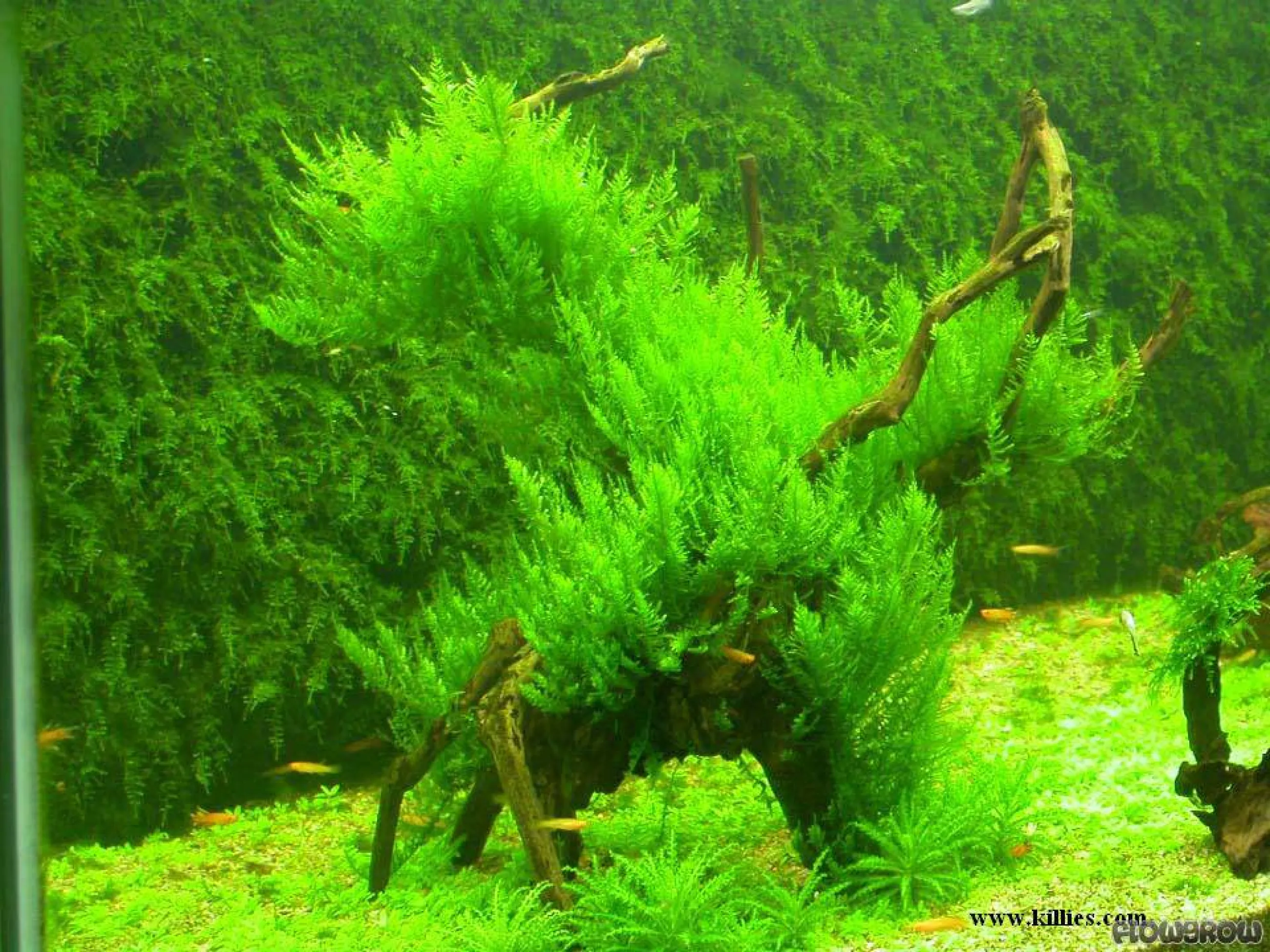
Vesicularia reticulata
(Erect Moss)Medium
Requires strong vertical light to maintain its distinctive upright growth habit.
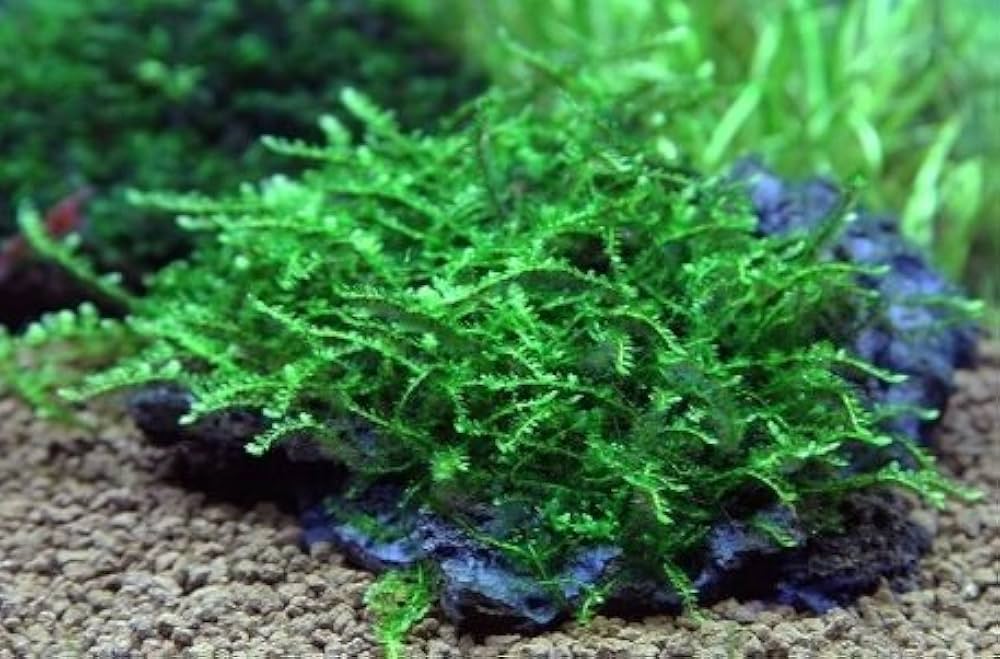
Vesicularia sp.
(Creeping Moss)Easy
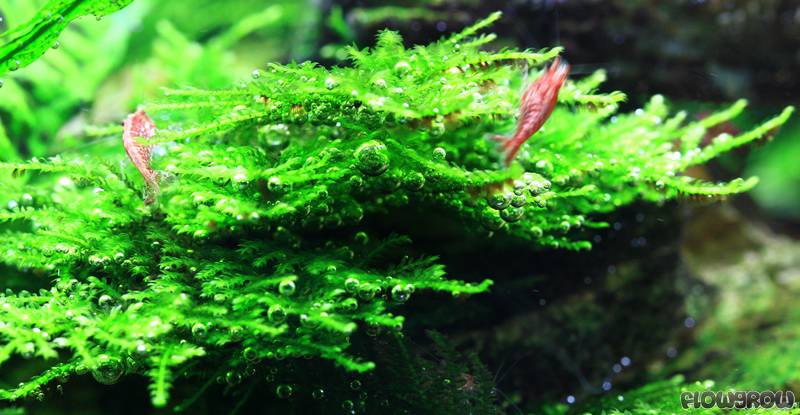
Vesicularia sp. 'Mini Christmas'
(Mini Christmas Moss)Easy
Vesicularia sp. 'Triangelmoos'
(Triangle Moss)Easy
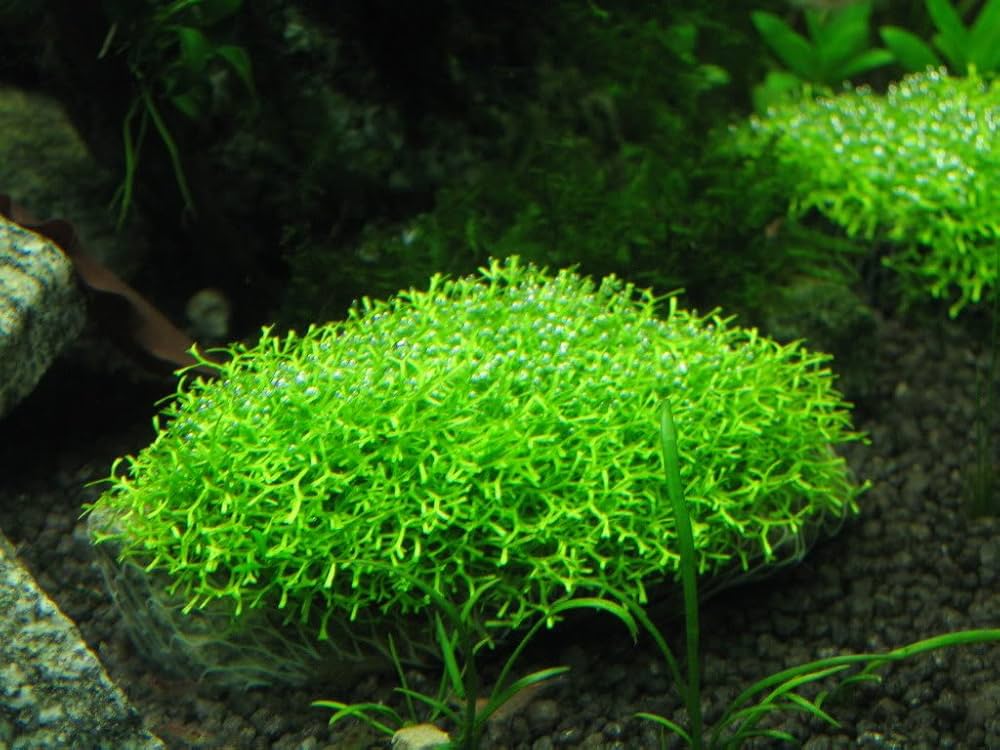
Riccia fluitans
(Riccia Moss / Crystalwort)Medium
Has no roots; must be tied down with mesh or line. Requires heavy trimming to prevent the bottom from rotting and floating away.
Stem Plants (Fast Growers)
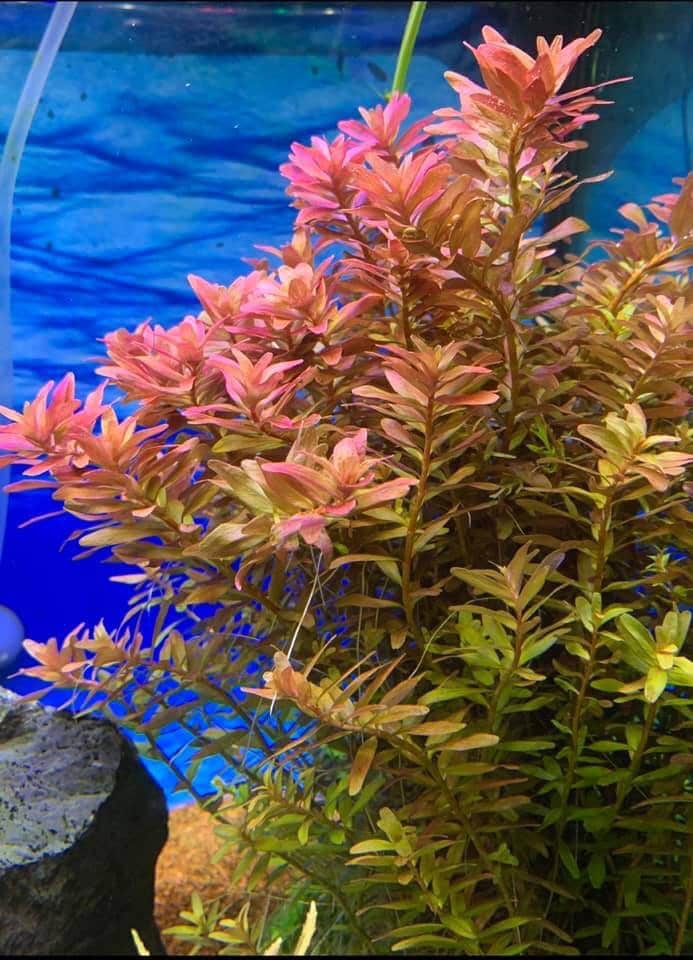
Rotala rotundifolia
(Rotala)Easy
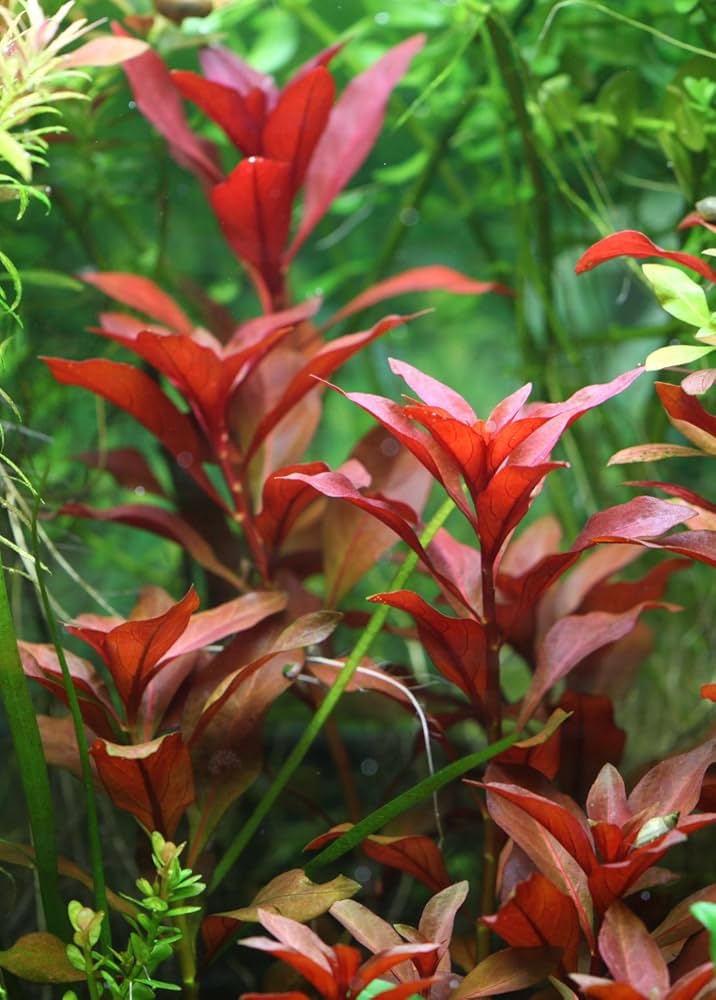
Ludwigia repens
(Red Ludwigia)Easy
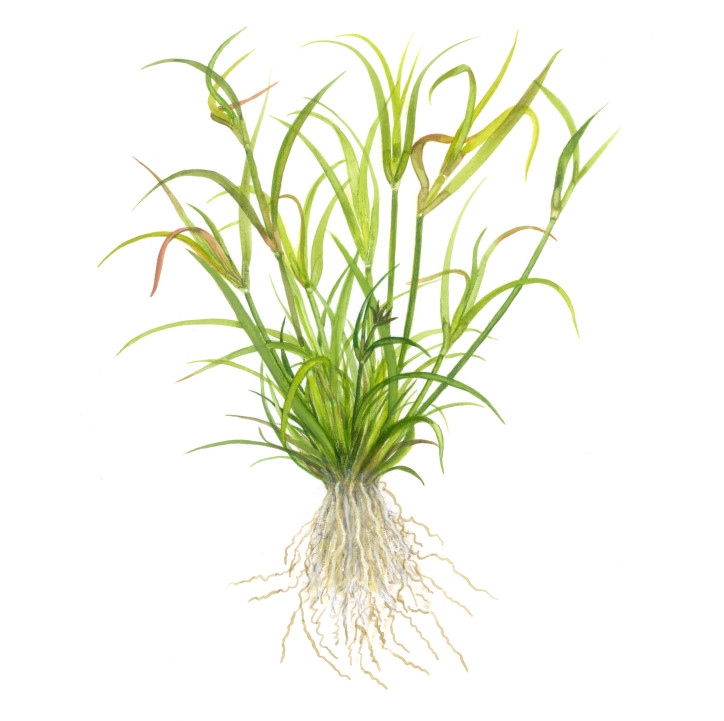
Juncus repens
(Creeping Rush)Easy
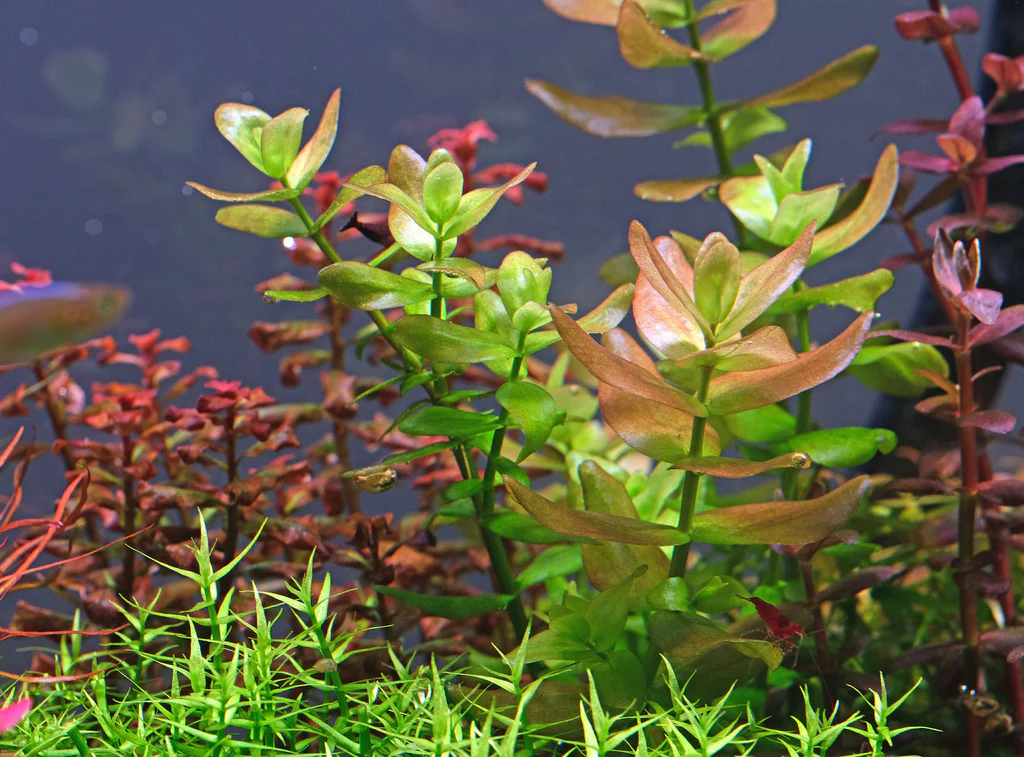
Bacopa caroliniana
(Giant Bacopa)Easy
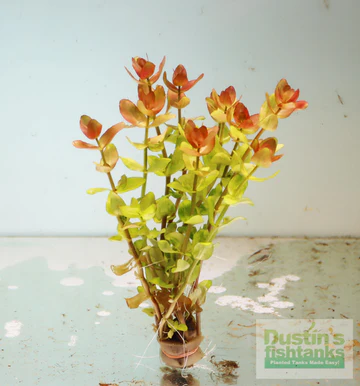
Bacopa caroliniana 'Yellow Flame'
(Yellow Flame Bacopa)Easy
A selectively bred cultivar featuring thick, durable, rubbery leaves. It develops vibrant yellow-to-pinkish-red tips under medium to high lighting.
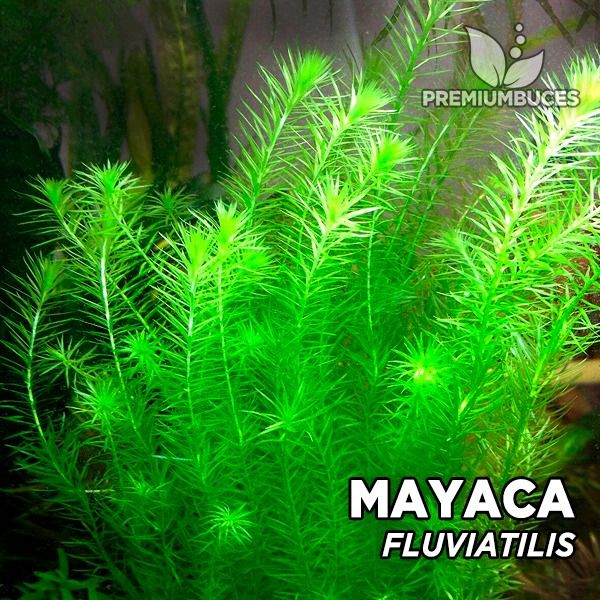
Mayaca fluviatilis
(Bog Moss / Stream Bogmoss)Easy
A delicate, feathery stem plant that thrives in soft water. It is a great indicator plant; its growing tips will turn pale or white if iron levels drop too low.
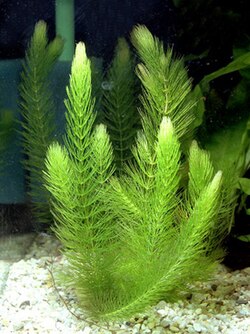
Ceratophyllum demersum
(Hornwort)Easy
It will release its spikes and it can make a mess.
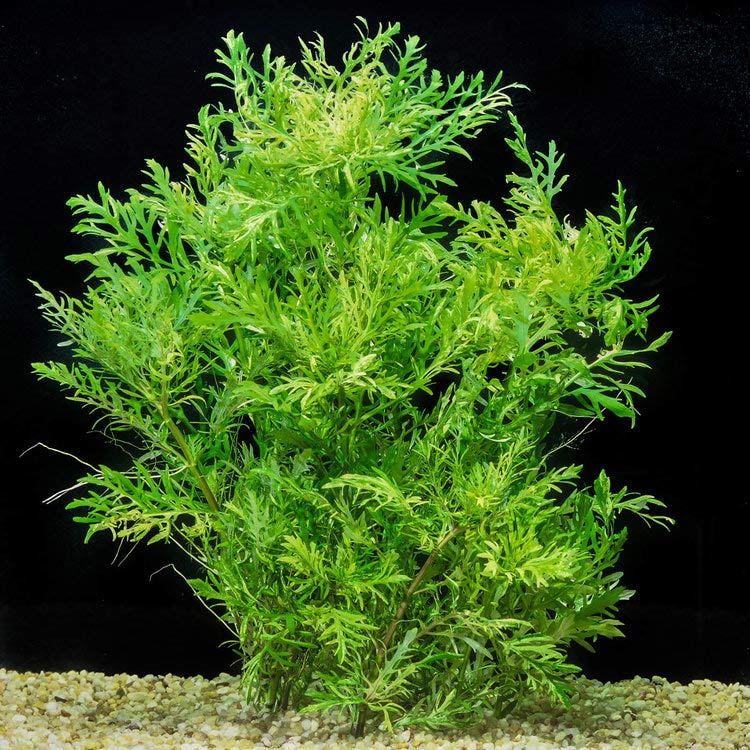
Hygrophila difformis
(Water Wisteria)Easy
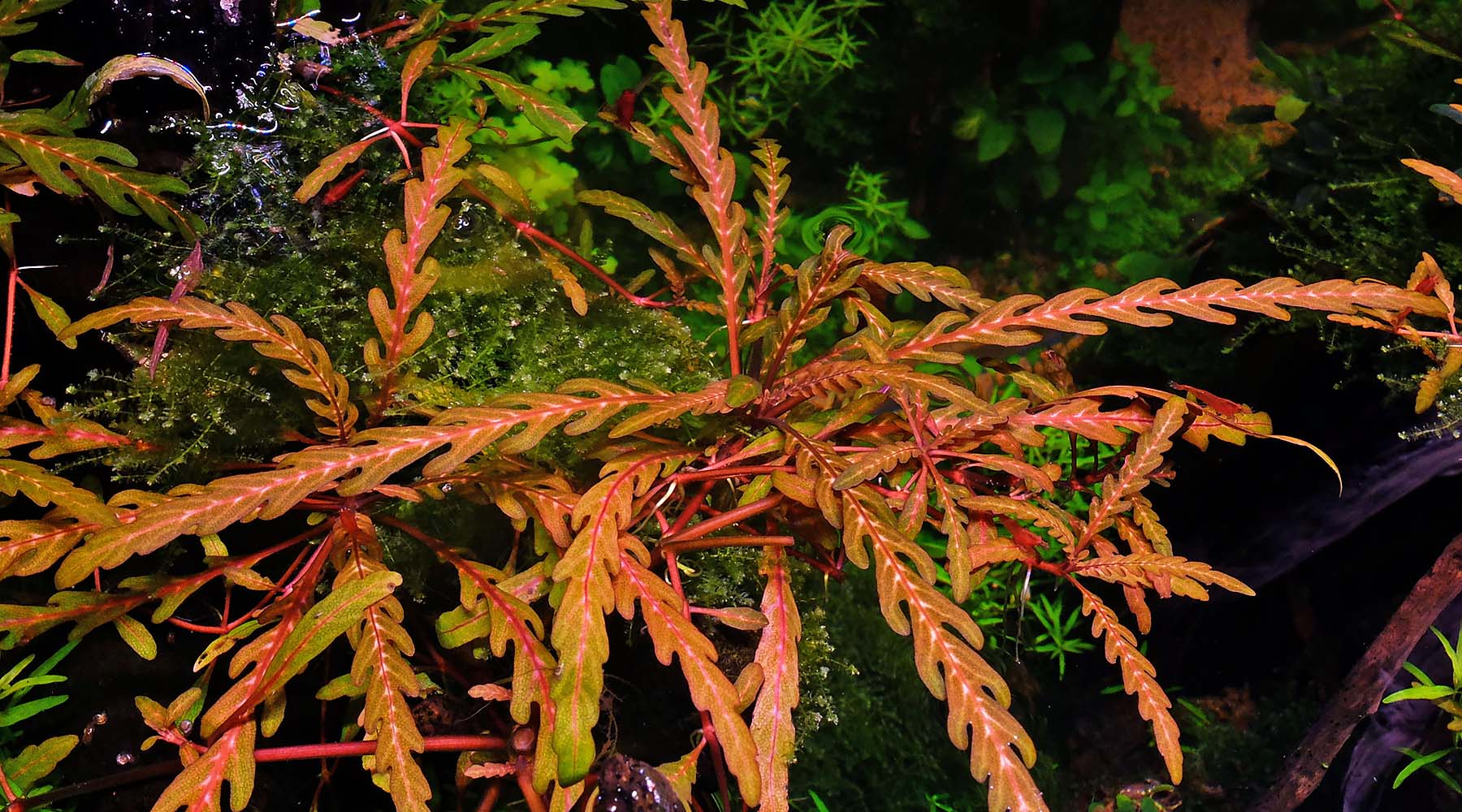
Hygrophila pinnatifida
(Fern Hygrophila)Medium
A unique stem plant that can also be attached to wood. Requires high potassium and iron to stay healthy.
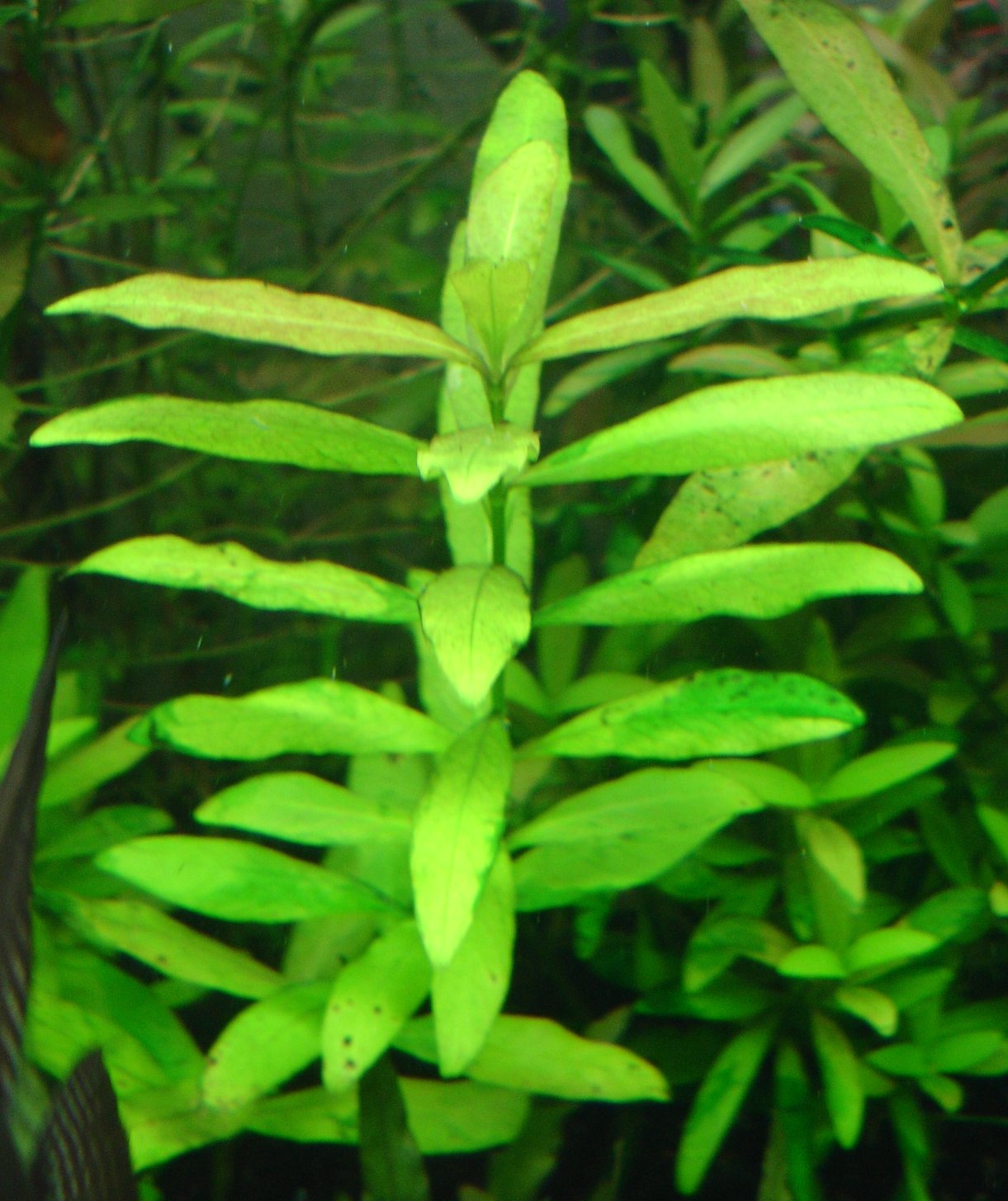
Hygrophila polysperma
(Dwarf Hygro)Easy
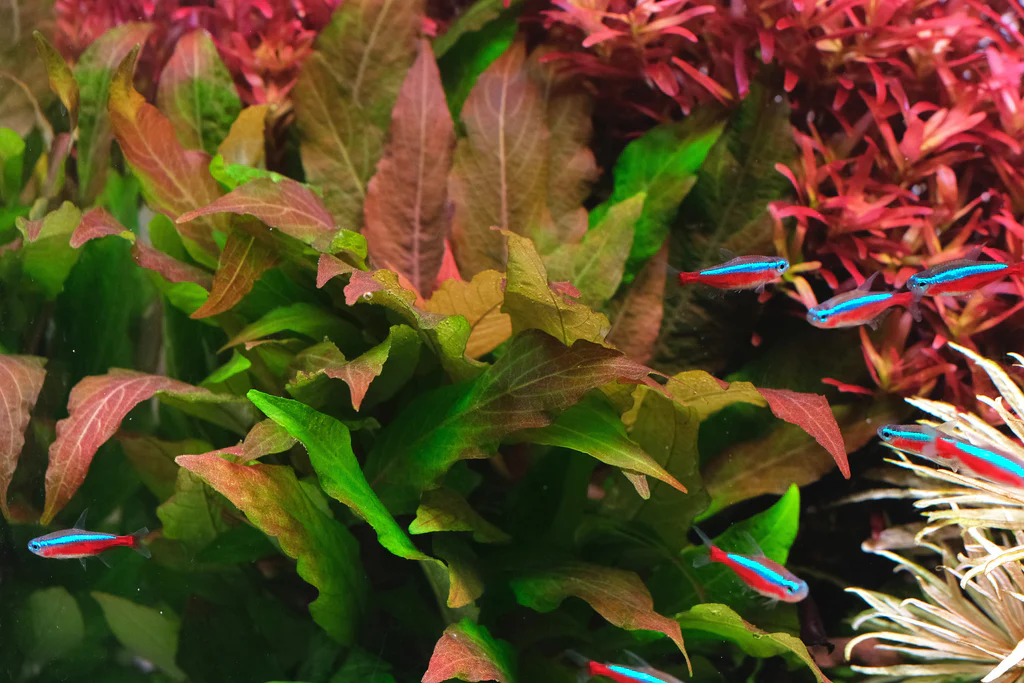
Hygrophila corymbosa
(Giant Hygro / Temple Plant)Easy
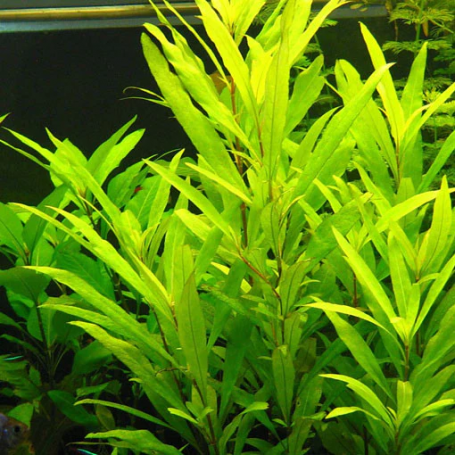
Hygrophila corymbosa 'Siamensis 53B'
(Narrow Leaf Hygro)Easy
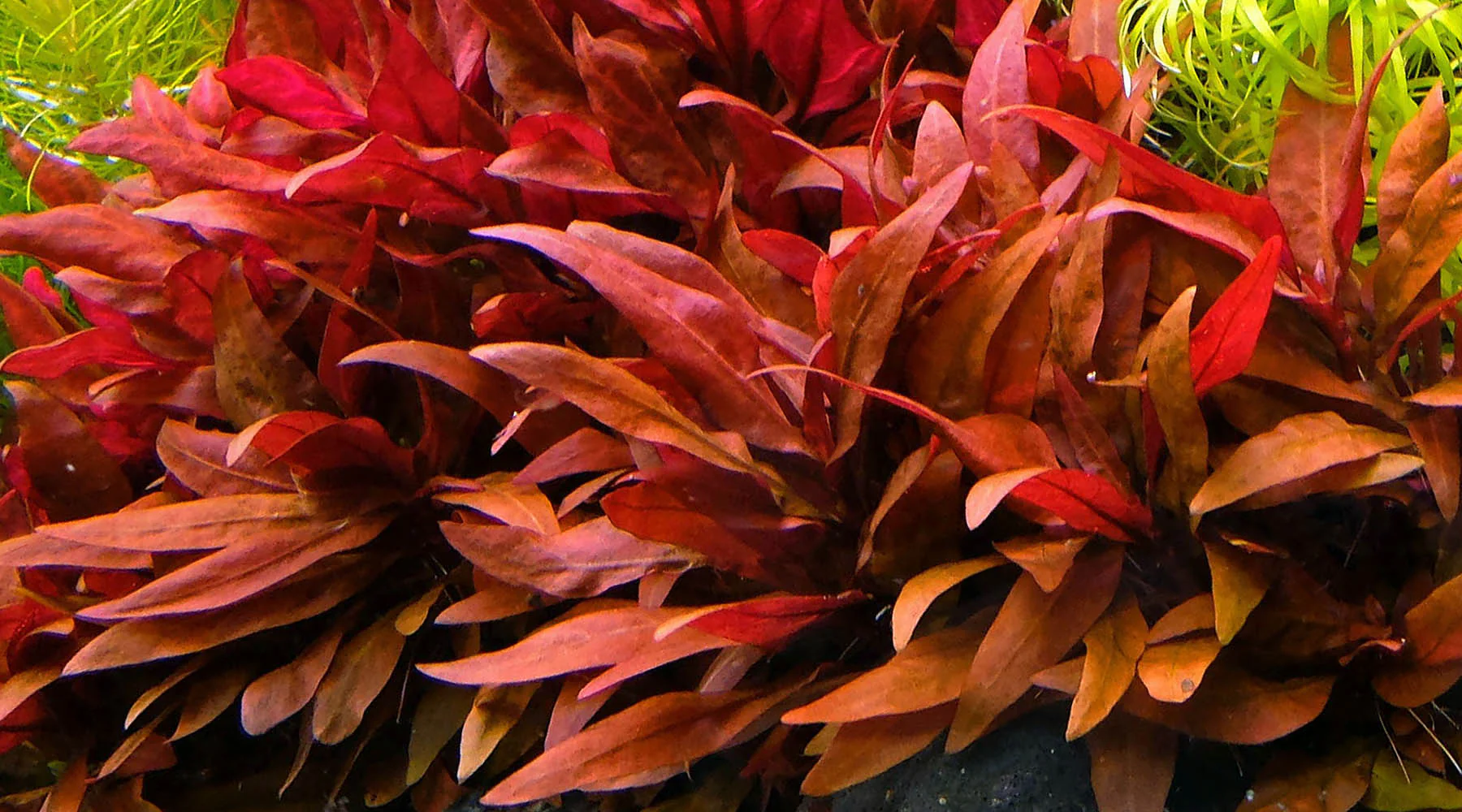
Alternanthera reineckii
(Scarlet Temple)Medium
Needs high light and iron to stay red; very prone to melting if moved frequently.
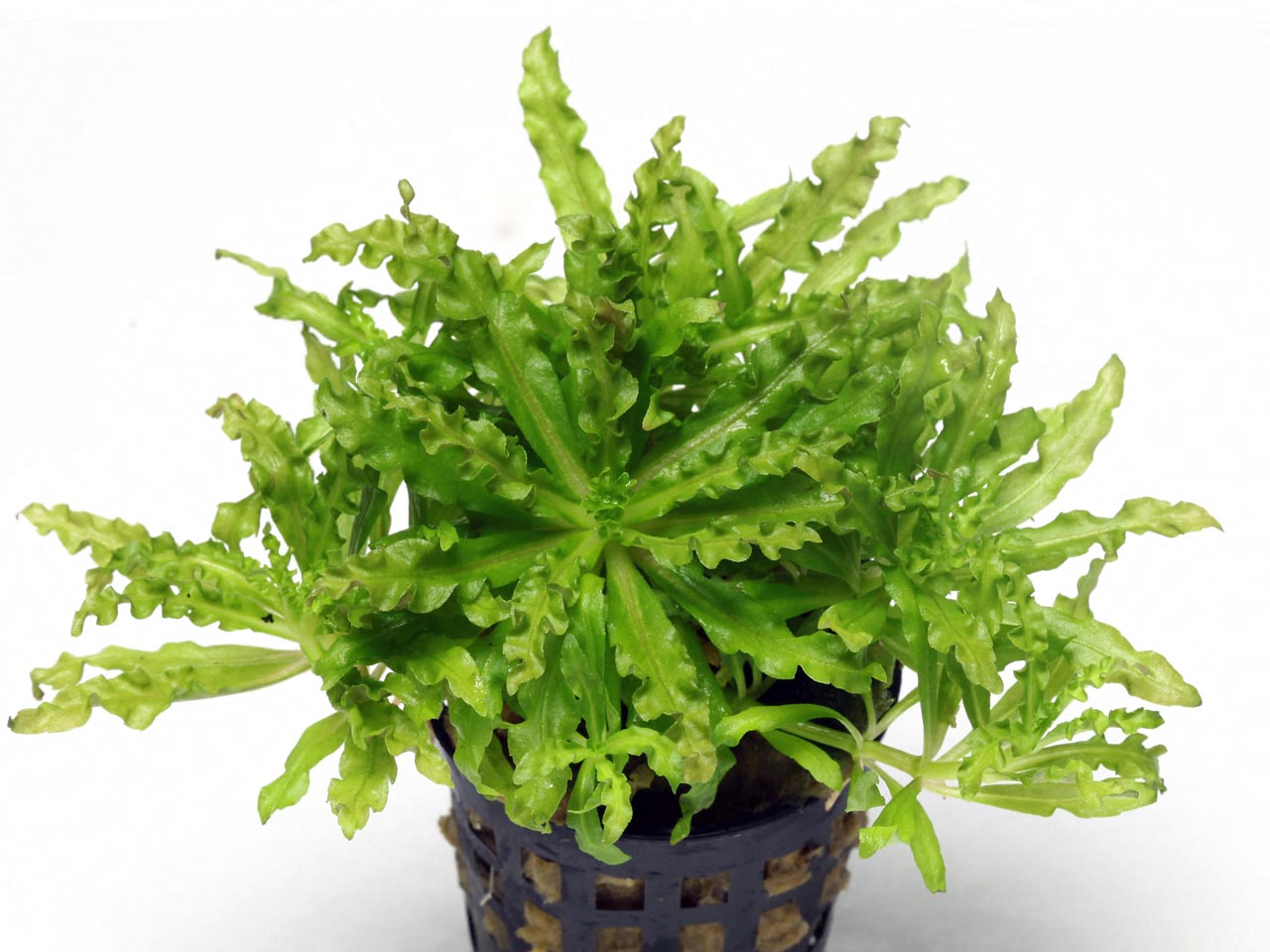
Pogostemon helferi
(Downoi)Medium
Requires stable CO2 levels and is highly sensitive to liquid carbon additives.
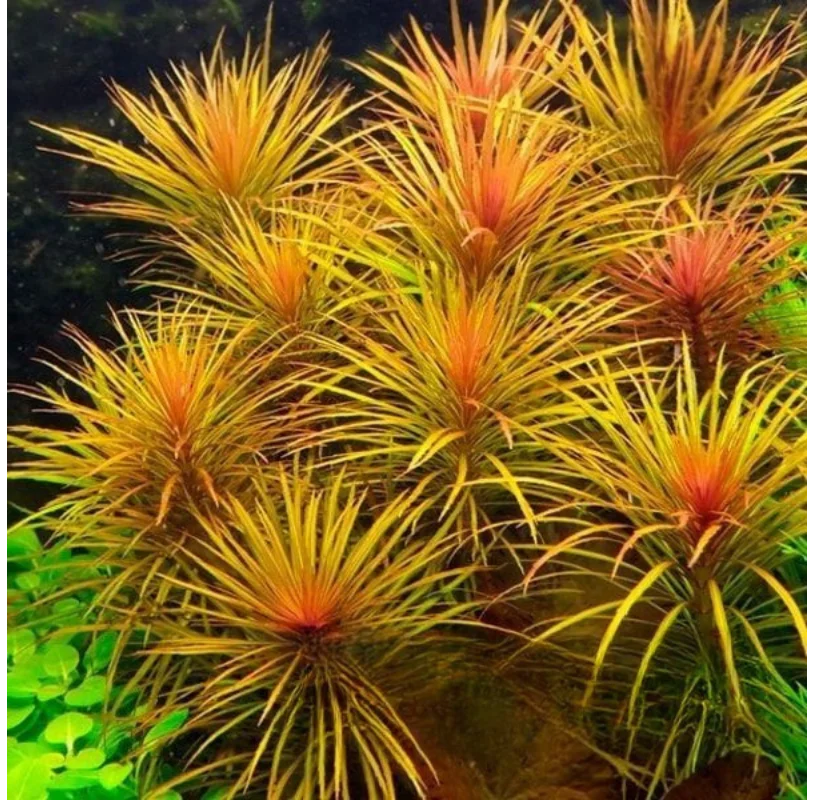
Pogostemon stellatus 'Octopus'
(Octopus Plant)Easy
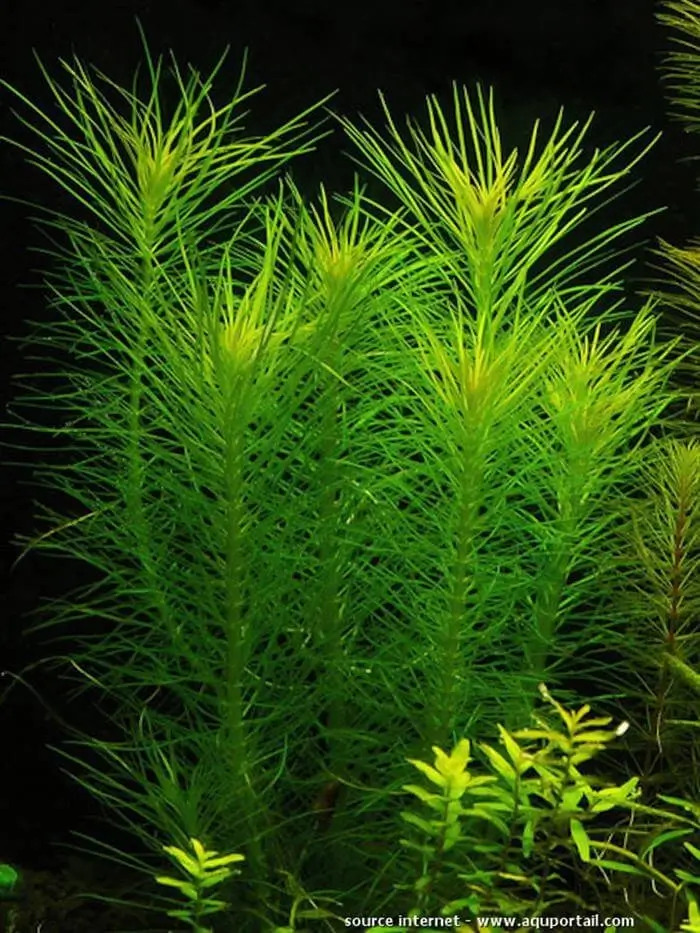
Pogostemon erectus
(Pogostemon Erectus)Medium
Requires moderate to high light and consistent nutrition to prevent the lower needles from shedding.
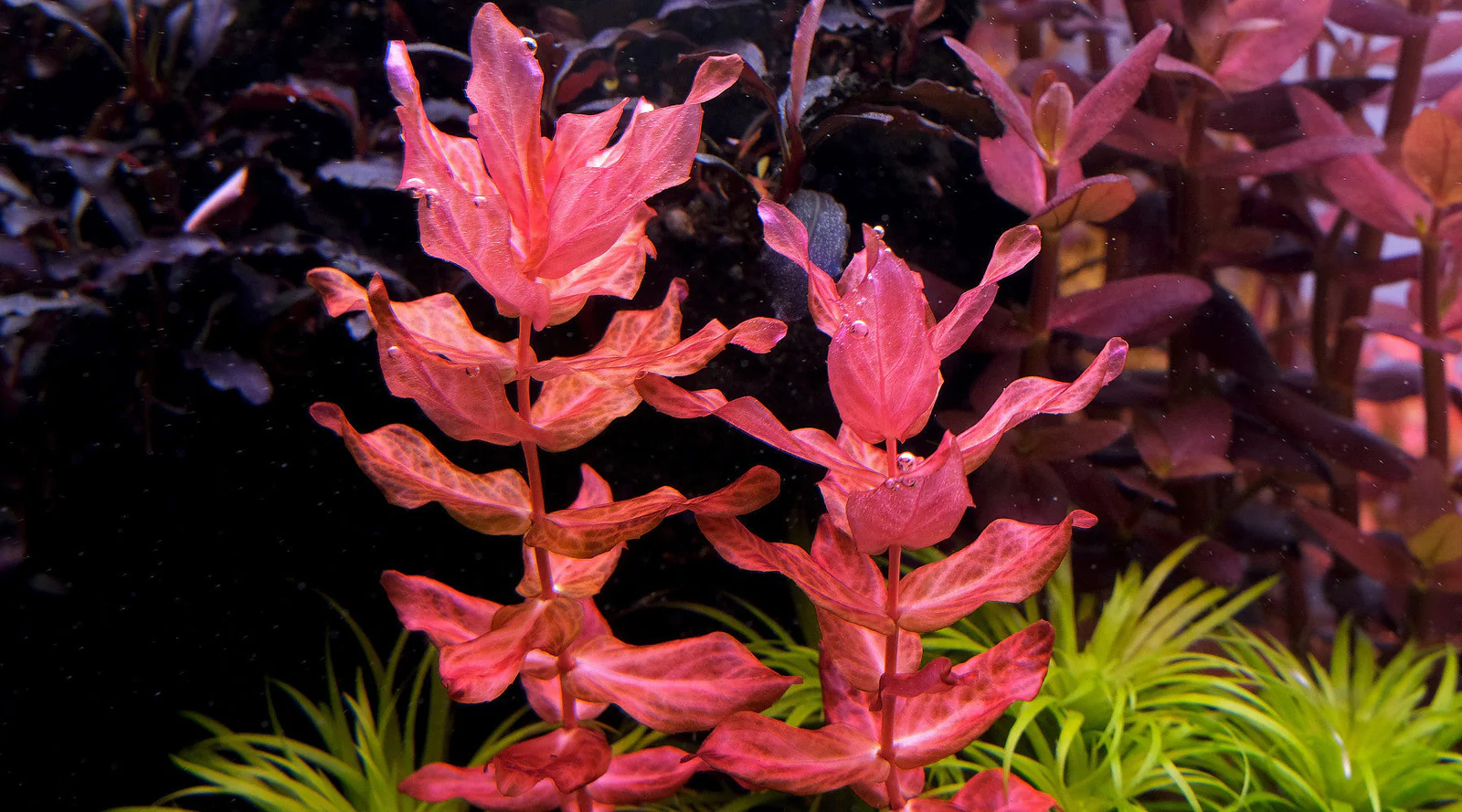
Rotala macrandra
(Giant Red Rotala)Hard
Demands very soft water, high CO2, and precise dosing; will die quickly if parameters drift.
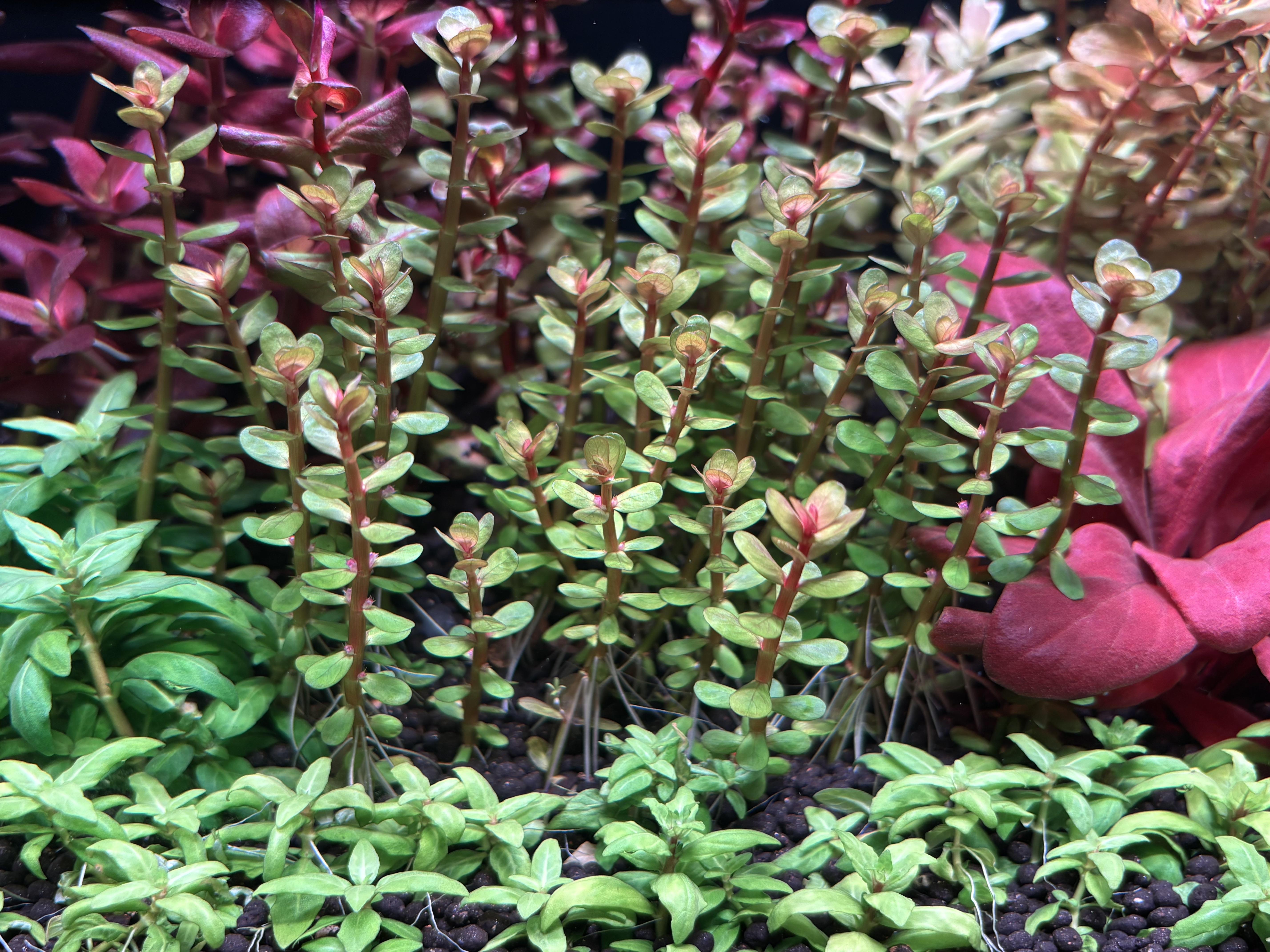
Rotala indica
(Bonsai Rotala / Indian Toothcup)Medium
Requires high light and stable CO2 to maintain its unique upright 'bonsai' growth habit.
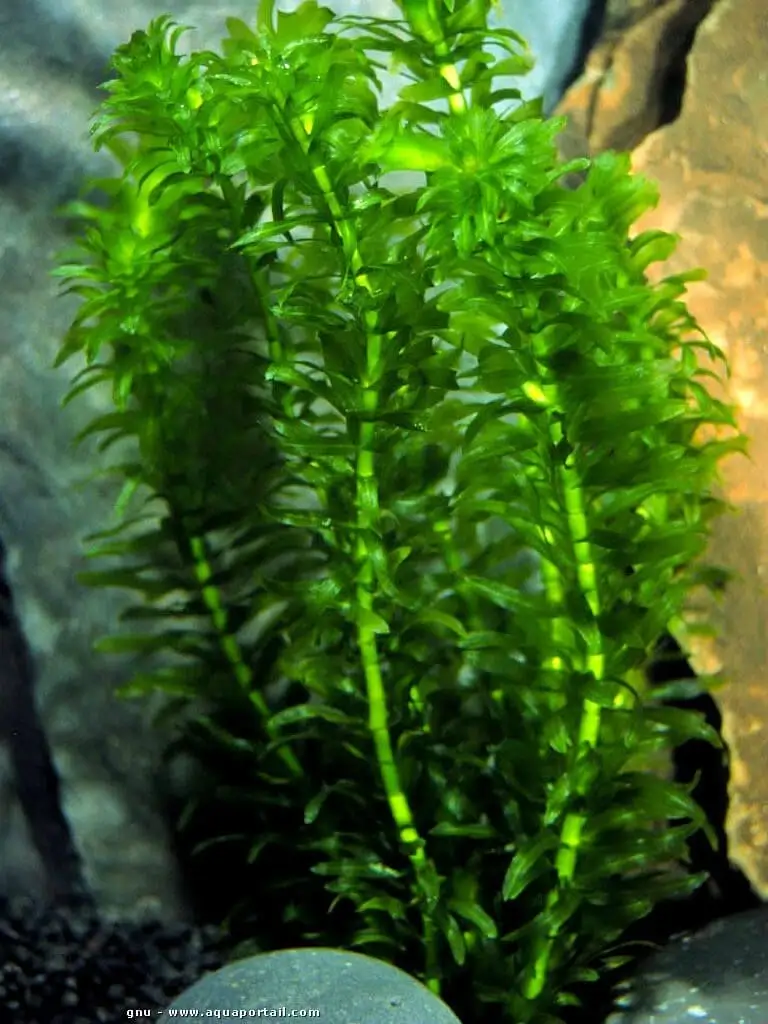
Egeria densa
(Anacharis / Brazilian Elodea)Easy
One of the best oxygenators; prefers cooler water and may melt if temperatures stay above 27°C.
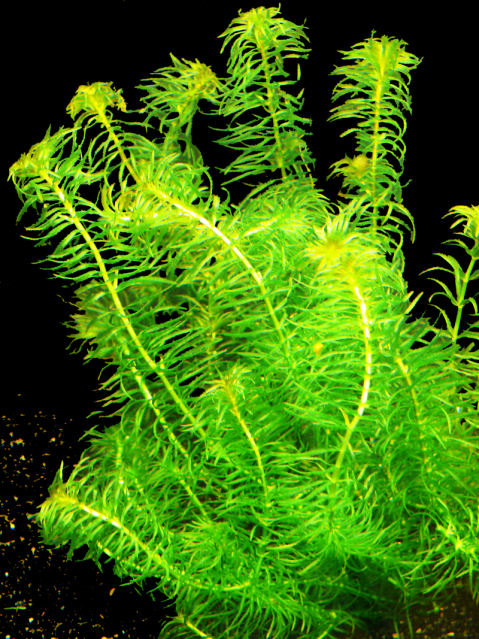
Egeria najas
(Narrow-leaf Anacharis)Easy
A fast-growing nutrient sponge; more tolerant of high temperatures than Egeria densa.
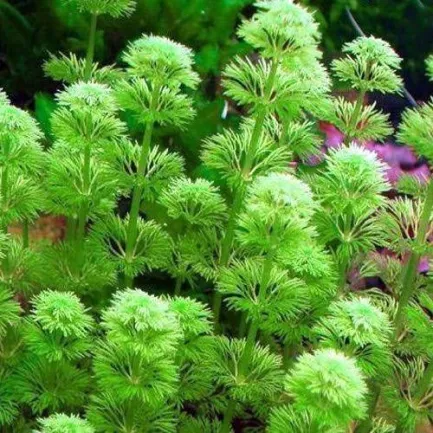
Limnophila sessiliflora
(Asian Ambulia)Easy
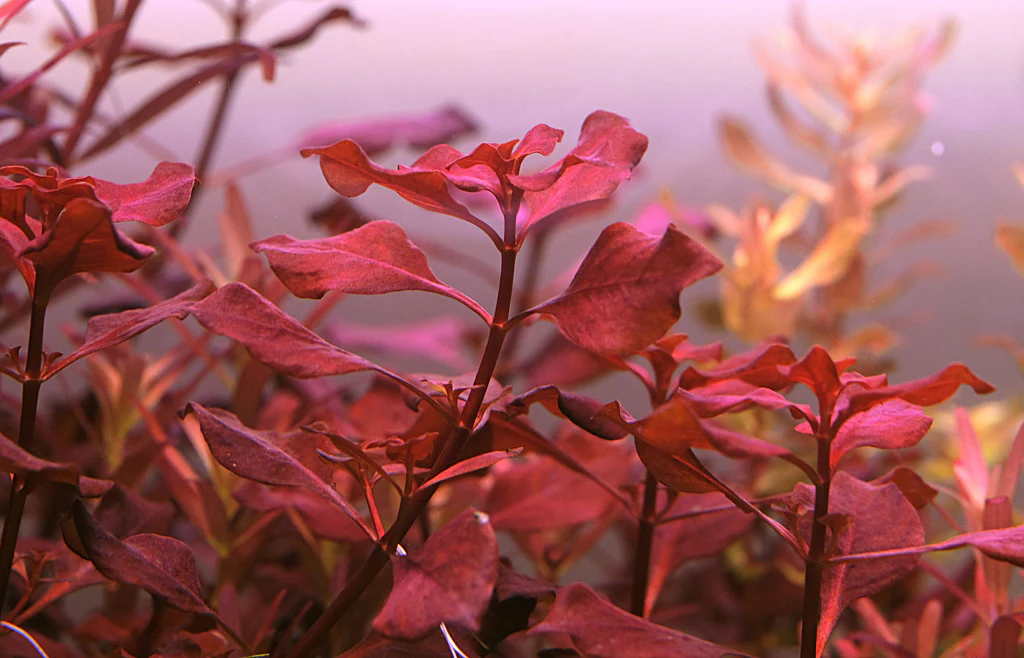
Ludwigia palustris 'Super Red'
(Mini Super Red)Easy
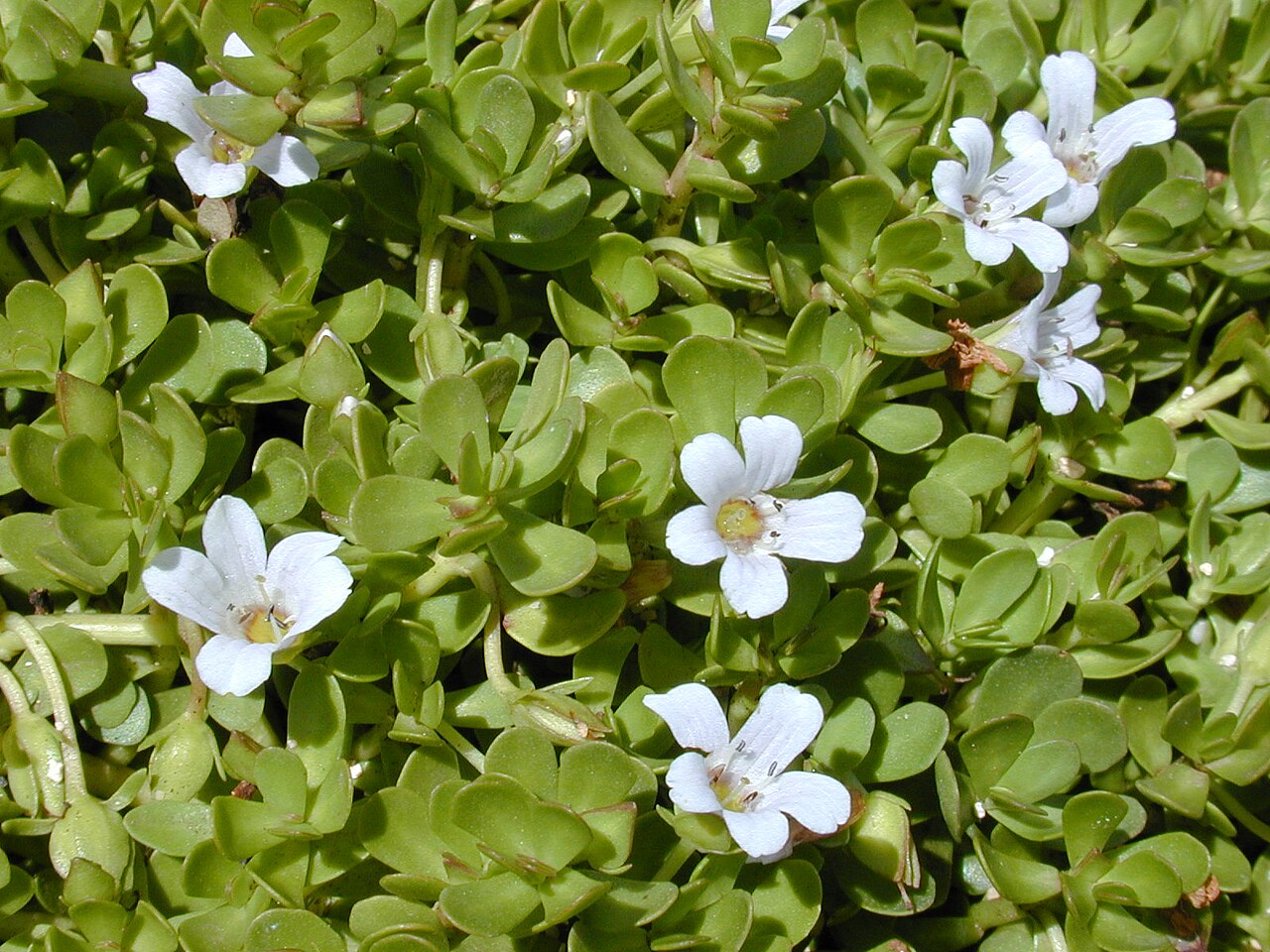
Bacopa monnieri
(Moneywort)Easy
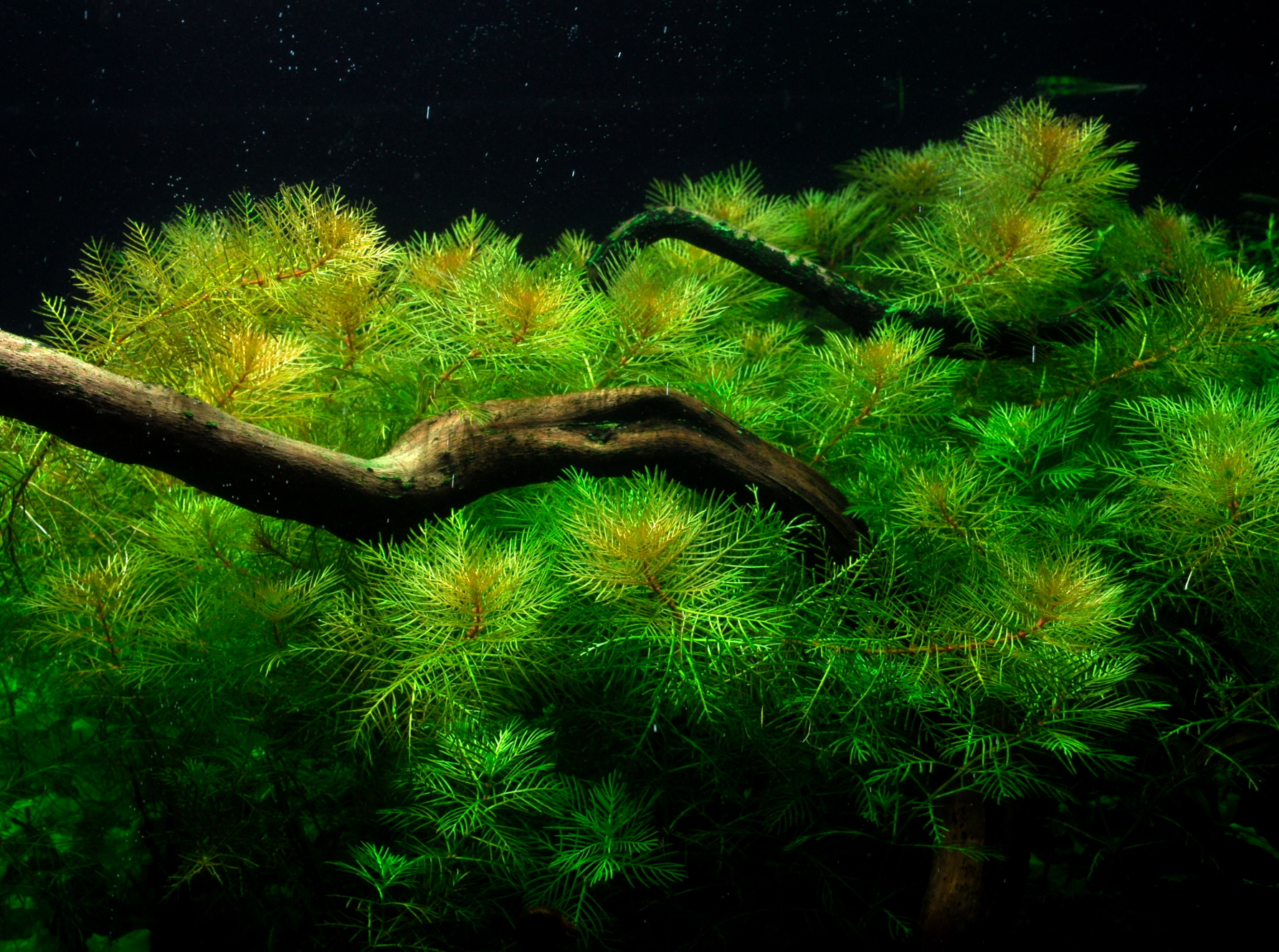
Myriophyllum mattogrossense
(Red Myrio)Medium
Extremely fine leaves trap debris easily; requires high light to prevent bottom leaves from shedding.
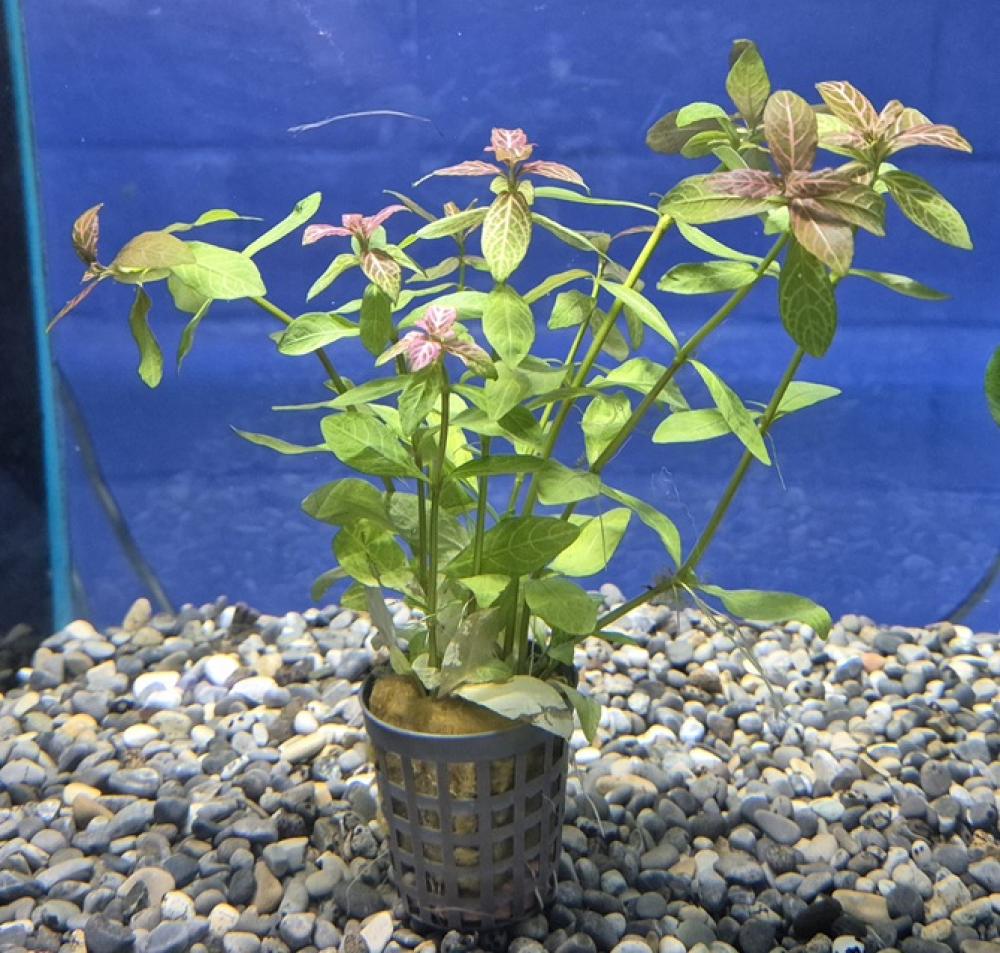
Hygrophila rosae australis
(Rosae Australis)Easy
An adaptable Australian stem plant featuring rounded, pointed leaves. Under moderate to intense lighting, its new growth displays a warm, striking pink hue before gradually maturing to a soft green. Excellent for beginners and newly set up aquariums.
Carpet Plants (The Foreground)
✨ Pro Tip: The Dry Start Method
For the best results with carpet plants, try planting them in damp soil without filling the tank for 4-6 weeks. Keep the tank covered with plastic wrap and mist daily. This allows the tiny roots to anchor and spread across the substrate without competing with algae or floating away.
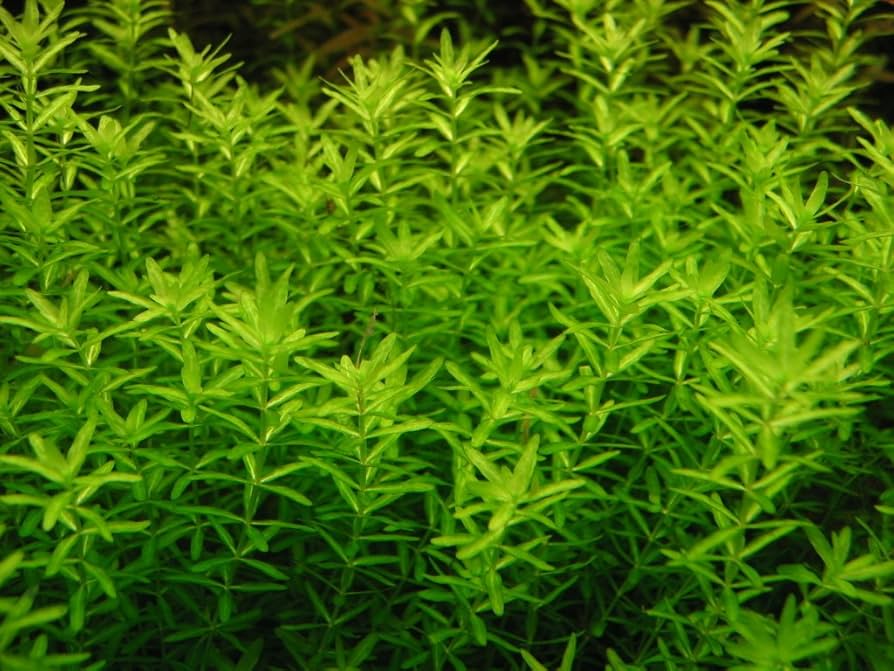
Hemianthus micranthemoides
(Pearl Weed)Easy
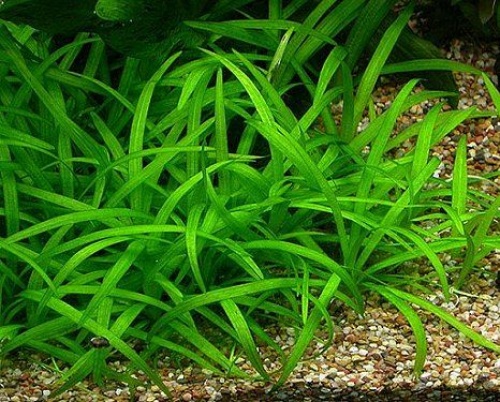
Helanthium tenellum
(Pygmy Chain Sword)Easy
A "runner" plant that needs a nutrient-rich substrate (or root tabs) to spread; under low light, it will grow taller rather than forming a flat carpet.
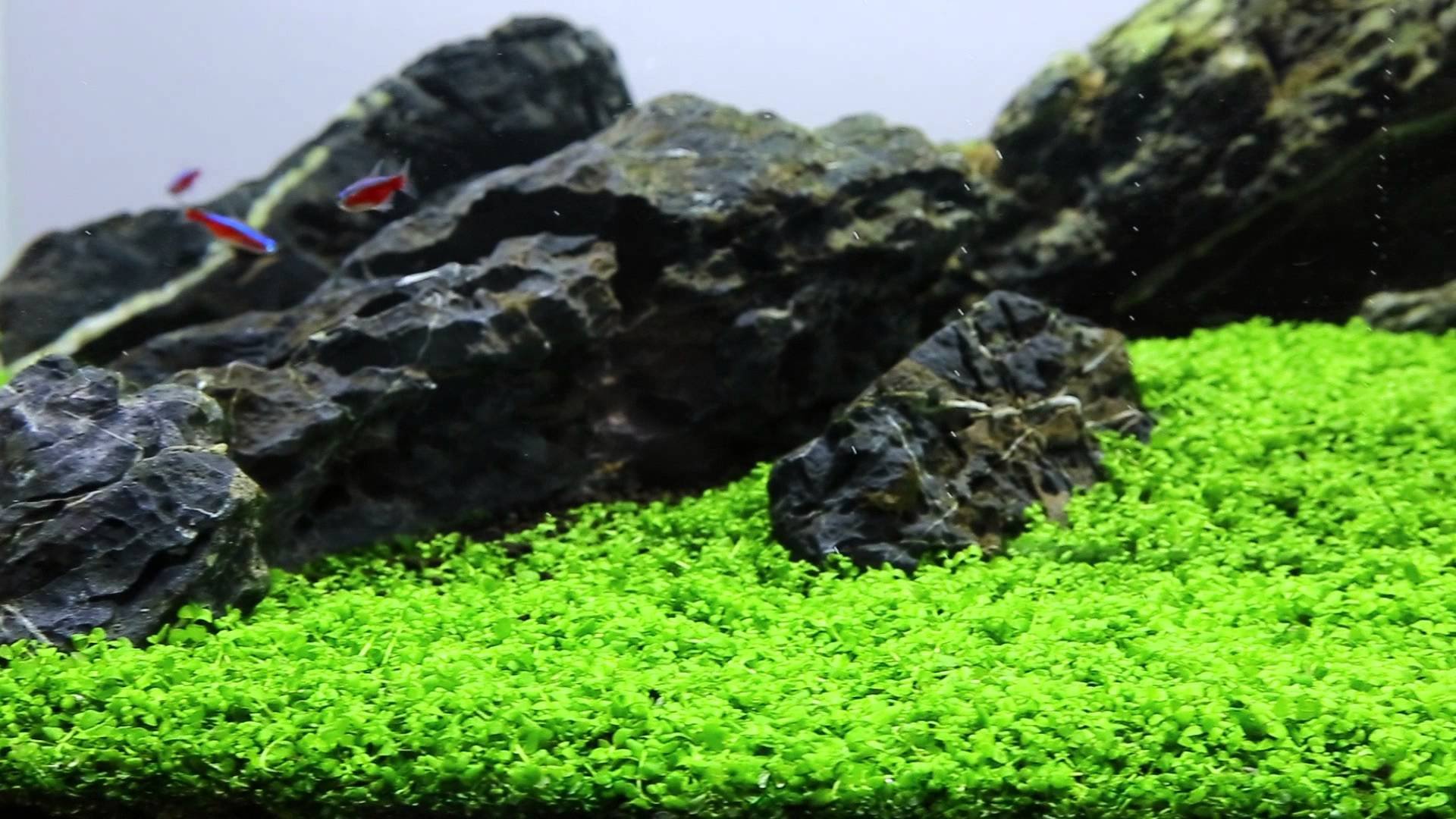
Micranthemum 'Monte Carlo'
(Monte Carlo)Medium
Requires high light and consistent CO2 to grow 'flat' along the substrate rather than upwards.
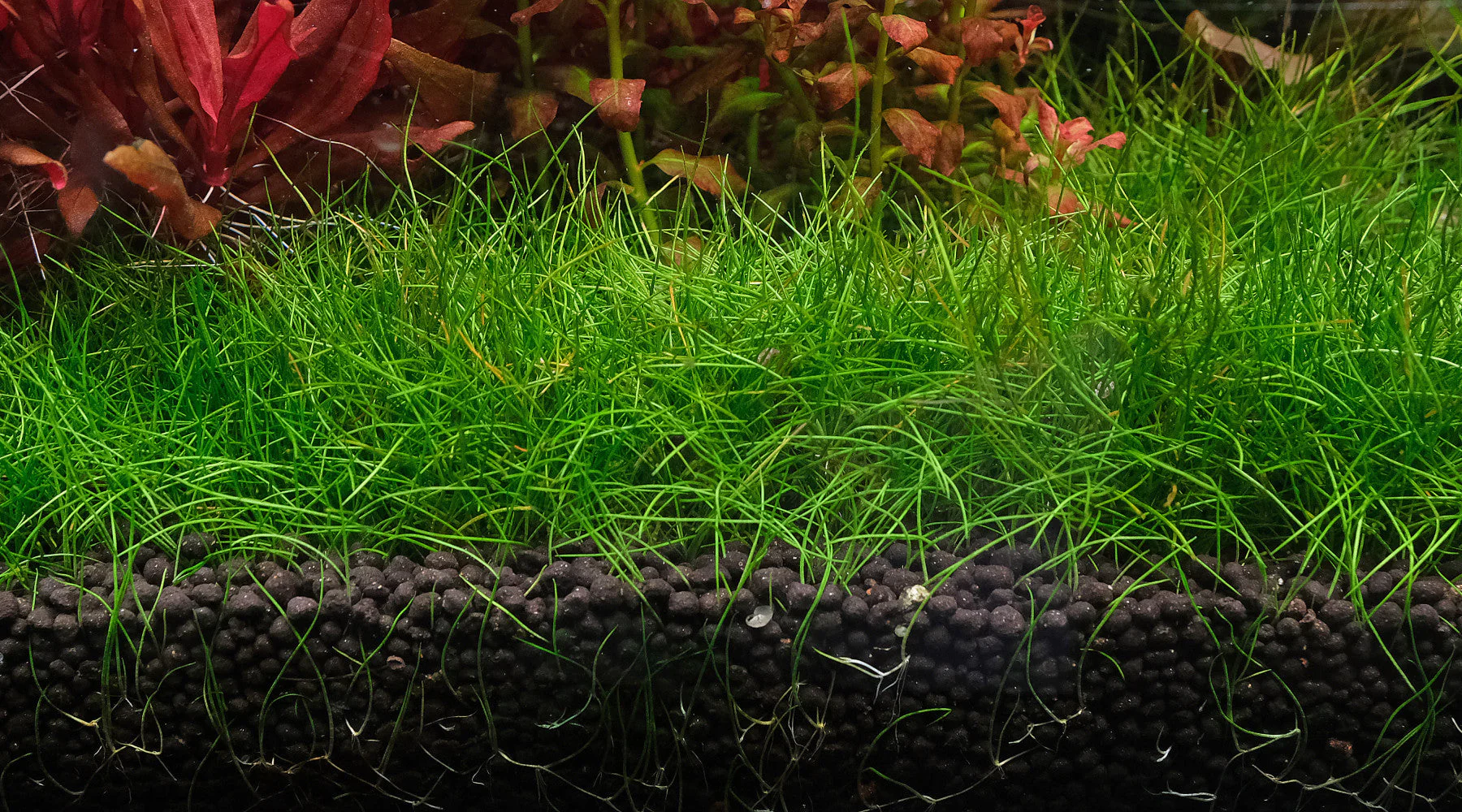
Eleocharis acicularis
(Dwarf Hairgrass)Medium
Needs very fine substrate and frequent 'haircuts' to trigger the growth of horizontal runners.
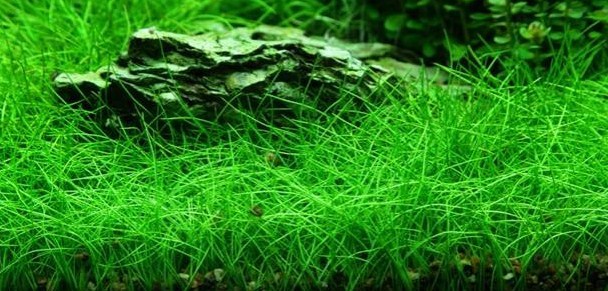
Eleocharis pusilla 'Mini'
(Mini Dwarf Hairgrass)Medium
The shortest hairgrass variety (reaches only 3–5 cm) with slightly curved blades; ideal for nano tanks and carpets that require less frequent trimming.
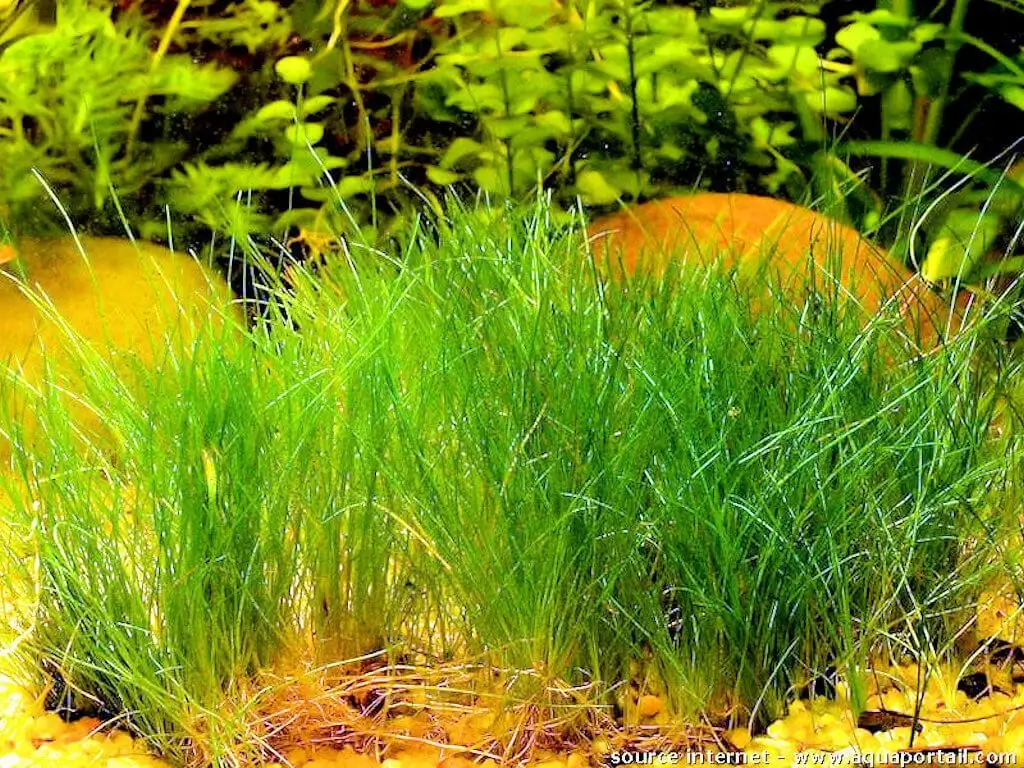
Eleocharis parvula
(Dwarf Hairgrass / Hair Grass)Medium
Grows slightly shorter and with more outward-arching blades than E. acicularis; spreads quickly via runners in fine substrate under moderate-to-high light.
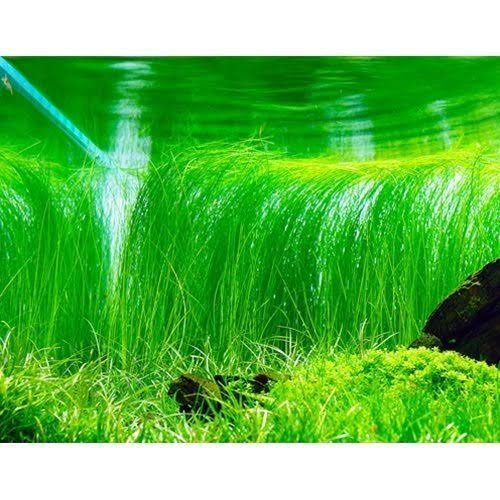
Eleocharis montevidensis
(Giant Hairgrass)Easy
A much taller species (growing 20–40+ cm) with straight, needle-like blades; suited for creating flowing grassy backgrounds or midground transitions rather than flat carpets.
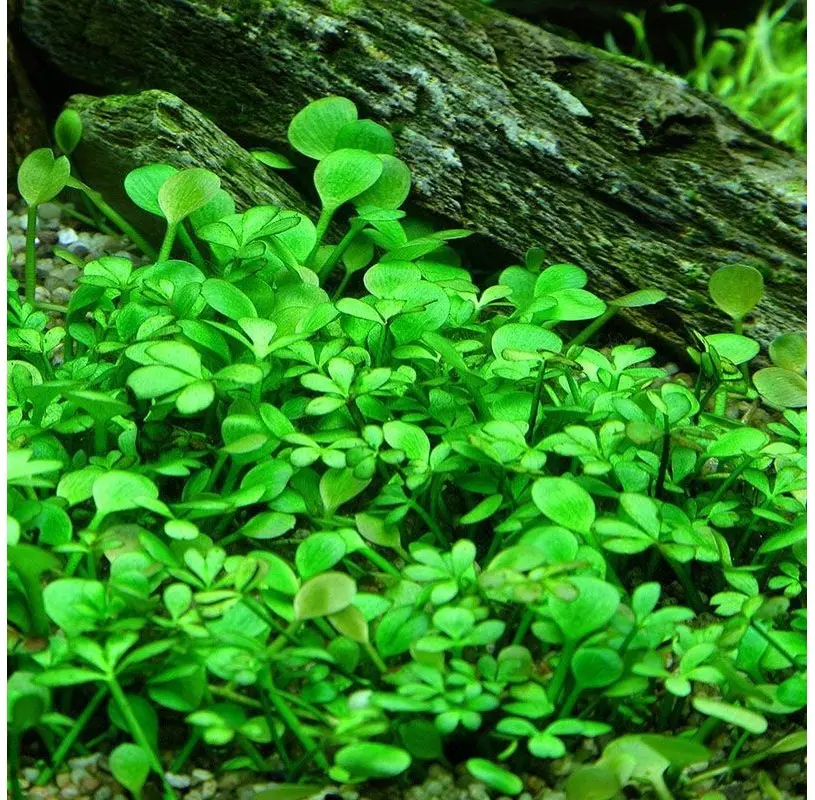
Marsilea hirsuta
(Dwarf Water Clover)Easy
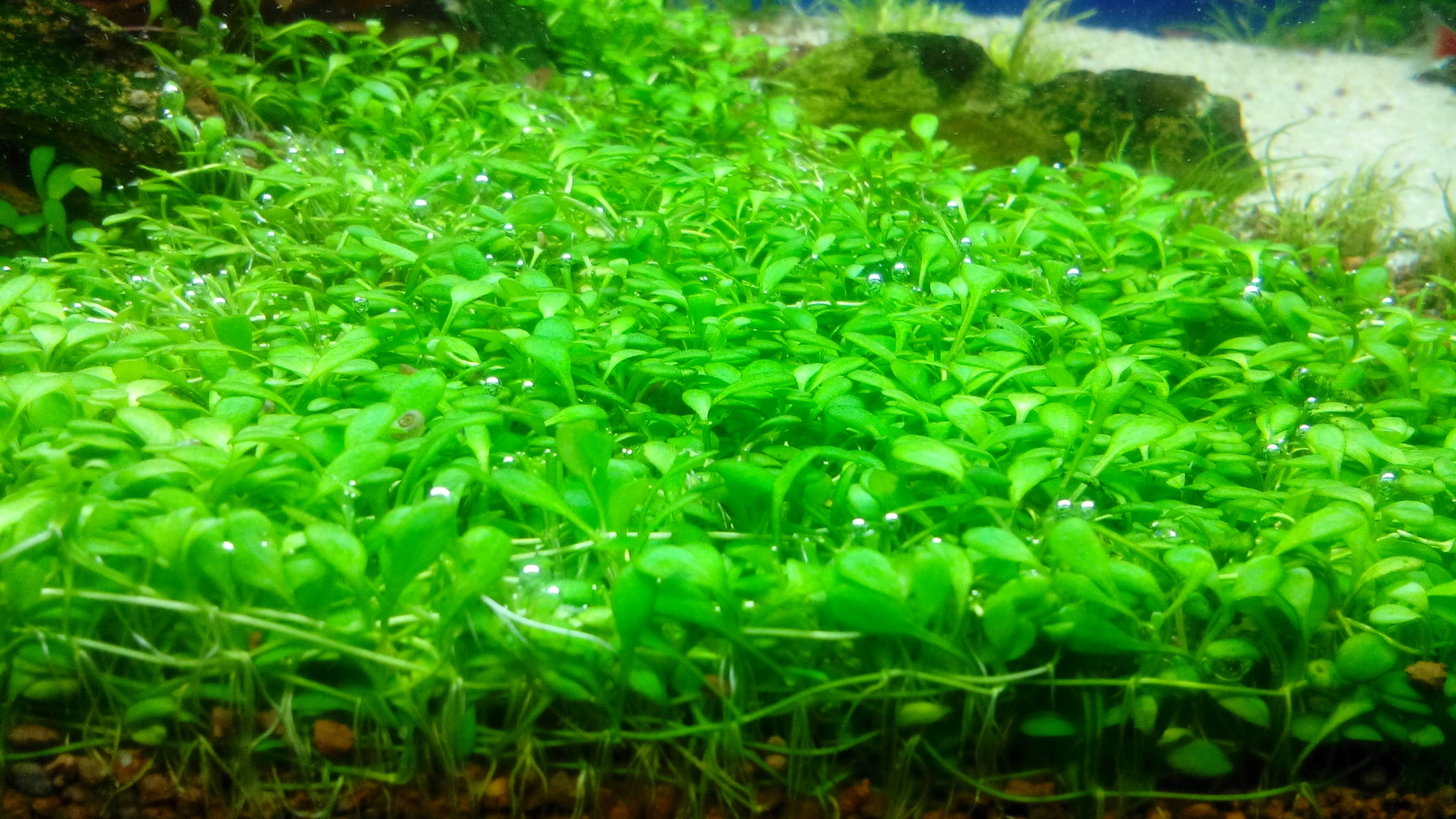
Glossostigma elatinoides
(Glosso)Medium
If light is even slightly insufficient, it will grow tall like a stem plant instead of crawling.
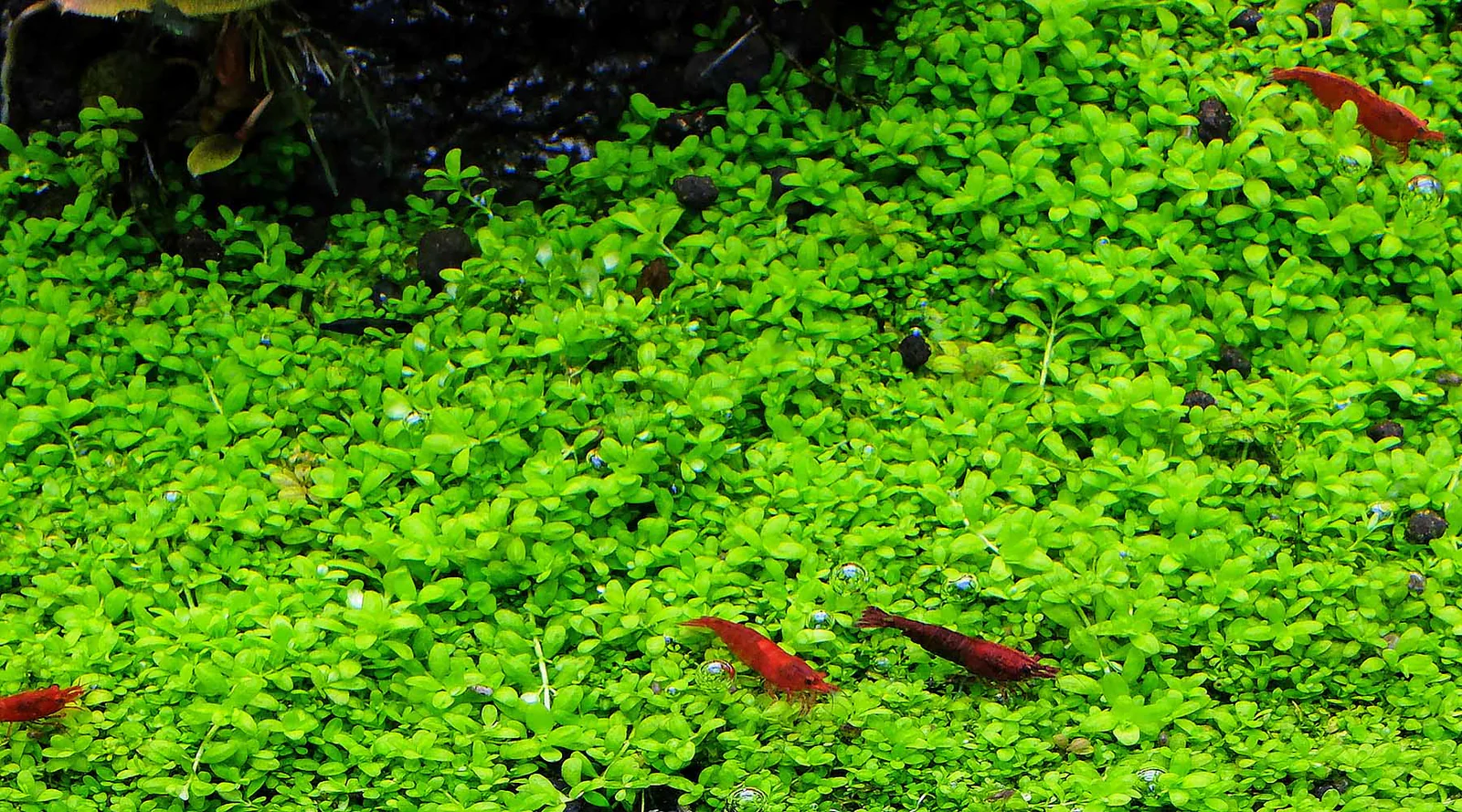
Hemianthus callitrichoides 'Cuba'
(HC Cuba / Dwarf Baby Tears)Hard
Tiny roots require specialized 'powder' substrate and very high CO2 levels to avoid floating away or dying.
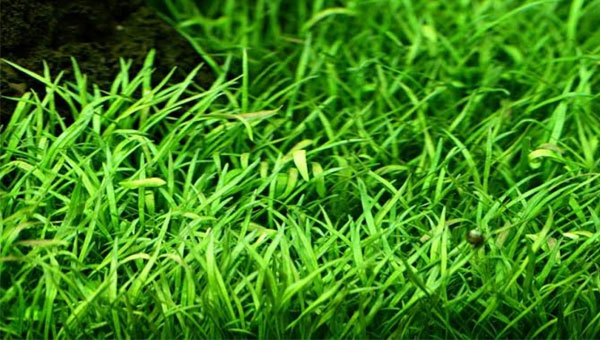
Lilaeopsis brasiliensis
(Micro Sword)Medium
Extremely slow grower; requires patience and very clean water to prevent algae from choking the leaves.
Rosette & Root Feeders
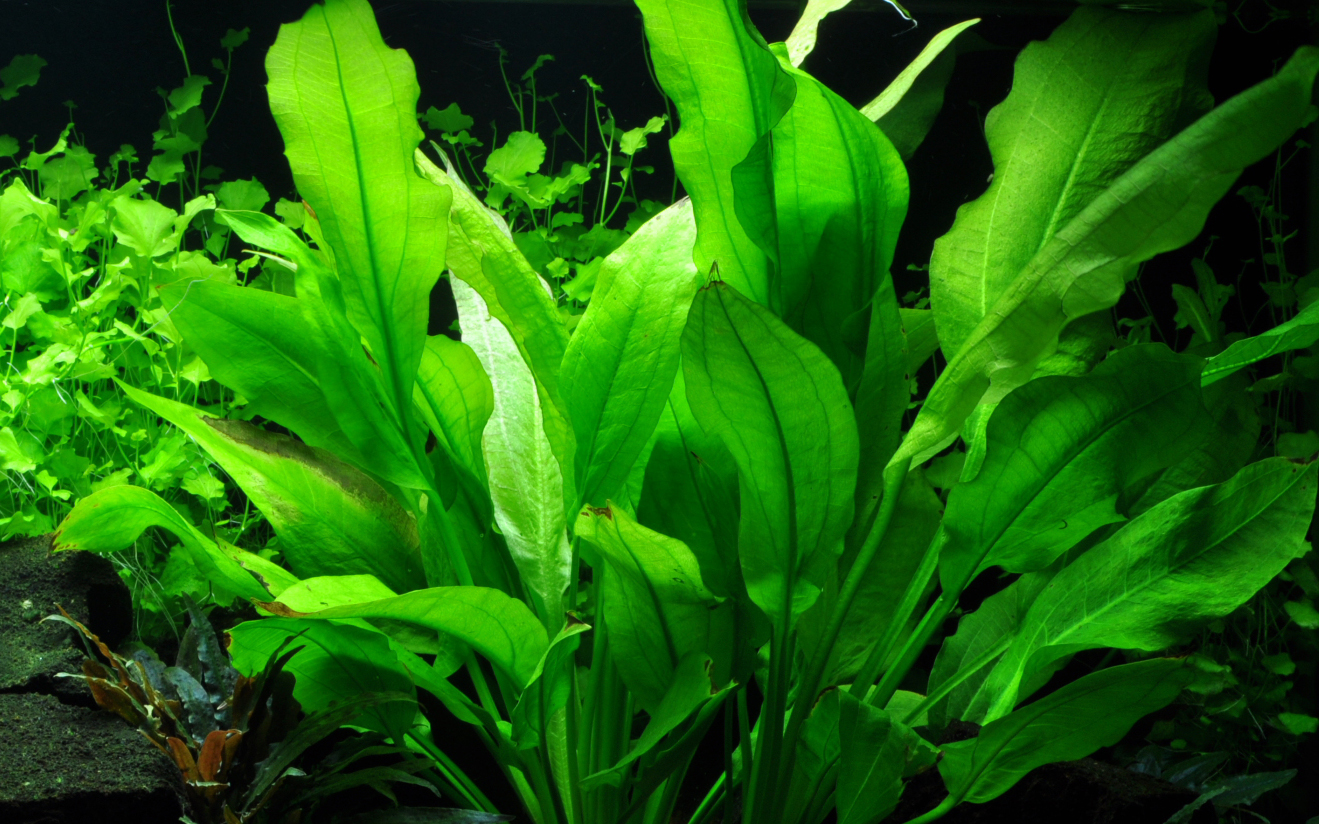
Echinodorus grisebachii
(Amazon Sword)Easy
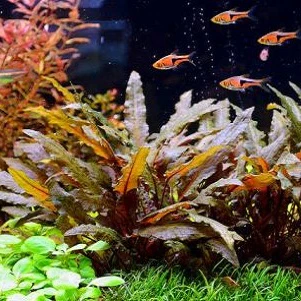
Cryptocoryne wendtii brown
(Brown Crypt)Easy
Prone to 'Crypt Melt' where leaves dissolve if water parameters change too quickly.
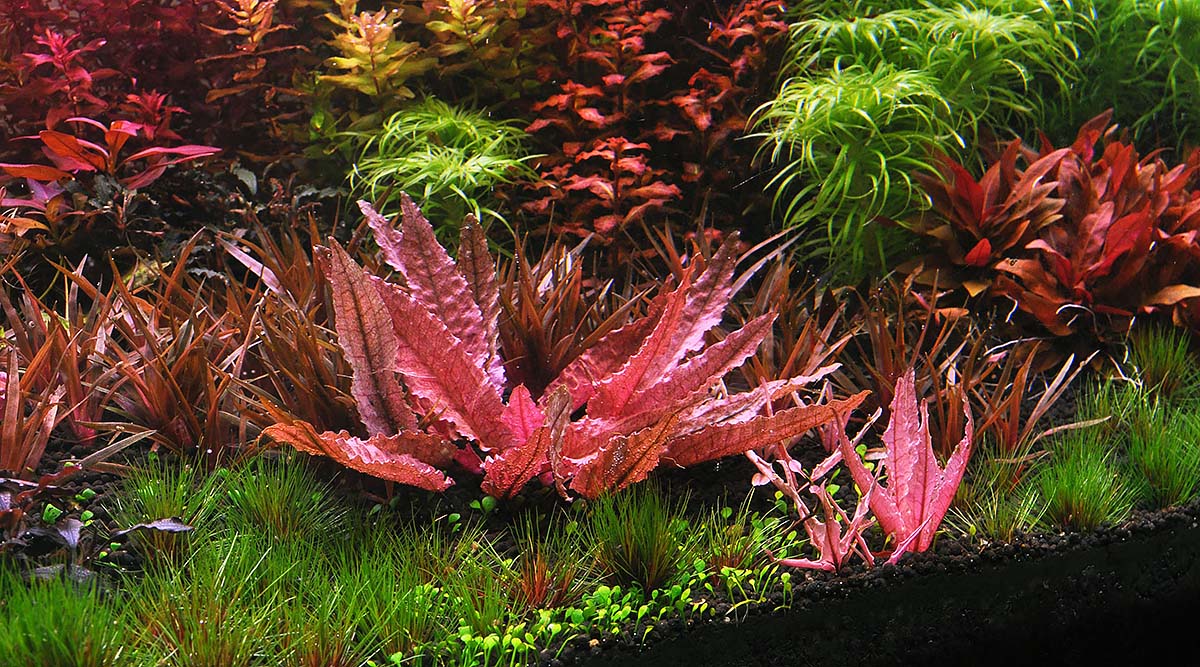
Cryptocoryne wendtii 'Flamingo'
(Pink Crypt Flamingo)Medium
Needs high light to keep its pink color and is extremely prone to melting when moved.
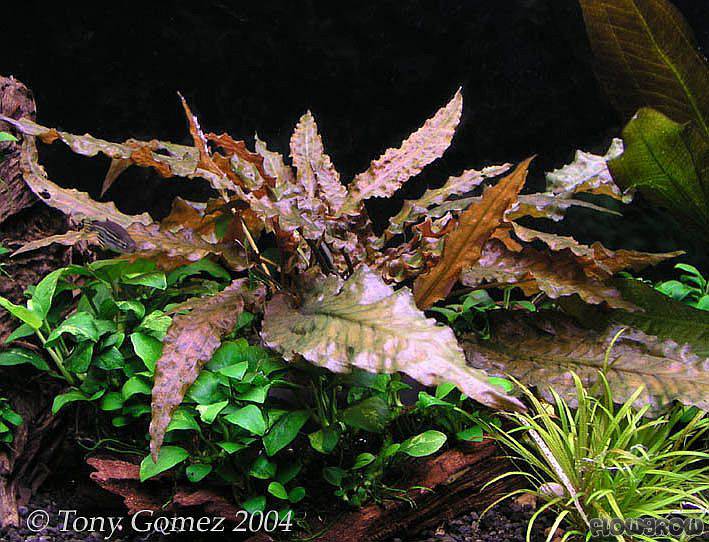
Cryptocoryne wendtii 'Mi Oya'
(Crypt Mi Oya)Easy
One of the largest wendtii varieties; very hardy but requires a settled, stable environment.
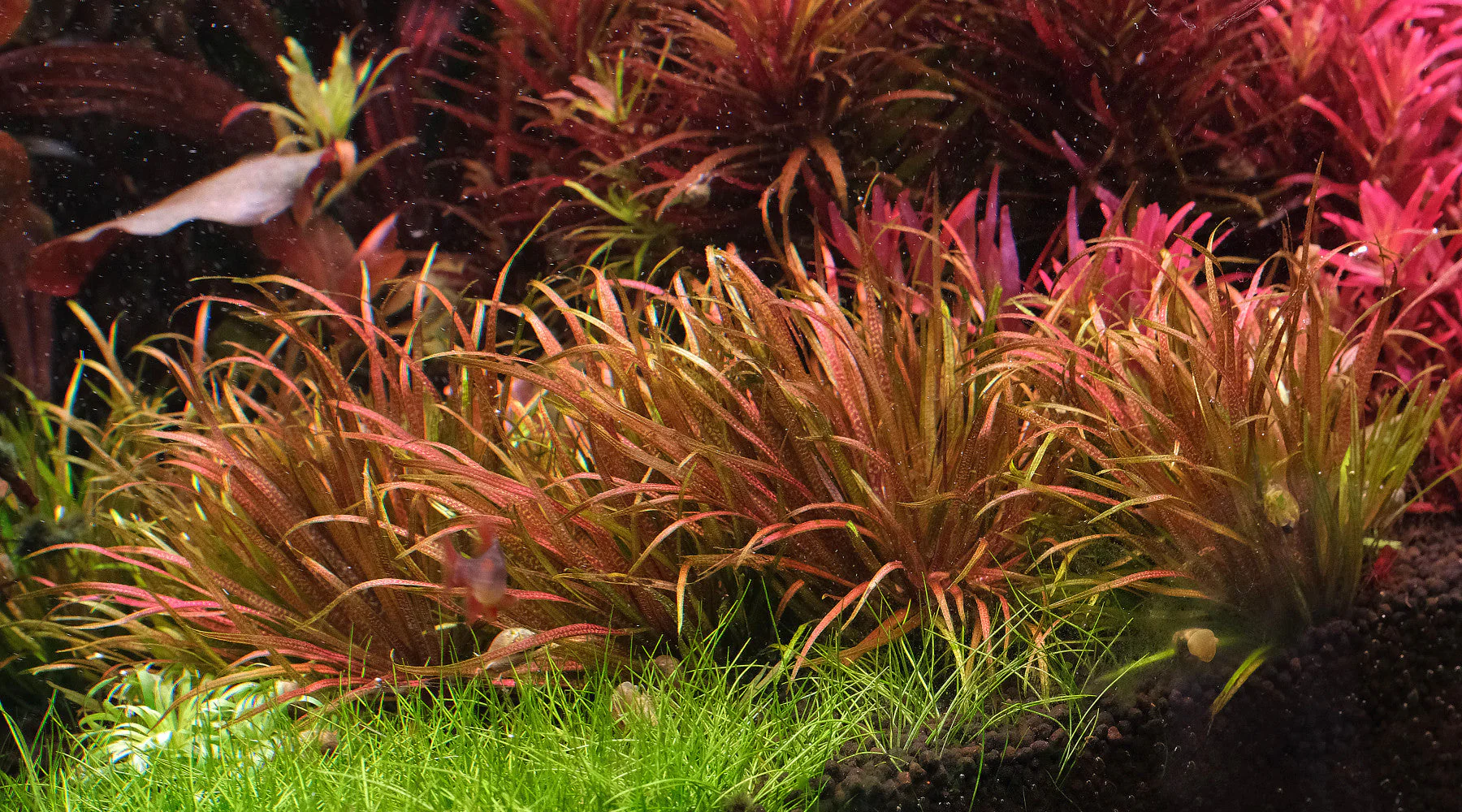
Blyxa japonica
(Japanese Rush)Medium
Technically a stem plant that grows like a rosette; requires CO2 and iron-rich substrate to prevent it from turning yellow or melting.
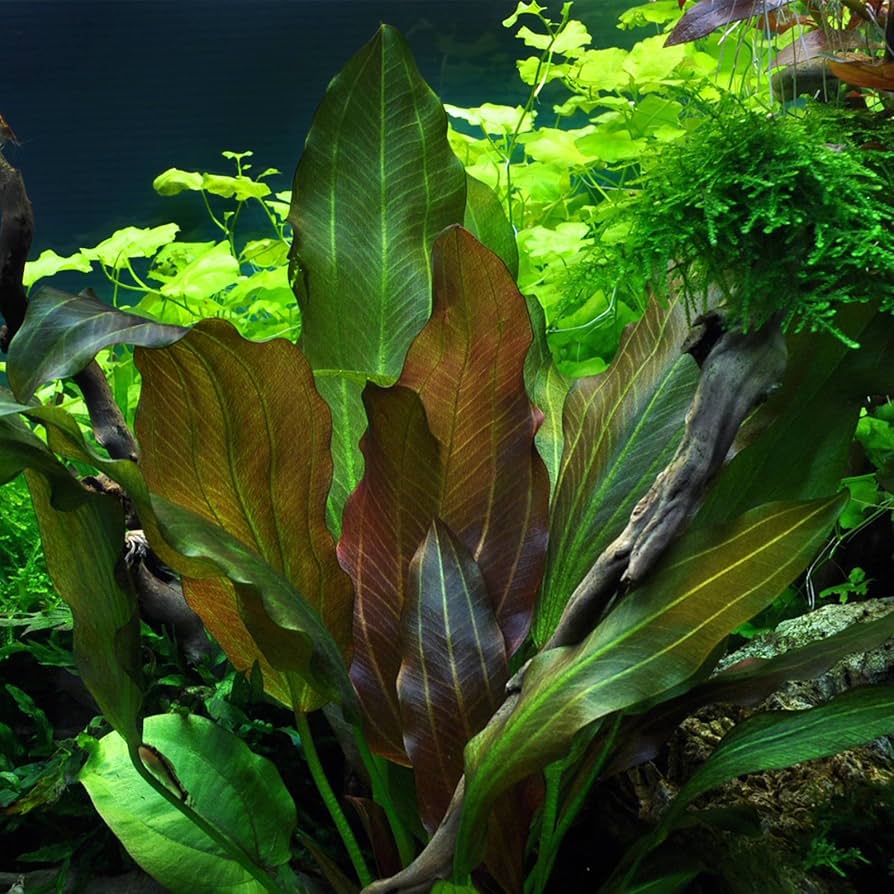
Echinodorus 'Reni'
(Red Dwarf Sword)Easy
A compact sword plant that needs iron-rich root tabs and decent light to keep its deep red color.
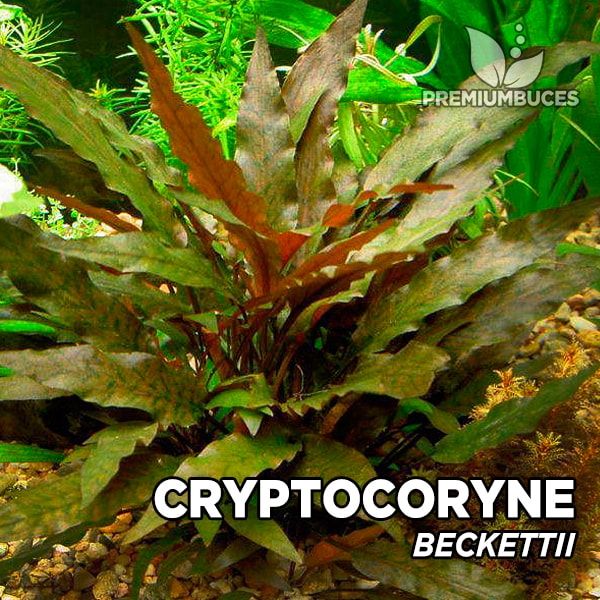
Cryptocoryne beckettii
(Beckett's Water Trumpet)Easy
Requires a nutrient-rich substrate; sensitive to being moved once established.
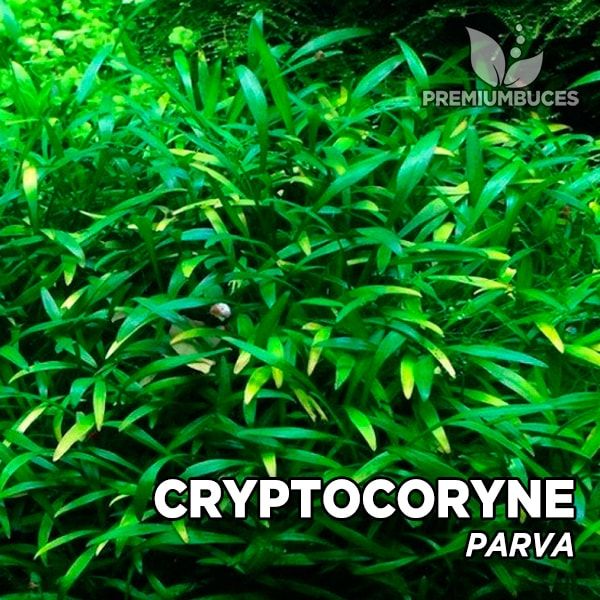
Cryptocoryne parva
(Dwarf Crypt)Medium
The smallest and slowest-growing Crypt; requires high patience and clean water to avoid algae issues.
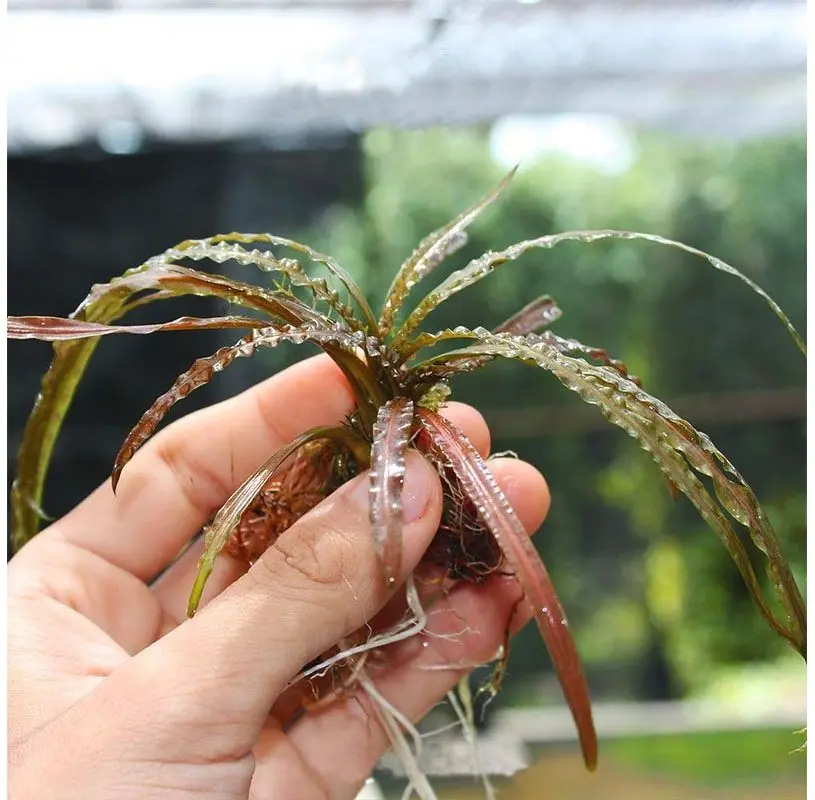
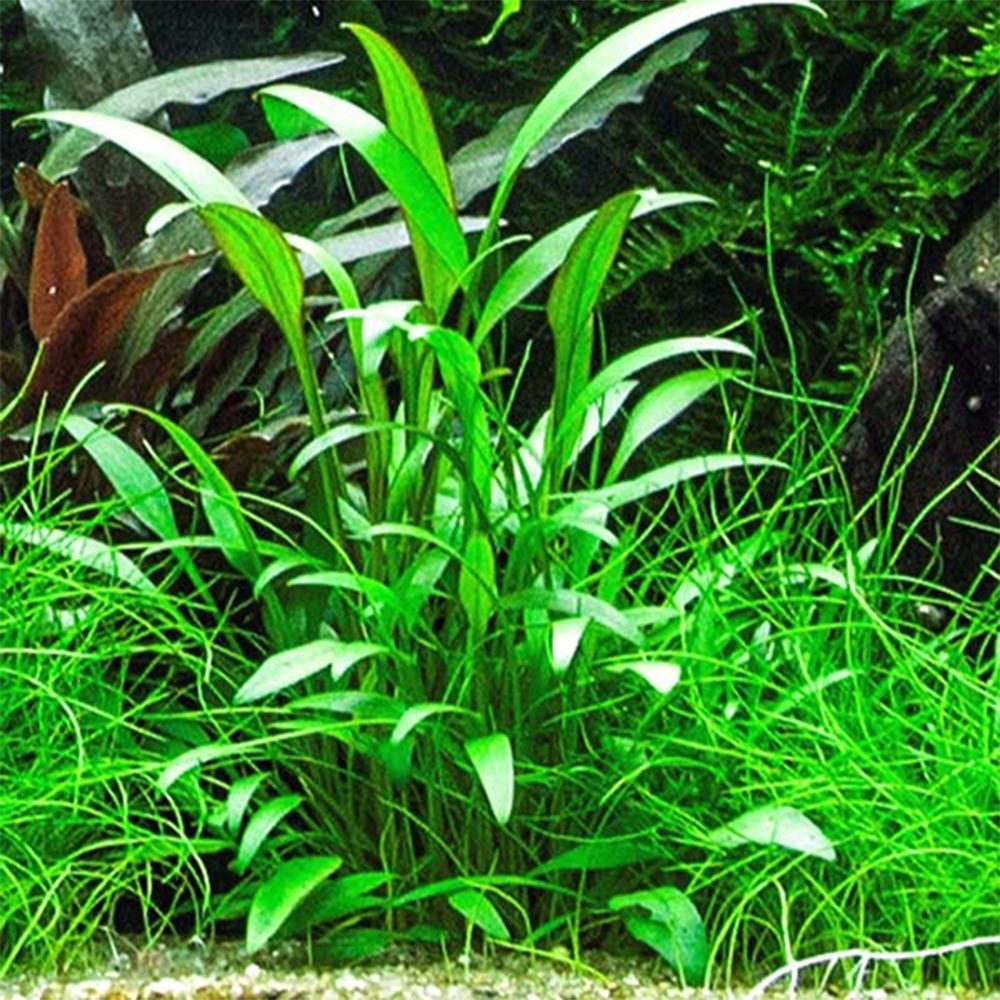
Cryptocoryne crispatula var. balansae
(Balansae Crypt)Easy
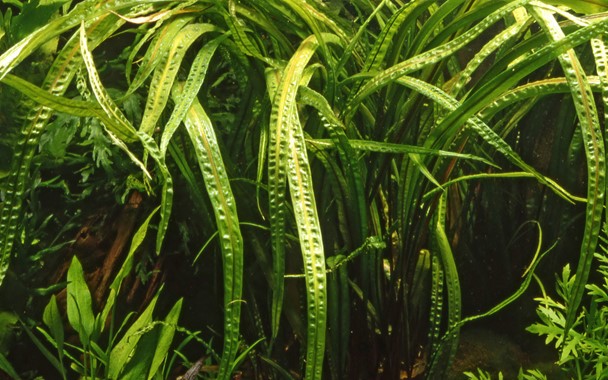
Cryptocoryne nevillii
(Nevill's Crypt)Easy
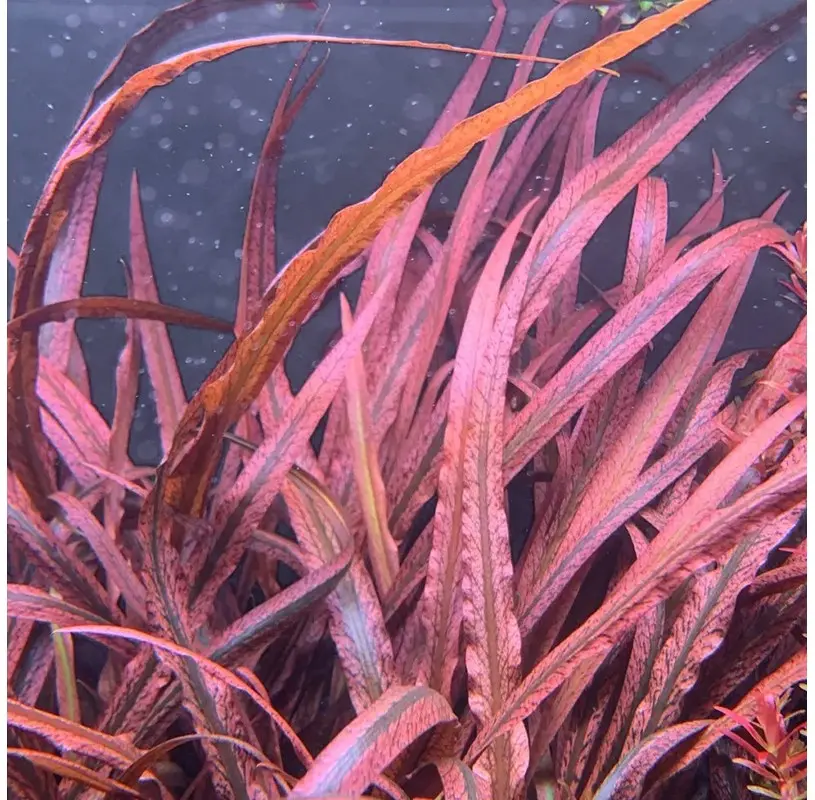
Cryptocoryne crispatula
(Flaccid Crypt)Easy
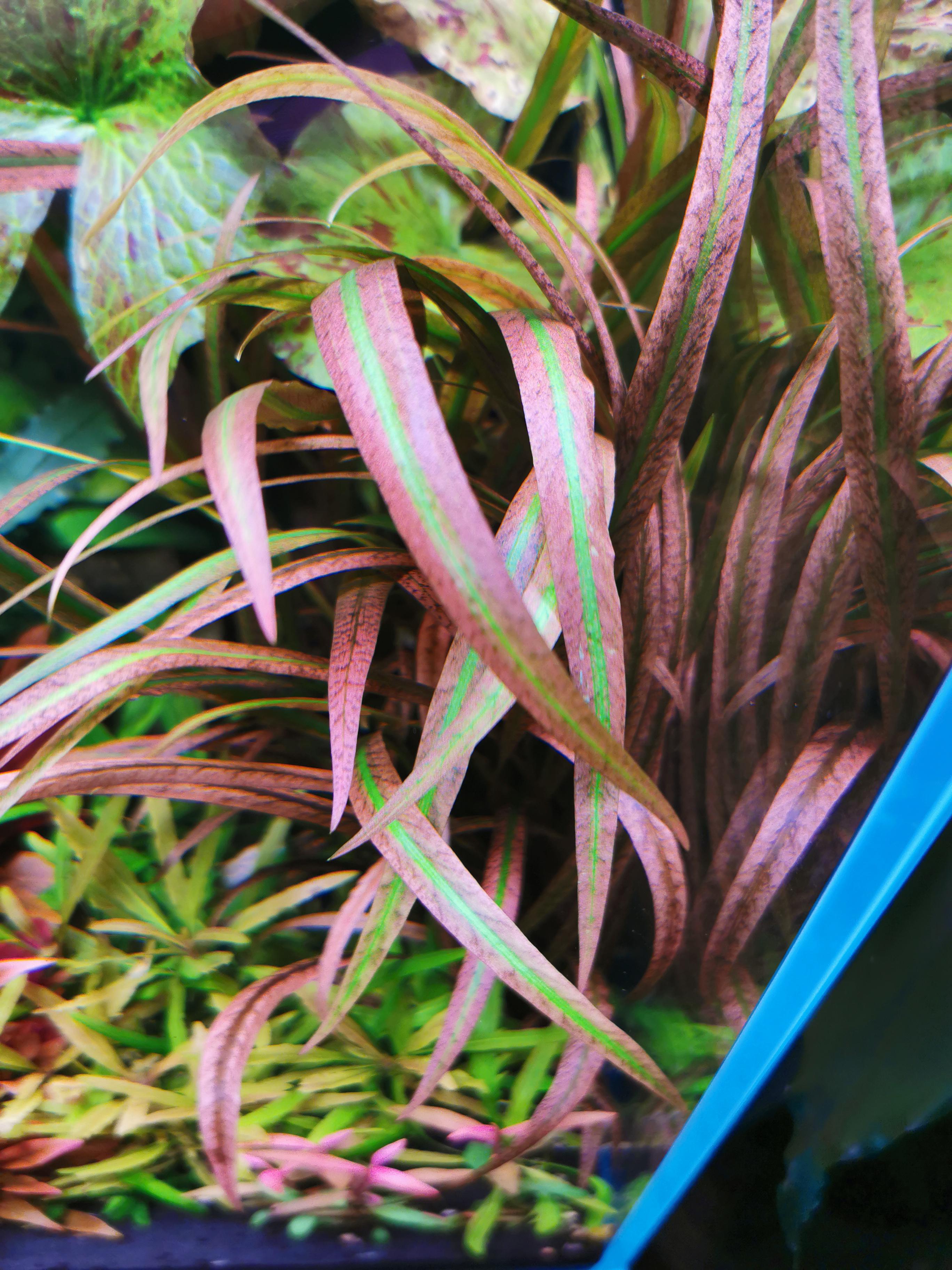
Cryptocoryne wendtii 'Pink Panther'
(Pink Panther Crypt)Medium
Requires stable parameters and decent lighting to maintain its vibrant pink coloration.
Cryptocoryne spiralis 'Red'
(Red Spiral Crypt)Medium
Requires iron-rich substrate and stable lighting to maintain its deep red-bronze coloration.
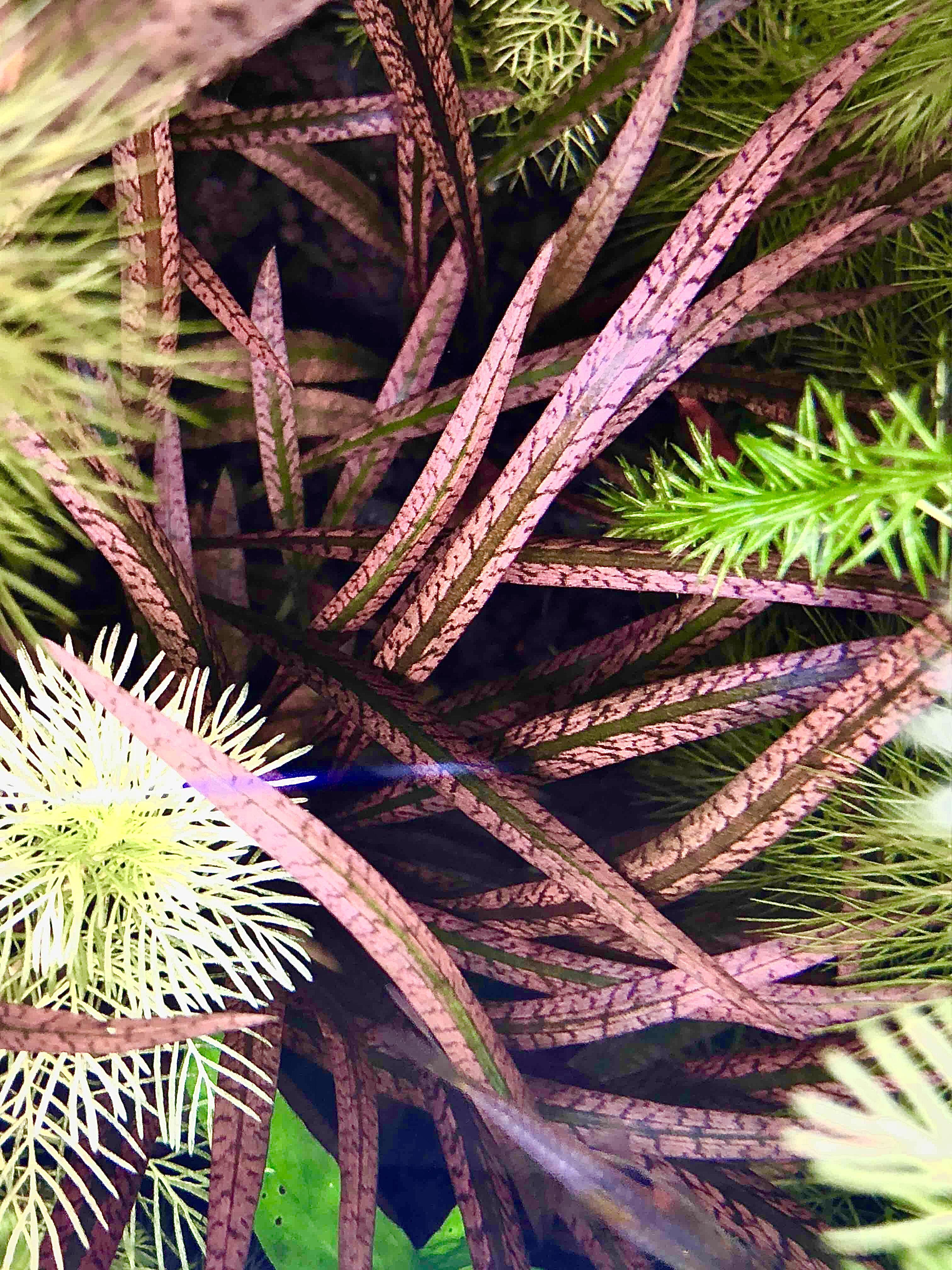
Cryptocoryne spiralis 'Tiger'
(Tiger Spiral Crypt)Medium
A rare variety known for tiger-like stripes; extremely sensitive to changes in water chemistry.
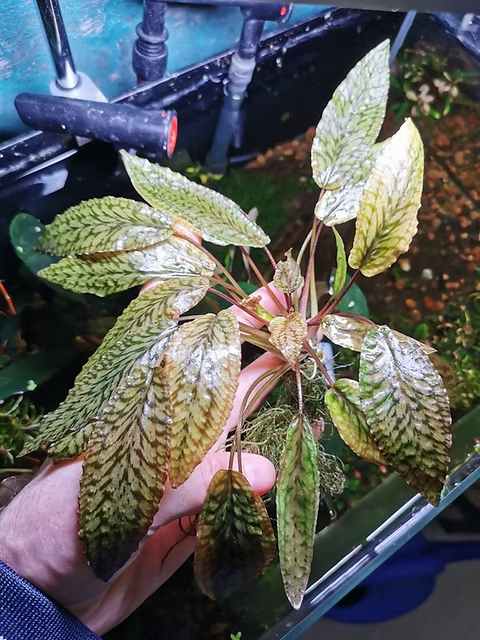
Cryptocoryne striolata
(Striolata Crypt)Hard
Demands high water flow, high oxygen levels, and very stable parameters; very prone to melting.
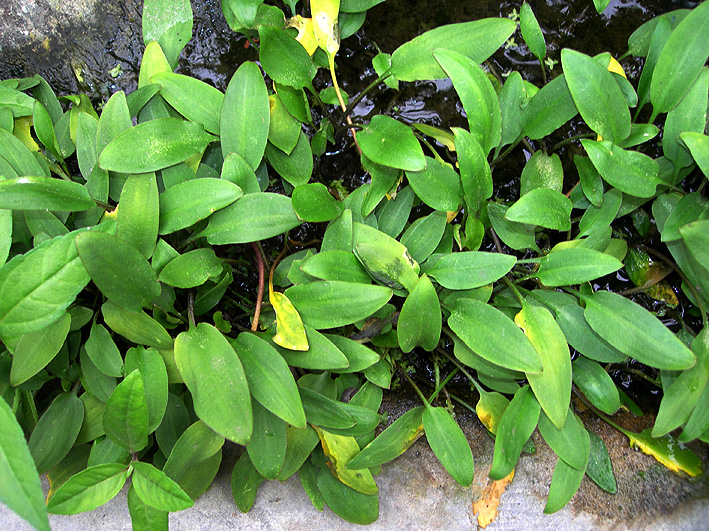
Cryptocoryne x willisii
(Willis's Crypt)Easy
A very slow-growing, compact crypt that is excellent for mid-ground grouping.
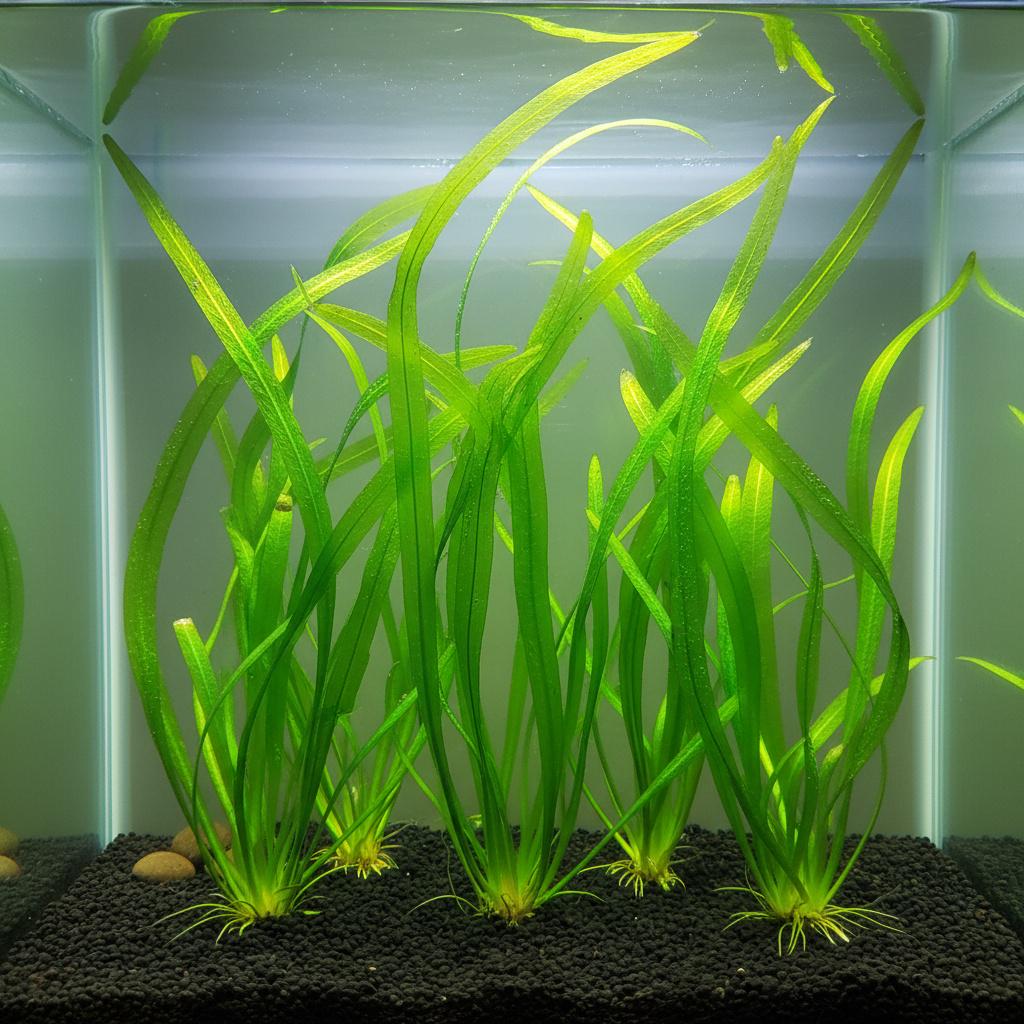
Vallisneria spiralis
(Straight Val / Italian Val / Jungle Val)Easy
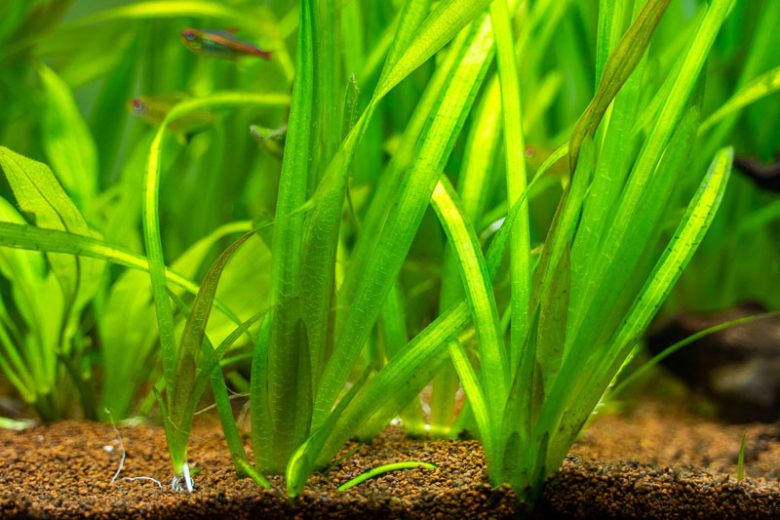
Vallisneria americana
(Water Celery)Easy
Look: Long, straight, ribbon-like green leaves.
Note: The name refers to its spiraling flower stalk, not its leaves! A perfect, tall background "curtain."
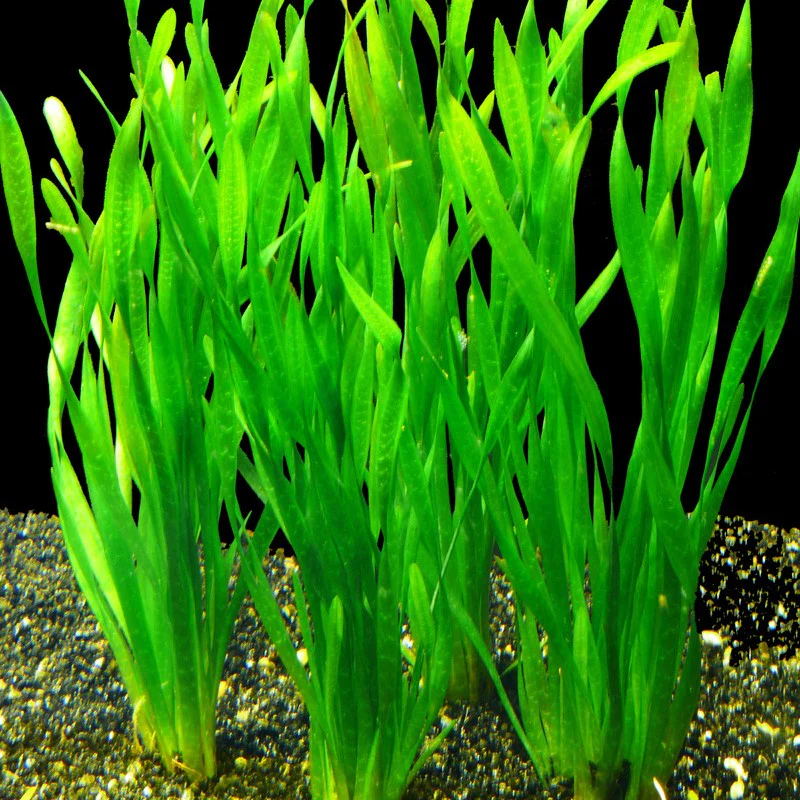
Vallisneria asiatica
(Asian Val)Easy
Look: Straight, narrow, and slightly more delicate than Spiralis.
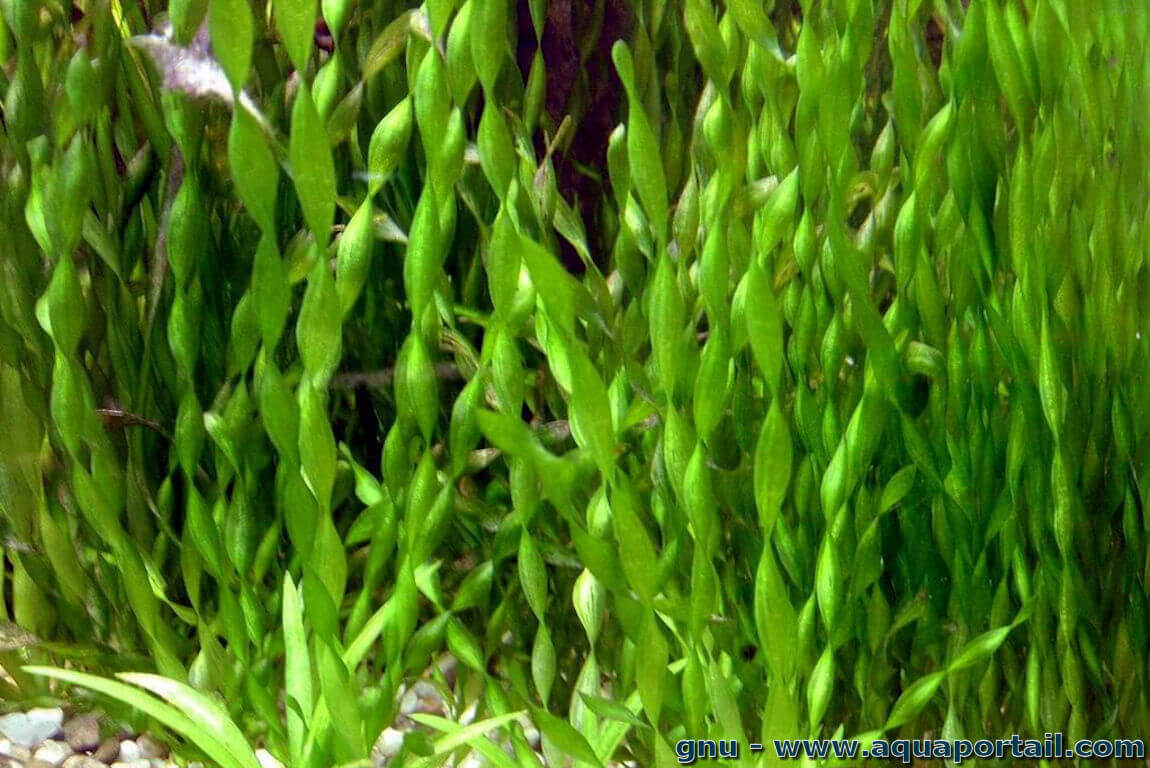
Vallisneria tortifolia
(Corkscrew Val)Easy
Look: Leaves grow in tight, beautiful corkscrew spirals.
Note: Stays much shorter (approx. 8-12 inches), making it suitable for the midground or smaller tanks.
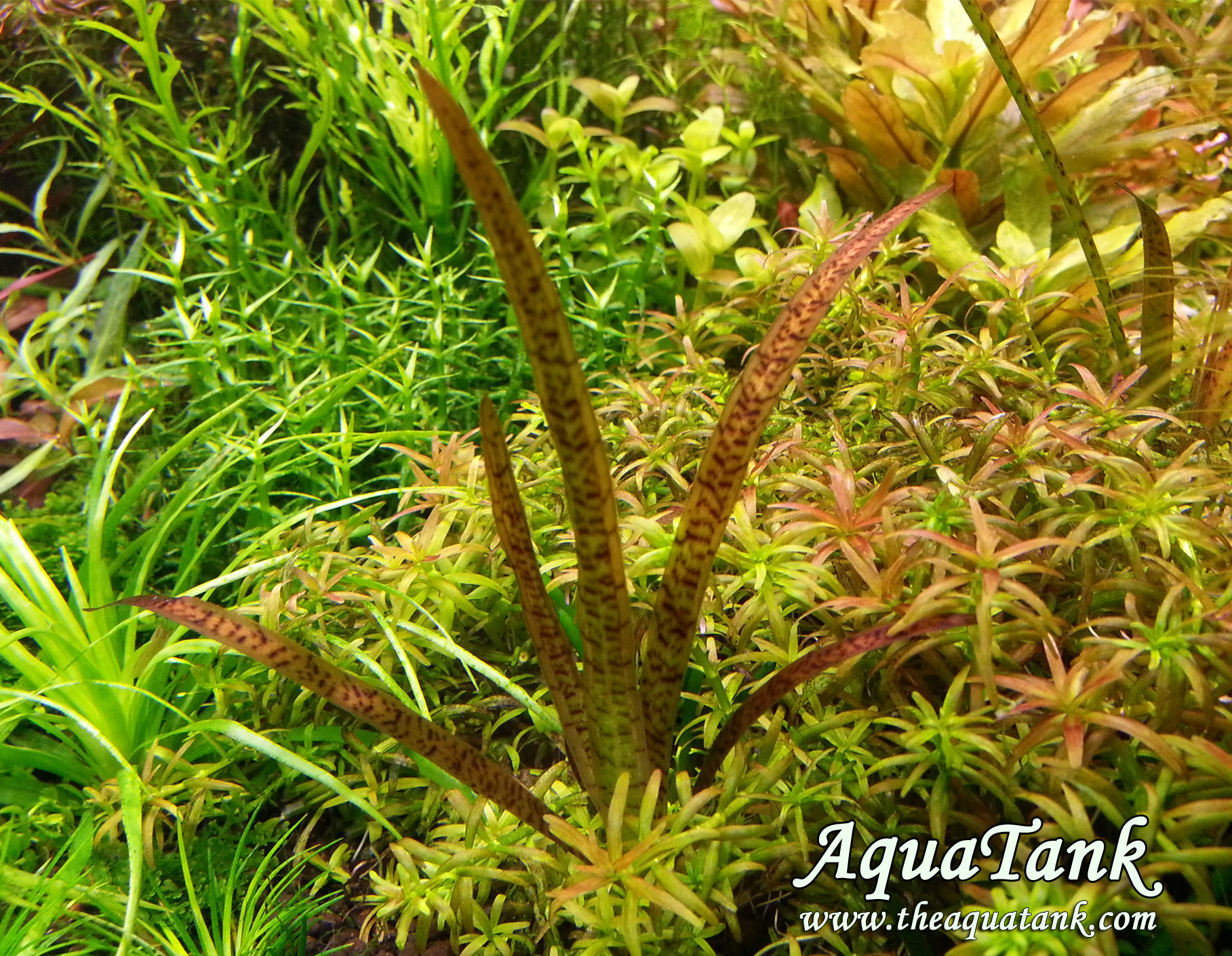
Vallisneria spiralis 'Leopard'
(Leopard Val)Easy
Features distinct dark spots or "tiger stripes" on the leaves. Despite the name 'spiralis', the leaves are usually straight; the name refers to the flower stalk!
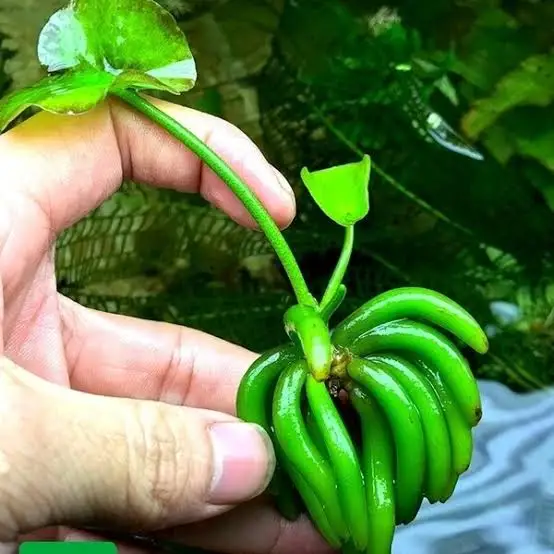
Nymphoides aquatica
(Banana Plant)Easy
The "banana" tubers should not be buried deep in the substrate; they are prone to rotting if they don't have water flow around them.
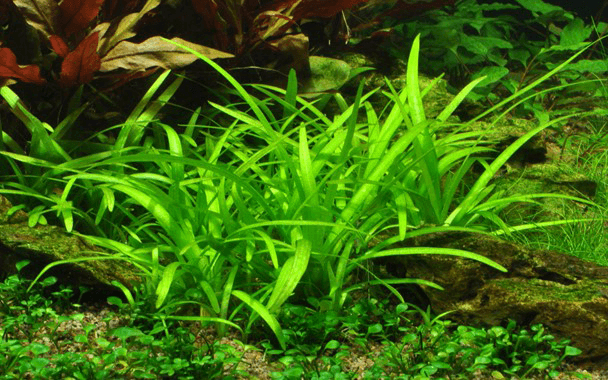
Sagittaria subulata
(Dwarf Sagittaria)Easy
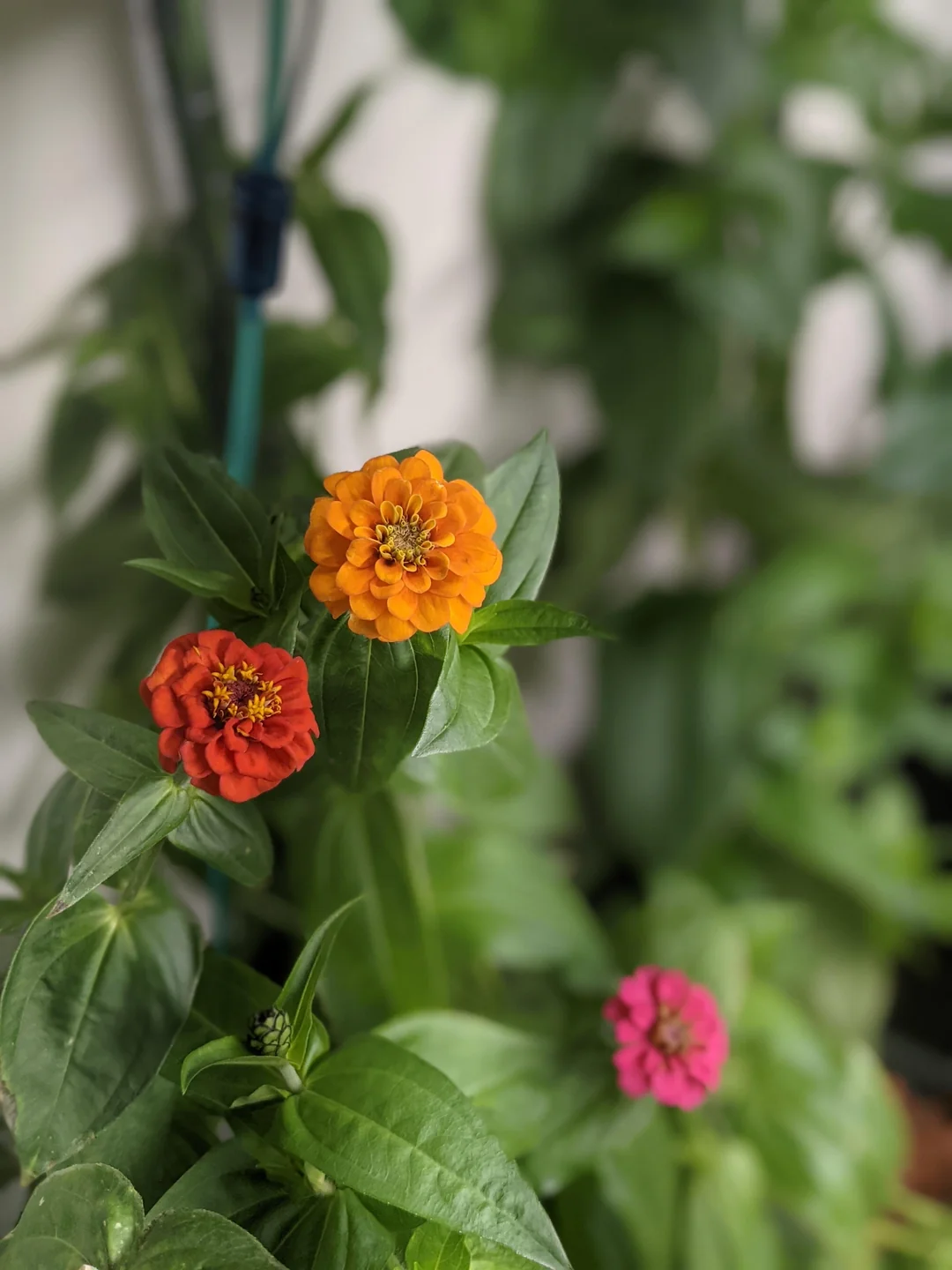
Zinnia elegans
(Common Zinnia)Emersed Only
Can be grown "riparium style" with bare roots suspended in the aquarium water and foliage growing upward. Fully submerging the leaves will kill the plant.
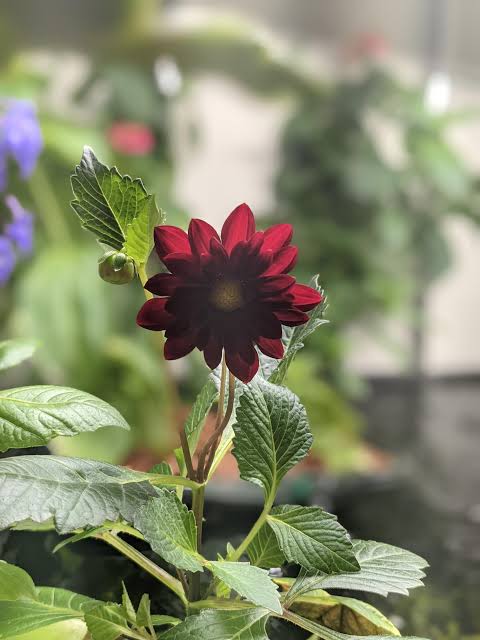
Dahlia spp.
(Garden Dahlia Tuber)Aquaponics / Hydroponics
Can be grown in aquaponic beds, AutoPots, or hydroponic setups. The tuber and crown must be positioned in a dry, highly aerated medium (such as clay pebbles) with only the root system accessing the water column to prevent rot.
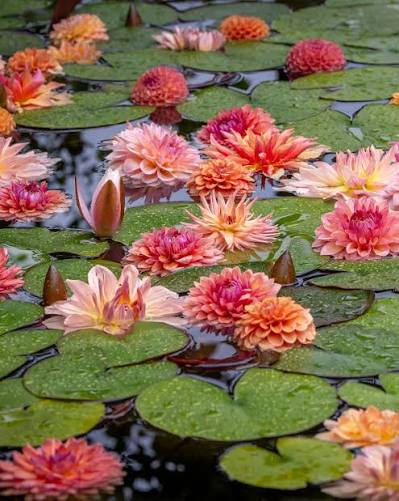
Nymphaea 'Dahlia'
(Dahlia Water Lily)Medium
A hardy water lily grown from a rhizome/tuber. Requires deep water and is best suited for large indoor tanks or outdoor ponds.
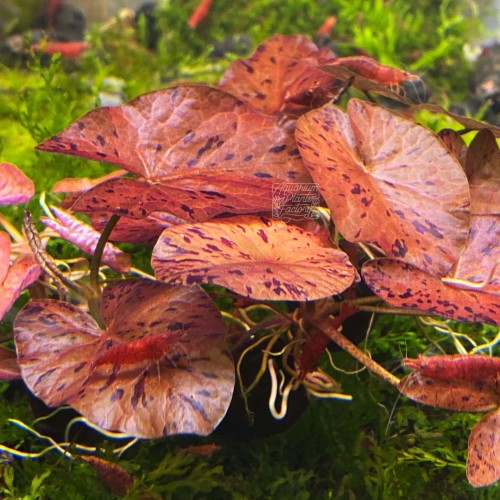
Nymphaea zenkeri
(Tiger Lotus)Medium
Heavy root feeder; requires frequent pruning of surface leaves to stay submerged and compact.
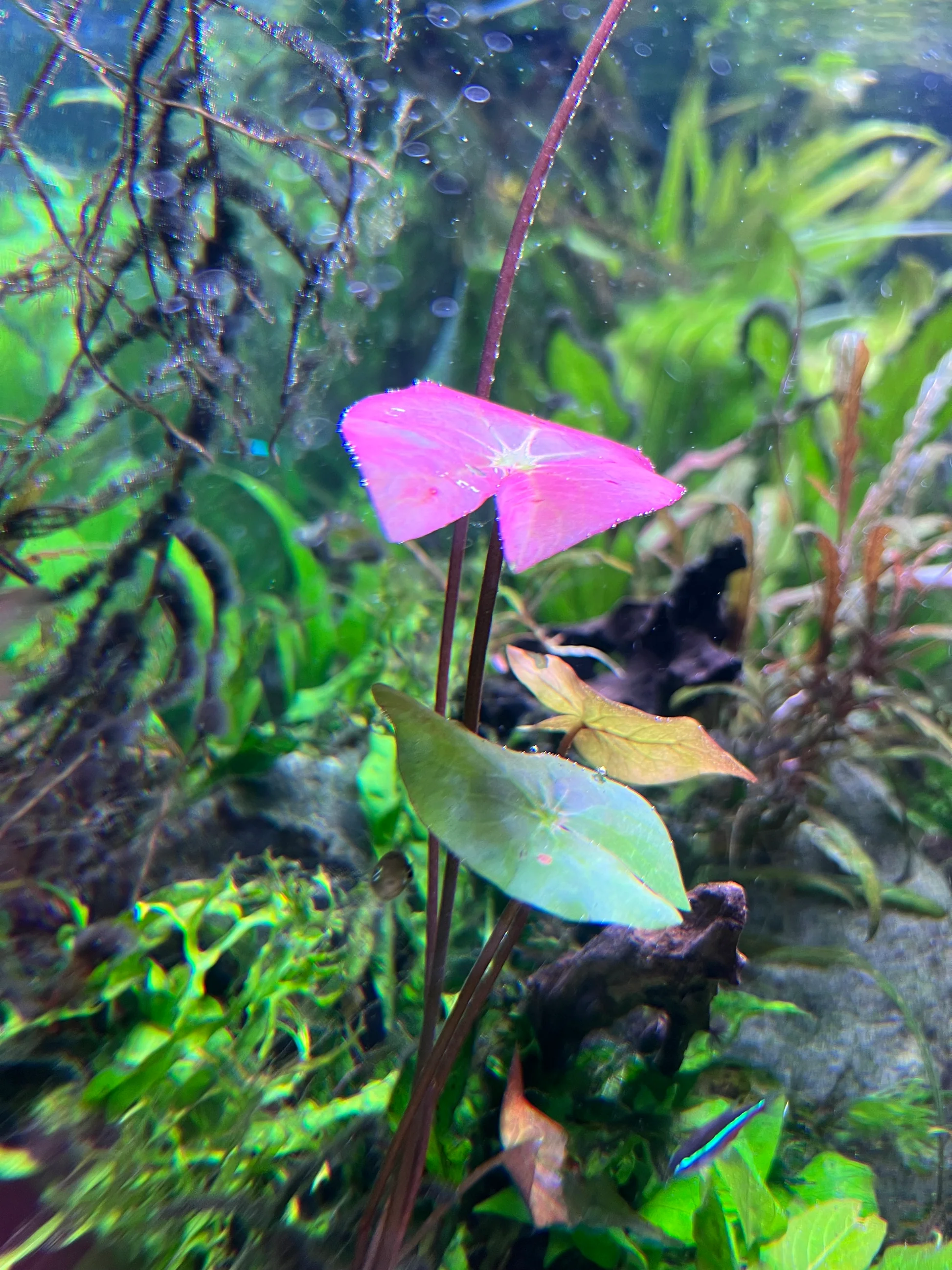
Nymphaea leibergii
(Dwarf Water Lily)Medium
Heavy root feeder; requires specialized substrate and frequent pruning of surface leaves to stay compact.
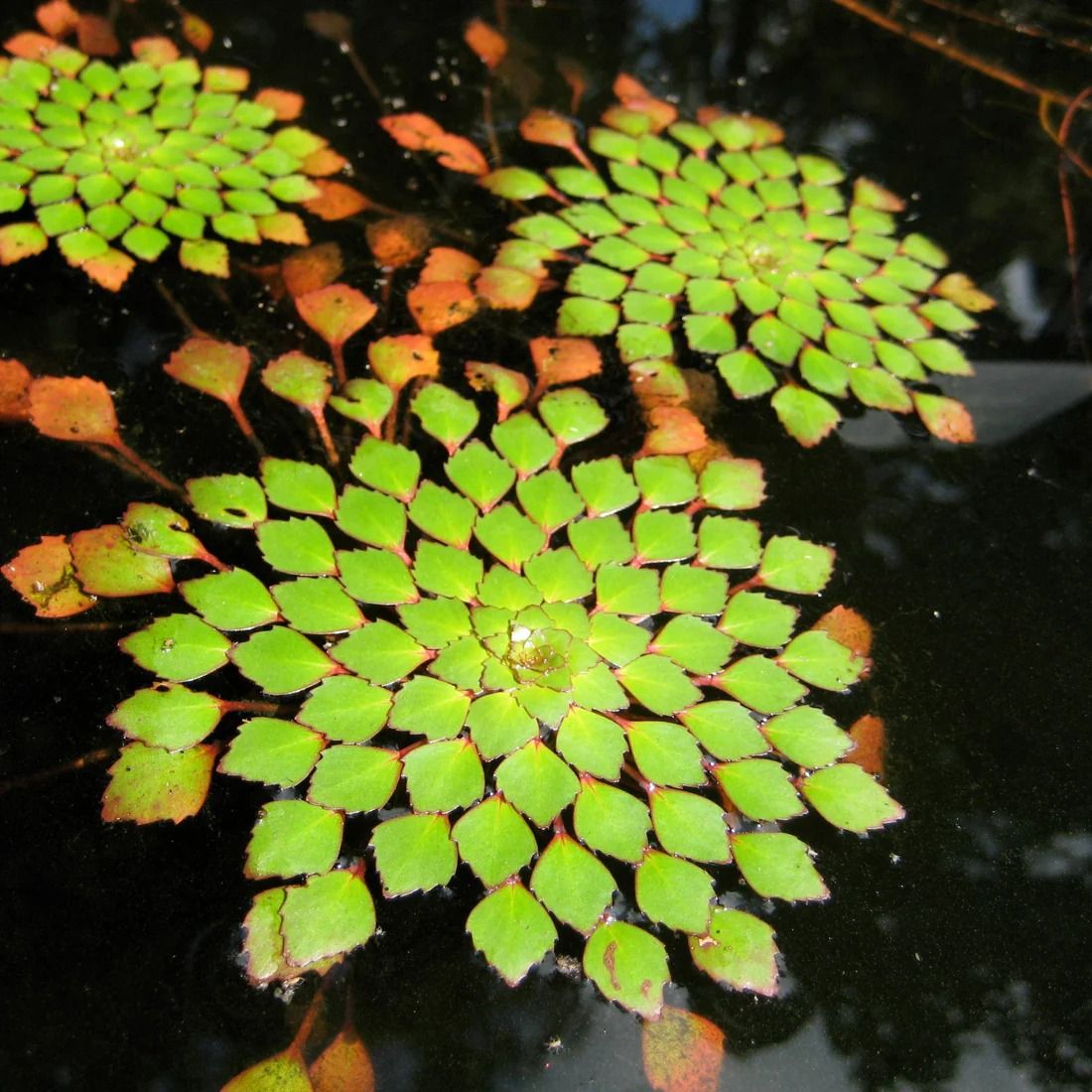
Ludwigia sedioides
(Mosaic Plant)Transition: Underwater it is a simple stem. On the surface, it forms a stunning geometric "mosaic" of red and green diamonds.
Floating Plants (Nitrate Magnets)
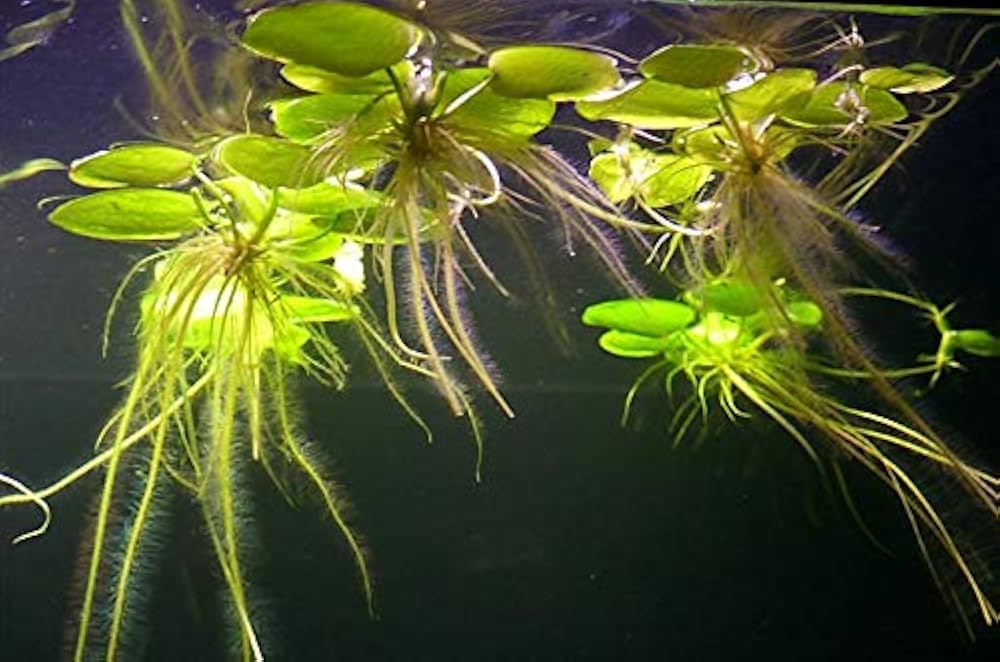
Limnobium laevigatum
(Amazon Frogbit)Easy
Highly sensitive to condensation on top of its leaves; requires an open top or good air circulation.
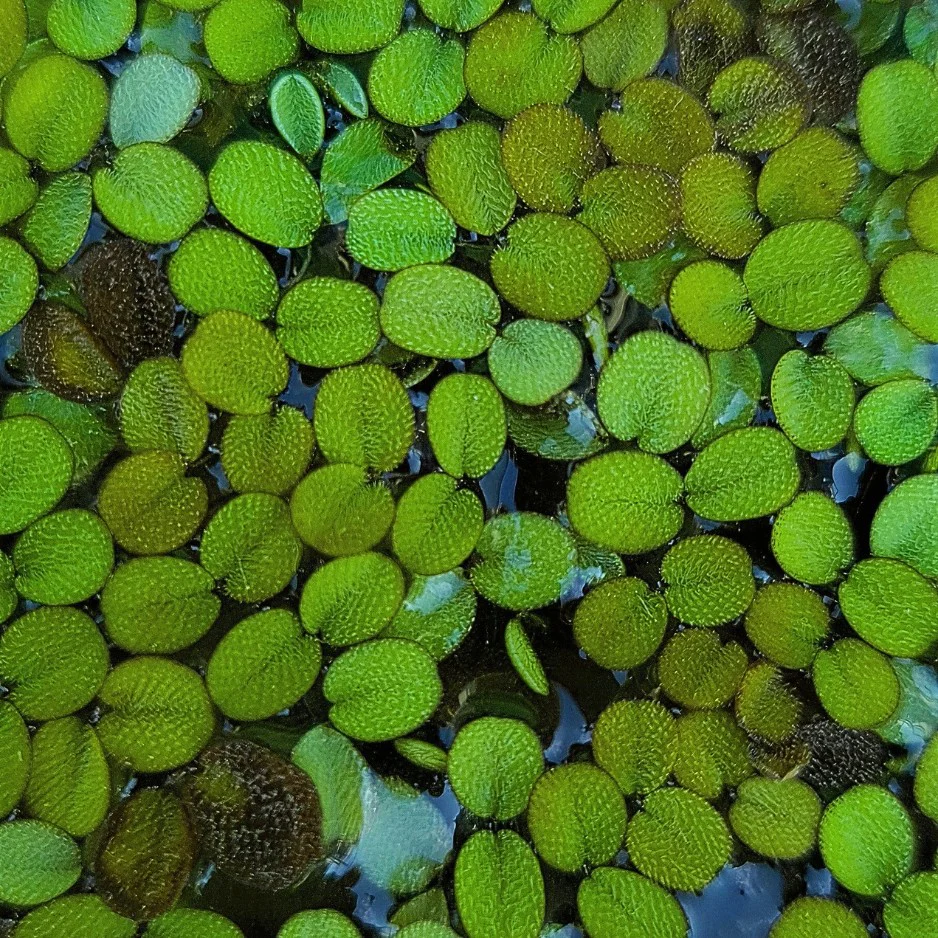
Salvinia minima
(Water Spangles)Easy
Hates high surface agitation; leaves can turn brown if constantly pushed underwater by a filter.
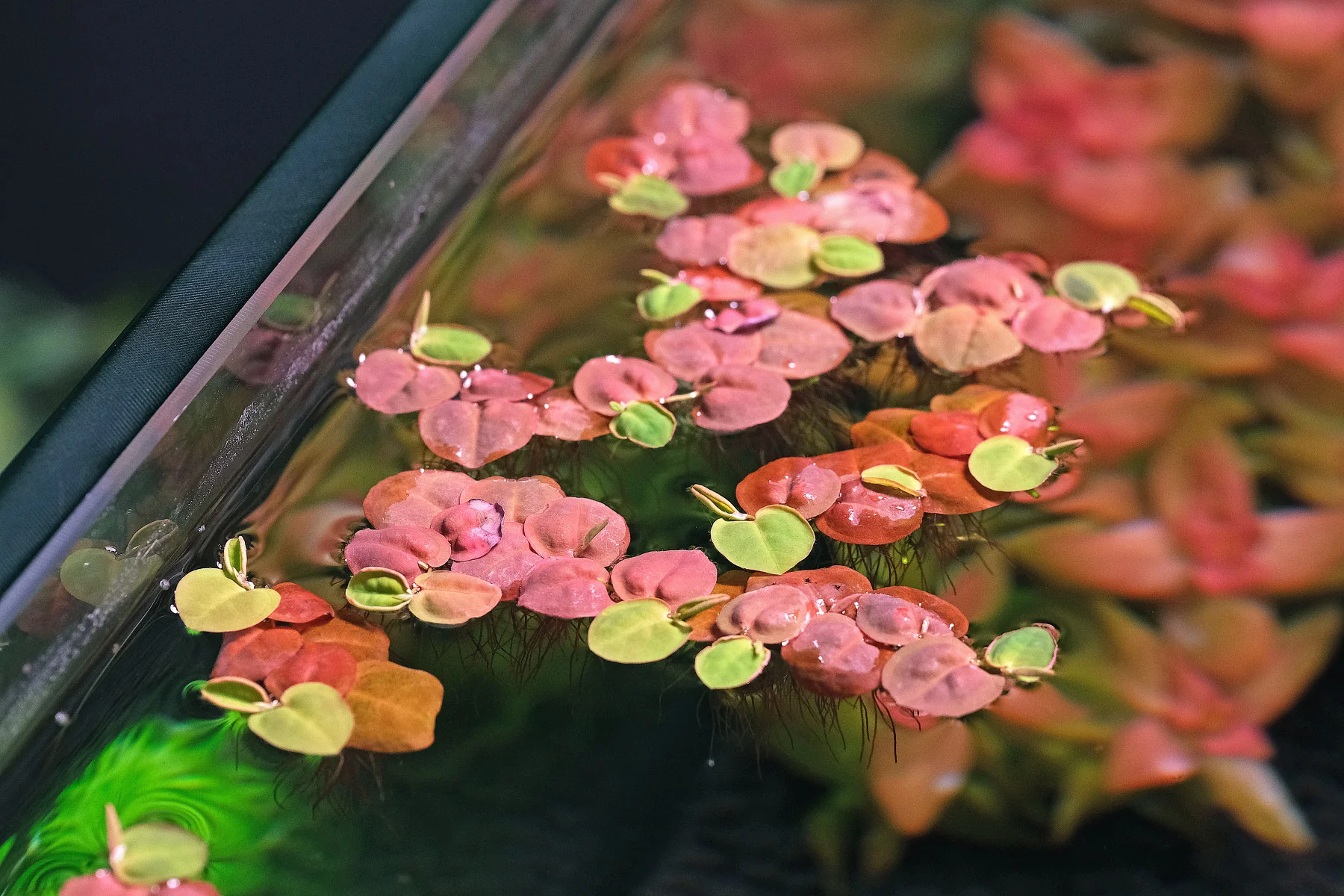
Phyllanthus fluitans
(Red Root Floater)Medium
Requires high light and iron dosing to achieve red color; very intolerant of water movement.
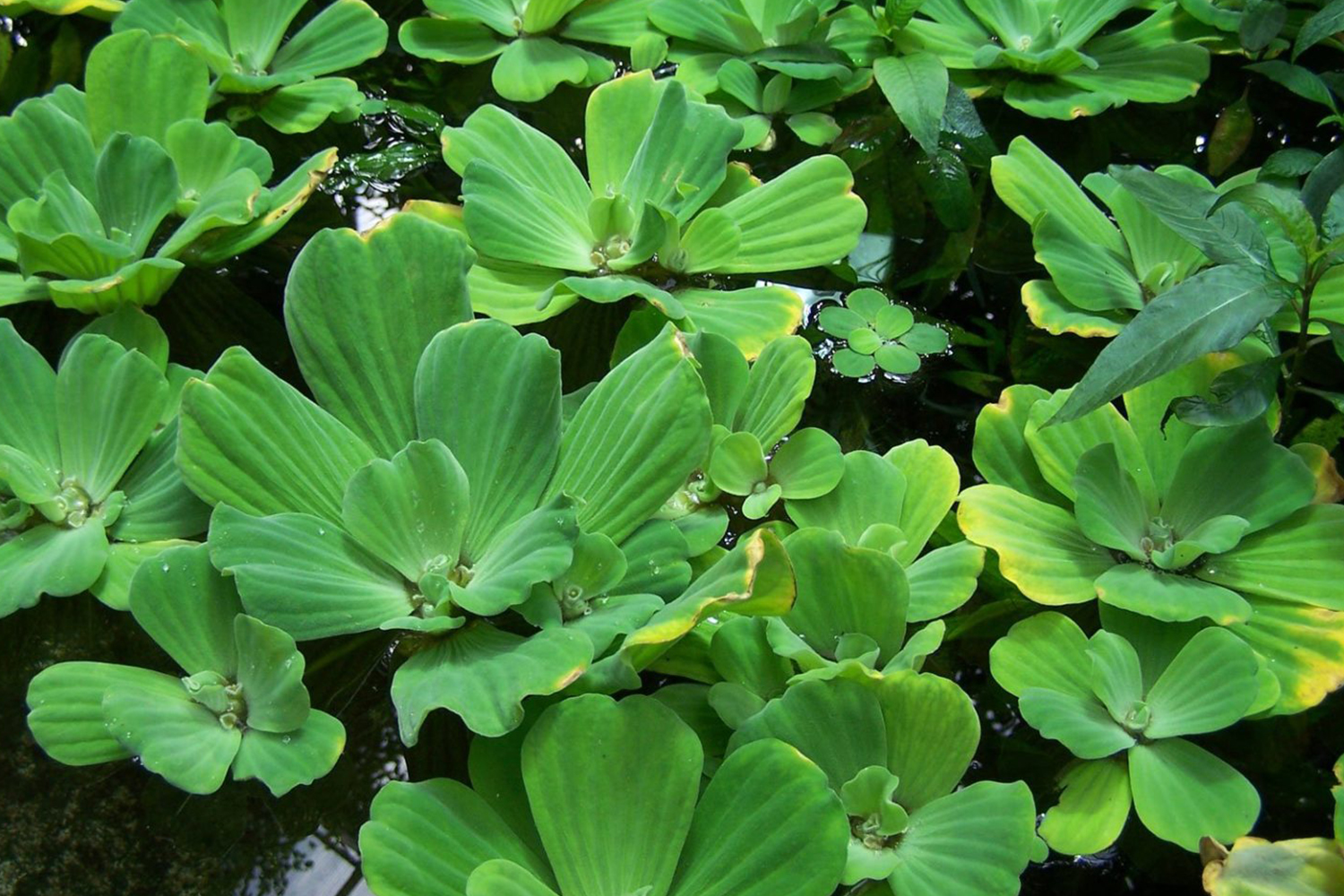
Pistia stratiotes
(Dwarf Water Lettuce)Easy
Nutrient hungry; leaves rot quickly if they get wet or if humidity is too high under a lid.
⚠️ Check Regulations: This plant is highly invasive in many warm climates and is strictly banned or regulated in several countries and states. Please verify your local environmental laws before purchasing.
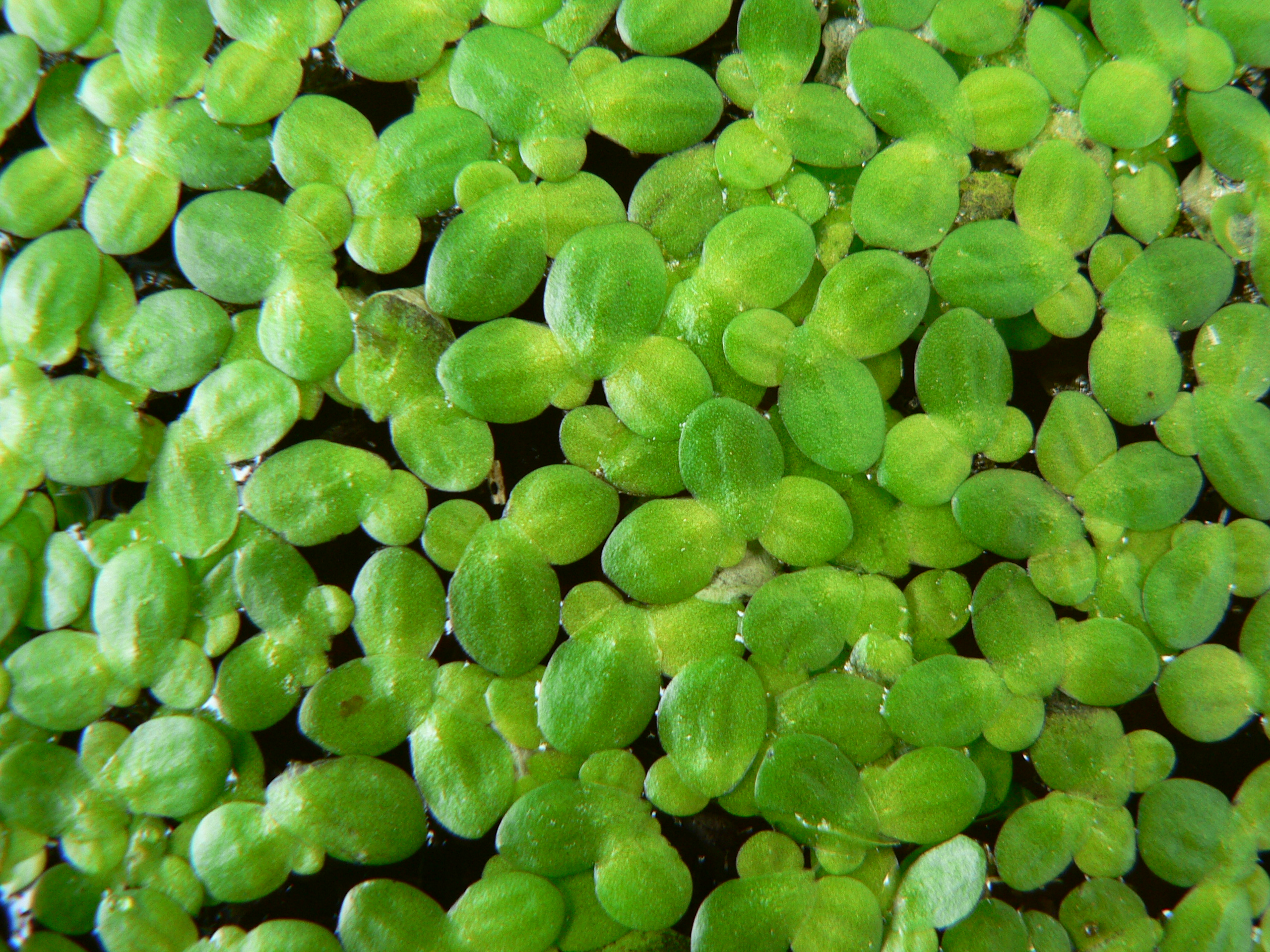
Lemna minor
(Duckweed)Very Easy
The 'Herpes of the aquarium' - nearly impossible to remove once it enters a tank.
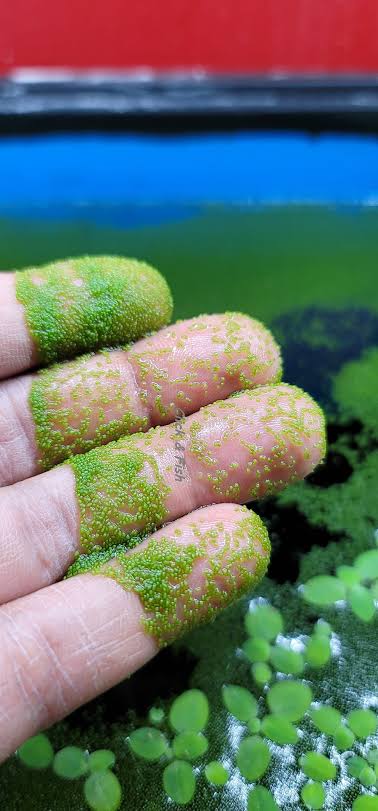
Wolffia globosa
(Asian Watermeal / Mankai)Easy
The smallest flowering plant on Earth. Lacking roots, stems, or leaves, it floats on the surface like fine green sand. It serves as an exceptional, high-protein live food for goldfish, medaka, and barbs, but reproduces extremely fast and can quickly cover the water surface if unchecked.
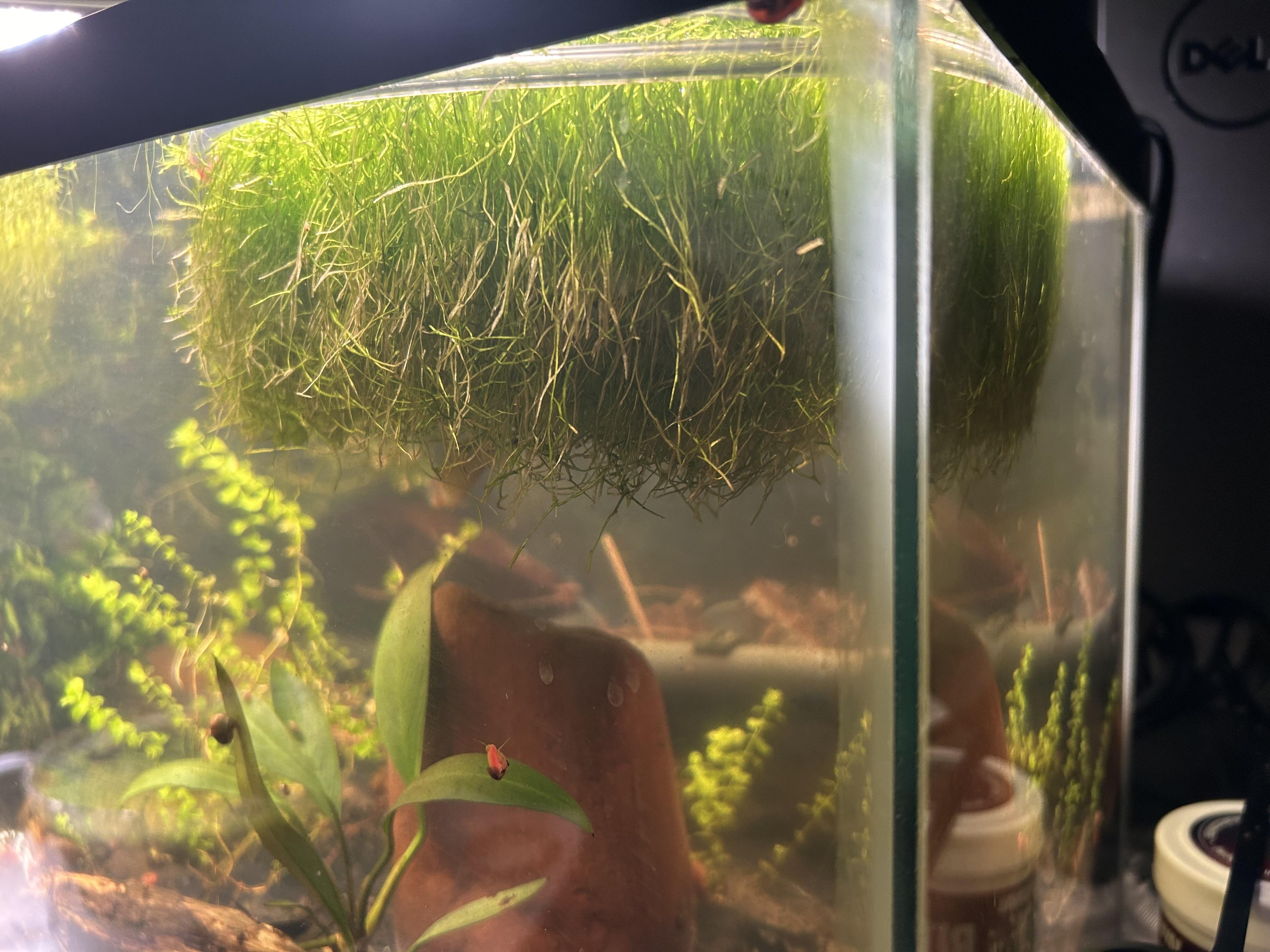
Riccia fluitans
(Crystalwort)Medium
Requires high light and regular thinning; if the floating mat becomes too thick, the bottom layers will die and rot.
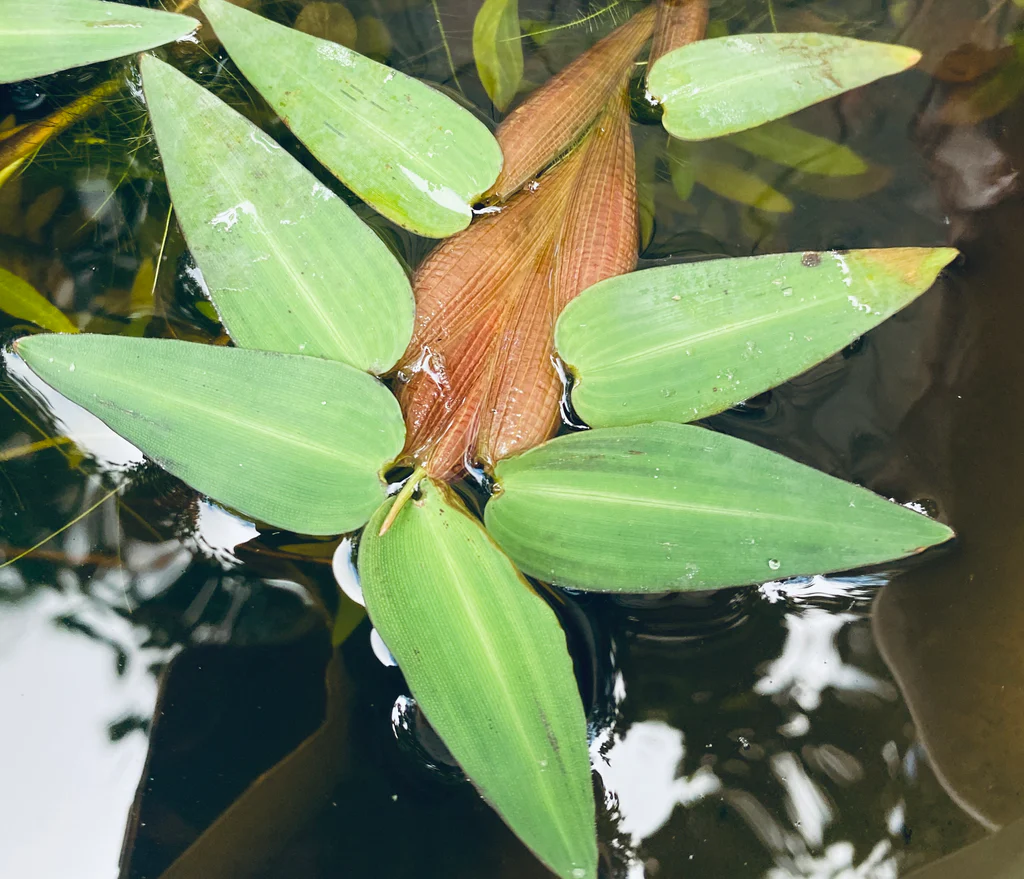
Hygroryza aristata
(Floating Bamboo / Asian Water Grass)Easy
The only true grass species commonly used in aquariums. It floats via inflated, spongy leaf sheaths and develops long, feathery roots that absorb nitrates and provide excellent shelter for fry.